Introduction: Rethinking Robot Safety
In the world of industrial automation, the conversation around safety often begins and ends with the big red emergency stop button. While essential, this reactive measure is only one small piece of a much larger puzzle. A truly safe robotic system is built on a proactive, multi-layered strategy that encompasses mechanical integrity, robust mounting, and intelligent control. This holistic approach not only protects personnel and equipment but is also fundamental to achieving compliance with critical international standards like ISO 13849.
Building a culture of safety means looking at the entire robot cell as an integrated system. Every component, from the smallest fastener to the central motion controller, plays a role. In this article, we'll break down the layers of a comprehensive safety strategy, demonstrating how a focus on quality components and best practices at every stage leads to a safer, more reliable, and compliant automation environment.
Layer 1: The Foundation of Mechanical Integrity
Before a single line of code is written, physical safety begins with the robot's assembly. The most sophisticated safety software is useless if the robot's end-of-arm tooling (EOAT) detaches mid-operation due to mechanical failure. Industrial environments are characterized by constant motion, vibration, and thermal cycling, all of which can compromise the integrity of threaded fasteners over time.
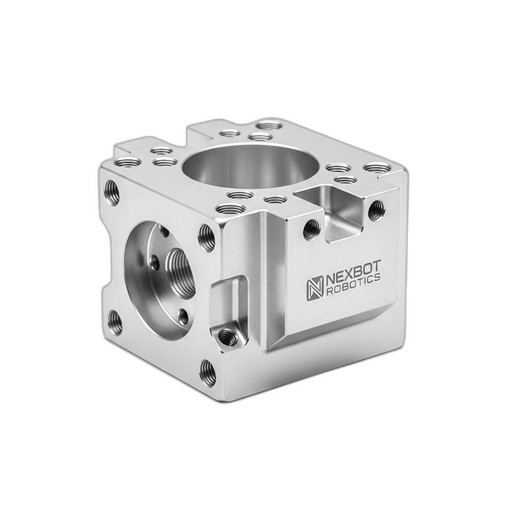
This is where foundational components and consumables become critical safety elements. For instance, ensuring a tool is securely fastened to the robot arm requires more than just tightening bolts. Using a high-quality mounting component like the NexBot Robotics 813-001 Tool Adapter Plate ensures a precise, stable connection that conforms to established standards like ISO 9409-1. This standardization eliminates guesswork and provides a reliable mechanical interface.
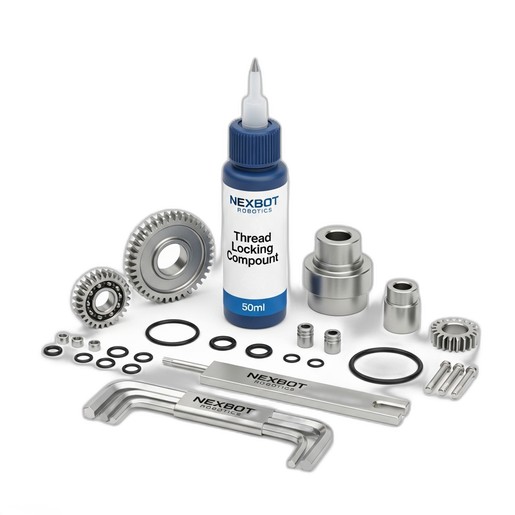
However, even a perfect fit can be compromised by operational vibration. This is why applying a product like NexBot Thread Locking Compound (NXB-CON-TLC-050) is not just a maintenance best practice—it's a core safety procedure. This compound fills the gaps between threads, curing to form a hardened polymer that prevents fasteners from loosening due to vibration or shock. A secure EOAT is a predictable EOAT, and predictability is a cornerstone of a safe system. Neglecting this foundational layer can lead to catastrophic failures, including dropped payloads, damaged equipment, and severe personnel hazards.
Layer 2: The Nervous System - Intelligent Motion Control
Once the physical structure is secure, the next layer of safety resides in the robot's control system. Modern motion controllers are the brains of the operation, responsible for executing complex movements with precision. They are also central to implementing the functional safety requirements outlined in standards like ISO 13849.
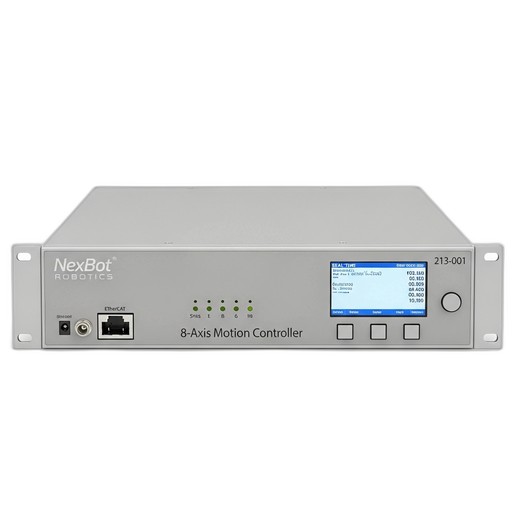
High-performance controllers, such as the NexBot Robotics 213-001 8-Axis Motion Controller, provide the necessary processing power and real-time communication to manage safety-rated functions. The use of a high-speed protocol like EtherCAT is crucial, as it ensures deterministic, low-latency communication between the controller, drives, sensors, and other safety devices. This real-time link allows the system to react instantly to unsafe conditions.
Key safety functions implemented at the controller level include:
- Safe Torque Off (STO): This is the most fundamental drive-based safety function. It ensures that no torque-generating energy can be supplied to the motor, preventing unexpected startup or motion. It's a critical function for safe machine access during maintenance.
- Safe Stop 1 (SS1): This function brings the robot to a controlled stop before engaging STO. It's ideal for high-inertia systems where an immediate power cut could create a hazard.
- Safely-Limited Speed (SLS): This function monitors the robot's speed and ensures it does not exceed a predefined limit, which is vital during setup, programming, or in collaborative applications where a human may be present.
The ability of a motion controller to reliably execute these functions is what allows a system to achieve a specific Performance Level (PL), a key metric in ISO 13849 that quantifies the ability of safety-related parts of a control system to perform a safety function under foreseeable conditions.
Layer 3: The Framework - Risk Assessment and Compliance
The top layer of your safety strategy is procedural and analytical. It involves conducting a thorough risk assessment to identify all potential hazards associated with the robotic application. This process, guided by standards like ISO 12100 (Safety of machinery), is not a mere box-ticking exercise; it is the essential framework that informs the design of the entire safety system.
The risk assessment determines the required Performance Level (PLr) for each safety function. For example, a high-risk application where a failure could result in serious injury will demand a higher PLr (e.g., PLd or PLe) than a low-risk scenario. This required level dictates the architecture of your safety system and the specifications of the components you must use.
This is where the layers connect. Your risk assessment might determine that vibration-induced fastener loosening is a significant hazard, mandating the use of thread locking compounds. It will define the need for safety functions like STO or SLS, which in turn requires a capable motion controller like the NXB-CTL-213-001 that can support the required PLr. The assessment validates the need for every safety-related choice, from mechanical components to control system architecture, ensuring a compliant and verifiably safe system.
Conclusion: Safety as a System-Wide Commitment
Achieving safety and compliance in industrial robotics is not about a single product or feature. It is a systematic, multi-layered approach that integrates robust mechanical design, best-practice assembly, and intelligent, real-time control. By securing the physical foundation with reliable mounting plates and consumables, and then building upon it with advanced motion controllers capable of executing certified safety functions, you create a fortress of safety.
This comprehensive strategy, guided by a rigorous risk assessment, ensures that your robotic systems are not only productive and efficient but also fundamentally safe for the people who work with them every day. At NexBot Robotics, we provide the components that form the building blocks of these safe systems, empowering you to build with confidence and comply with the highest industry standards.