Introduction: Rethinking Robot Safety in the Modern Factory
In the world of industrial automation, safety is not an option—it's a foundational requirement. While traditional safety measures like physical fencing and emergency stops are still critical, the increasing complexity and collaborative nature of modern robotics demand a more sophisticated, multi-layered approach. True safety and compliance with standards like ISO 13849-1 are achieved not by a single solution, but by integrating safety at every level of the system, from the core components to the intelligent sensors that perceive the environment.
This holistic strategy involves three key layers: inherent safety through robust component design, physical protection against environmental hazards, and advanced safeguarding through intelligent systems. By understanding how these layers work together, you can build a robotics cell that is not only productive and efficient but also fundamentally safe for your personnel and equipment.
The Foundation: Inherent Safety by Design
Before any external guards or sensors are added, a robot's safety begins with the integrity of its core components. The ability of a robot to move predictably, accurately, and reliably is the first line of defense against unexpected and potentially hazardous behavior. This is where the quality of its drive system becomes paramount.
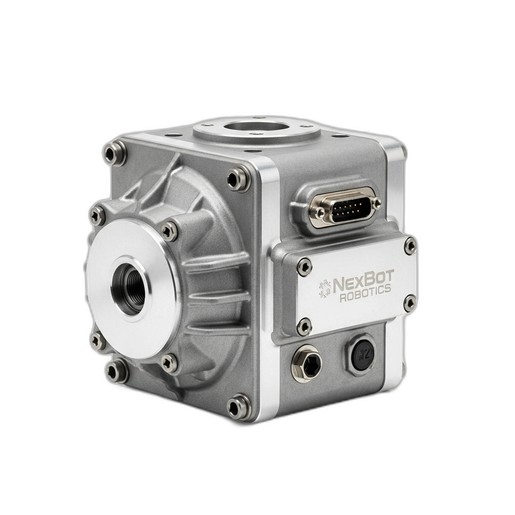
High-precision gearboxes are the heart of reliable motion. A component like the NexBot Vision HRM121-003 Harmonic Gearbox is designed specifically for this purpose. Its zero-backlash characteristic ensures that there is no 'slop' or play in the joint, meaning the robot's end-effector is always where the controller commands it to be. Combined with high torsional stiffness, this prevents oscillations or deflections under load. For a safety system, this predictability is non-negotiable. A robot that moves precisely as programmed, every single time, is inherently safer than one with mechanical unpredictability. When performing a risk assessment, the reliability and performance data of such critical components contribute directly to the overall Performance Level (PL) of a safety function.
Layering On Protection: Environmental Hardening and Guarding
The second layer of safety involves protecting the robot itself from the operational environment. An industrial setting can be harsh, with exposure to fluids, dust, metal shavings, and other debris. If these contaminants ingress into critical mechanisms like joints, bearings, or encoders, they can cause premature wear, corrosion, and, ultimately, catastrophic failure. A sudden joint seizure or erratic movement resulting from internal contamination is a significant safety risk.
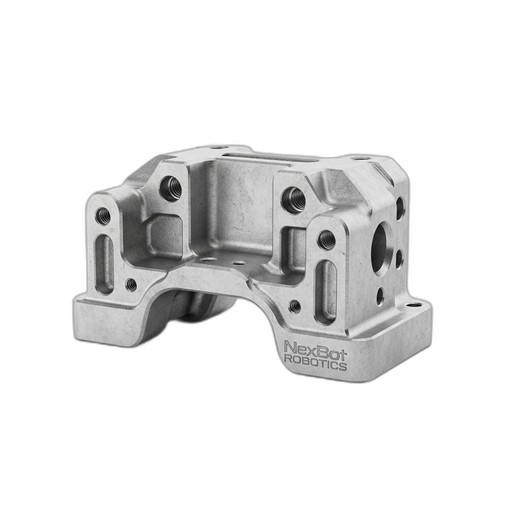
This is where targeted physical protection plays a crucial role. The NexBot Robotics 823-001 Splash Guard is a prime example of this protective layer. Made from durable cast aluminum, it is designed to shield sensitive robot joints from direct exposure to cutting fluids, wash-down chemicals, and particulate matter. By ensuring the mechanical and electrical integrity of the robot's joints, these guards prevent environment-induced failures that could lead to an unsafe state. This proactive protection is a simple but highly effective step in maintaining the robot's operational reliability and, by extension, its safety. It ensures the 'inherent safety' of the components is not compromised by external factors.
Advanced Safeguarding: The Role of Modern Vision Systems
The third and most dynamic layer of safety involves intelligent systems that can perceive and react to the workspace in real-time. As robots and humans begin to share more of the same workspace, static fences are giving way to more flexible and intelligent safeguarding solutions. Advanced sensor technology, particularly 3D vision, is at the forefront of this evolution.
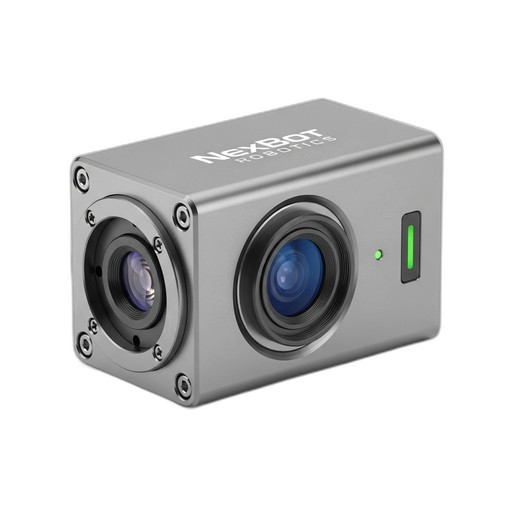
The NexBot Drives 322-002 3D Vision Camera provides the high-fidelity spatial awareness needed for modern safety applications. While its primary function might be robotic guidance or inspection, its capabilities are a cornerstone of advanced safety strategies. For example, in a collaborative application, a 3D vision system can be used to implement speed and separation monitoring (SSM). The camera constantly tracks the position of a human operator, and the robot control system automatically reduces speed as the person gets closer, coming to a complete stop if they enter a pre-defined critical zone. This creates a responsive safety envelope that enhances productivity without compromising personnel safety.
Furthermore, the camera's IP67 rating ensures it can perform this critical safety function reliably even in environments with dust and water, tying back to the principle of environmental hardening. When integrated correctly, a 3D vision system can provide a level of intelligent, adaptive safeguarding that physical barriers alone cannot.
Bringing It All Together: A Holistic Risk Assessment
These three layers—robust components, physical protection, and intelligent sensing—are not standalone solutions. They are integral parts of a comprehensive safety system that must be designed and validated through a thorough risk assessment, as mandated by standards like ISO 13849. The risk assessment process identifies potential hazards and requires the implementation of safety functions to mitigate them to an acceptable level.
The reliability of the Harmonic Gearbox contributes to the safety of the motion itself. The protection offered by the Splash Guard ensures that reliability is maintained over time. The perception capabilities of the 3D Vision Camera enable advanced, dynamic safety functions like collision avoidance and safe-rated monitored stops. Together, they form a robust ecosystem that elevates the safety and compliance of the entire robotic cell.
By adopting this multi-layered philosophy, you move from a reactive to a proactive safety posture, building a system that is safe by design, protected from its environment, and intelligent enough to adapt to changing conditions.