Introduction: Safety as a Cornerstone of Modern Automation
In the era of Industry 4.0, industrial robots are no longer a novelty but a fundamental driver of efficiency and productivity. As these systems become more powerful and integrated into our production lines, ensuring the safety of human personnel is paramount. A robust safety strategy is not just about meeting regulatory requirements; it's about building a reliable, sustainable, and trustworthy automated environment. Neglecting safety can lead to catastrophic equipment failure, costly downtime, and, most importantly, serious injury. This guide will walk you through the essential pillars of industrial robot safety, from foundational risk assessments to the specifics of ISO 13849 and the role that high-quality components play in achieving compliance.
The First Step: Comprehensive Risk Assessment
Before a single safety gate is installed, a thorough risk assessment must be conducted. This systematic process is the foundation of any effective safety system. The goal is to identify all potential hazards associated with the robotic cell throughout its entire lifecycle—from installation and normal operation to maintenance and decommissioning.
A typical risk assessment involves:
- Identifying Hazards: What can cause harm? This includes mechanical hazards (crushing, impact), electrical hazards, and ergonomic risks. Consider scenarios like a robot dropping its payload, unexpected movements, or human-robot collisions.
- Estimating Risk: For each hazard, determine the potential severity of injury and the probability of its occurrence.
- Evaluating Risk: Decide if the identified risk is acceptable or if it needs to be reduced.
- Implementing Protective Measures: If a risk is unacceptable, you must implement measures to mitigate it. This follows the hierarchy of controls: elimination, substitution, engineering controls (e.g., guarding), administrative controls (e.g., training), and finally, personal protective equipment (PPE).
Only after this process is complete can you begin to design and implement specific safety solutions for your robotic application.
Demystifying ISO 13849: Performance Levels and System Integrity
ISO 13849-1 is one of the most important functional safety standards for machinery control systems. It provides a clear methodology for designing and validating safety-related parts of control systems (SRP/CS). Instead of just prescribing solutions, it focuses on the reliability and performance of the safety functions themselves.
A key concept in ISO 13849-1 is the Performance Level (PL), which ranges from PLa (lowest) to PLe (highest). The required PL for a given safety function is determined by your risk assessment. Achieving a specific PL depends on several factors, including:
- System Category (Architecture): The structure of the safety circuit, from single-channel (Category B, 1) to dual-channel with extensive monitoring (Category 4).
- Mean Time to Dangerous Failure (MTTFd): A measure of the reliability of the components used in the safety circuit. High-quality, durable components are essential for achieving higher MTTFd values.
- Diagnostic Coverage (DC): The system's ability to detect its own internal failures.
- Common Cause Failures (CCF): Measures taken to prevent a single event from disabling redundant safety channels.
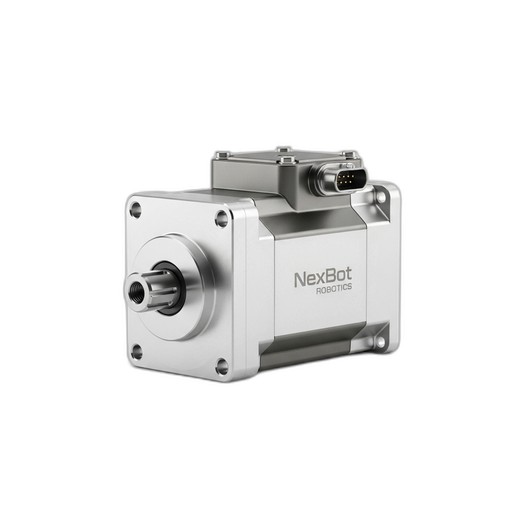
While a safety controller is the brain of the system, the integrity of every component contributes to the overall safety function. A system is only as strong as its weakest link. The predictable performance and durability of components like high-performance servo motors, for instance, are crucial. A motor such as the NexBot Vision DC112-011 DC Servo Motor, engineered for precision and reliability, provides the consistent motion control needed to ensure safety functions like 'Safe Stop' operate as intended. Its robust design contributes to a higher MTTFd for the drive system, which is a critical input when calculating the PL of the entire safety function.
Designing the Safe Workcell: From Components to Cohesion
A compliant robotic system is more than just a collection of safety-rated parts; it's a holistically designed environment. Physical guarding, light curtains, laser scanners, and pressure-sensitive mats create zones that prevent unauthorized human access during high-speed operations. However, the integrity of the robot itself is equally critical.
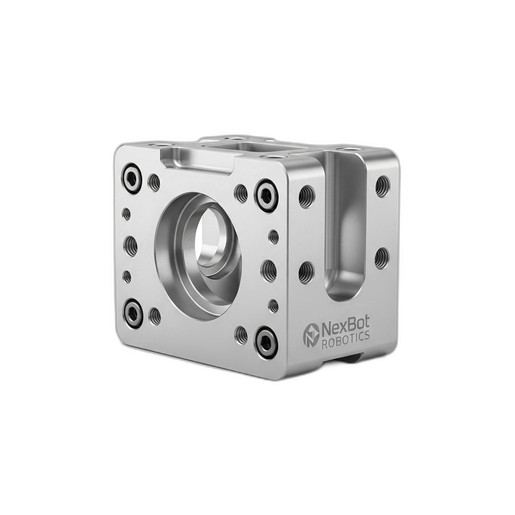
Consider the physical connections and interfaces. A dropped payload from an end-effector is a significant and preventable hazard. The security of this connection begins with the mounting interface. Using a precisely machined adapter plate, such as the NexBot Robotics 813-009 Tool Adapter Plate, ensures a secure, rigid connection that conforms to established standards like ISO 9409-1. This eliminates alignment issues and reduces the risk of vibration-induced loosening, directly mitigating a key mechanical hazard.
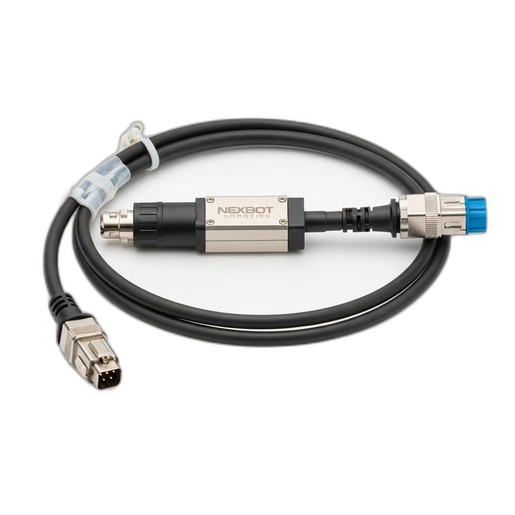
Furthermore, the management of cables and pneumatic lines is a frequently overlooked aspect of safety. Unmanaged cables can become a snag hazard, causing the robot to deviate from its programmed path or leading to premature cable wear and electrical failure. A failure in a PROFINET communication cable, for example, could lead to a loss of control. The NexBot Drives 542-006 Cable Dress Pack is designed to prevent these issues. By routing cables securely along the robot arm, it protects them from abrasion and mechanical stress, ensuring reliable communication and power delivery while preventing interference with the robot's motion. This simple accessory is a vital contributor to the operational safety and long-term reliability of the entire system.
Conclusion: A Proactive Approach to Safety
Industrial robot safety is an ongoing commitment, not a one-time checklist. It begins with a meticulous risk assessment and extends through the careful selection of every component. By understanding and applying standards like ISO 13849, you can design control systems that are not only compliant but fundamentally reliable. Investing in high-quality components—from the servo motors that drive motion to the adapter plates that hold the tooling and the cable packs that protect vital connections—is an investment in the safety of your personnel and the long-term success of your automation initiatives.