The Challenge: Precision Bottlenecks in Aerospace Manufacturing
AeroComponent Dynamics (ACD), a leading supplier of high-precision components for the aerospace industry, faced a critical bottleneck in their assembly line. A key sub-assembly process required meticulous manual handling of small, sensitive parts, the precise application of a thread locking agent, and the fastening of micro-screws. This manual process was not only slow but also susceptible to inconsistencies. Variations in gripping pressure led to component damage, while inconsistent adhesive application and torque resulted in an 8% rejection rate during final quality assurance checks. As demand for their products grew, ACD knew they needed a robust, repeatable solution to scale production without compromising their high standards.
The Solution: A Multi-Faceted Approach to Automation
To address these challenges, ACD partnered with NexBot Robotics to implement a fully automated robotic cell. The solution wasn't just about a single robot; it was an integrated system combining high-performance end-of-arm tooling, reliable industrial consumables, and comprehensive team training to ensure long-term success. The goal was to create a seamless workflow that handled parts delicately, applied compounds with precision, and empowered ACD's own team to manage and optimize the system.
Precision Handling with the PNU411-001 Pneumatic Gripper
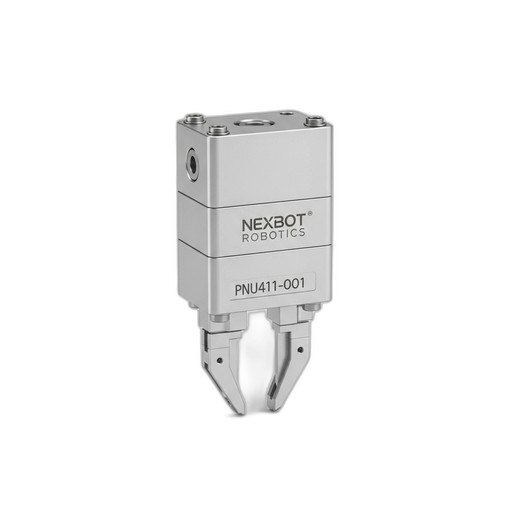
The core of the physical automation was the NexBot Robotics PNU411-001 Pneumatic Gripper. Handling delicate aerospace components required a gripper that was both powerful and precise. The PNU411-001 was the ideal choice, delivering a controlled 180 N of gripping force, sufficient to securely hold the parts without causing stress or deformation. Its most critical feature for ACD was its exceptional repeatability of ±0.02 mm. This level of precision ensured that every component was picked and placed in the exact same orientation for the subsequent assembly steps, eliminating a major source of error from the previous manual process.
Ensuring Reliability with NexBot Consumables
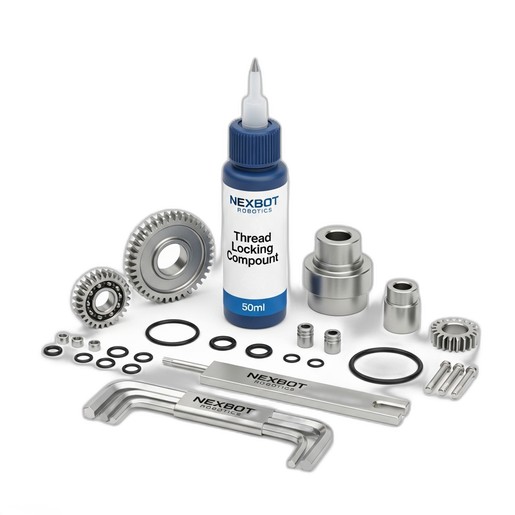
In aerospace, fastener integrity is non-negotiable. Vibrations during operation can cause improperly secured screws to loosen, leading to catastrophic failure. To automate the application of thread locking fluid, ACD integrated a dispensing system that used NexBot Thread Locking Compound (NXB-CON-TLC-050). By standardizing on a high-quality, specification-driven compound, they ensured consistent viscosity and curing time. The robotic cell was programmed to dispense the exact amount of compound required on every thread, eliminating the 'too much' or 'too little' problem inherent in manual application. This small but critical step was instrumental in improving the reliability and safety of the final product.
Empowering the Team Through Advanced Training
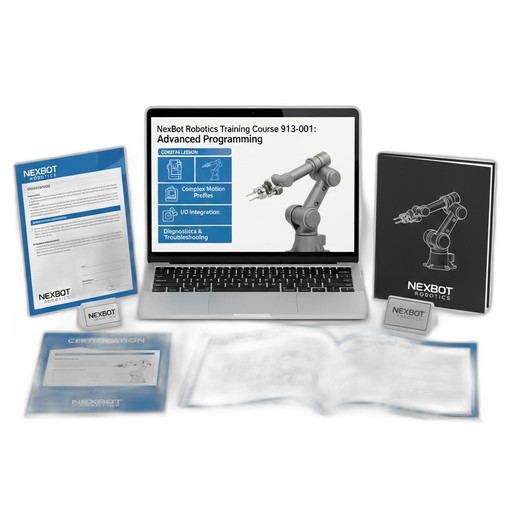
Technology is only as effective as the people who operate it. ACD recognized that to truly own their new automation, their engineering team needed to be proficient in managing it. Key technicians and programmers were enrolled in the NexBot Robotics Training Course 913-001 Advanced Programming. This intensive 4-day course went beyond basic operation, covering complex logic, multi-axis motion control, and the seamless integration of I/O devices like the pneumatic gripper and the fluid dispenser. Armed with this knowledge, the ACD team was able to fine-tune the robot's cycle time, optimize its movement paths for maximum efficiency, and confidently troubleshoot any issues that arose, reducing reliance on external support.
The Results: Measurable Gains in Productivity and Quality
The implementation of the NexBot robotics solution yielded immediate and significant results for AeroComponent Dynamics:
- Throughput Increased by 65%: The automated cell operates consistently around the clock, dramatically increasing the output of the previously bottlenecked sub-assembly line.
- Rejection Rate Reduced to <1%: The combination of precise handling from the PNU411-001 gripper and consistent application of the NXB-CON-TLC-050 thread locker virtually eliminated assembly-related defects, dropping the rejection rate from 8% to under 1%.
- Enhanced Operational Uptime: With their team empowered by the advanced training course, ACD could perform routine maintenance and process optimizations in-house, minimizing downtime and maximizing the cell's productivity.
- Improved Worker Safety and Ergonomics: Automating the repetitive and strenuous manual task freed up skilled technicians to focus on higher-value activities like quality control, machine supervision, and process improvement.
Conclusion: A Blueprint for Future Automation
The success at AeroComponent Dynamics showcases how a holistic automation strategy—combining precise hardware, reliable consumables, and in-depth training—can transform a production environment. By leveraging the NexBot ecosystem, ACD not only solved a critical bottleneck but also established a new standard for quality and efficiency that they are now replicating across other areas of their facility.