The Challenge: Scaling Precision Manufacturing
AeroForge Components, a leading supplier of precision-machined parts for the aerospace sector, faced a critical growth barrier. Demand for their high-tolerance components was surging, but their production capacity was constrained by the manual-tending process for their CNC machining centers. Operators manually loaded raw material billets into the machines and unloaded finished parts, a repetitive and physically demanding task. This process created several significant challenges:
- Production Bottlenecks: Manual changeover times between cycles were inconsistent, leading to significant machine idle time.
- Limited Scalability: Running a full third shift was cost-prohibitive and difficult to staff, preventing the company from achieving true 24/7 operation.
- Ergonomic Risks: The repetitive lifting of metal parts, some weighing up to 20 kg, posed a risk of musculoskeletal injuries to their skilled workforce.
- Inconsistent Quality: Occasional misalignments during manual loading could lead to scrapped parts, impacting yield and profitability.
AeroForge needed a solution that could increase machine utilization, ensure consistent quality, and create a safer work environment, all while paving the way for future growth.
The Solution: Automated Machine Tending with NexBot Robotics
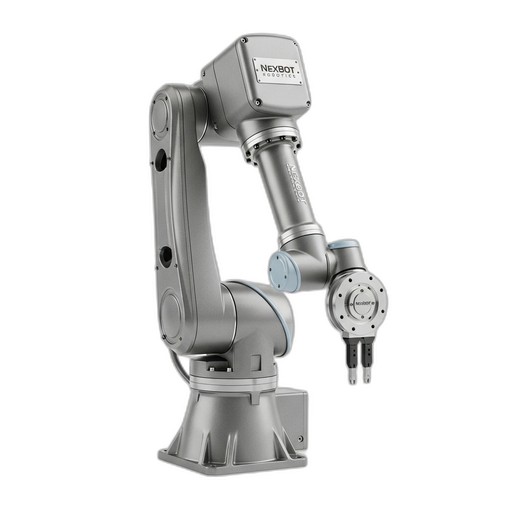
After a thorough evaluation, AeroForge partnered with a systems integrator to deploy a robotic automation solution centered around the NexBot Robotics MA012-010 6-Axis Robot Arm. This particular model was selected as the ideal fit for their demanding application for several key reasons:
- Payload Capacity: With a 25 kg payload, the MA012-010 could comfortably handle AeroForge's entire range of workpieces, from smaller fittings to larger structural components, providing flexibility for future product lines.
- Sufficient Reach: The robot's 1,750 mm reach was crucial for the cell design, allowing a single arm to service multiple CNC machines from a central position, maximizing the return on investment.
- Exceptional Repeatability: The specified ±0.02 mm repeatability was a non-negotiable requirement. This level of precision ensures that every workpiece is placed into the CNC chuck with perfect alignment, eliminating a major source of production errors and scrap.
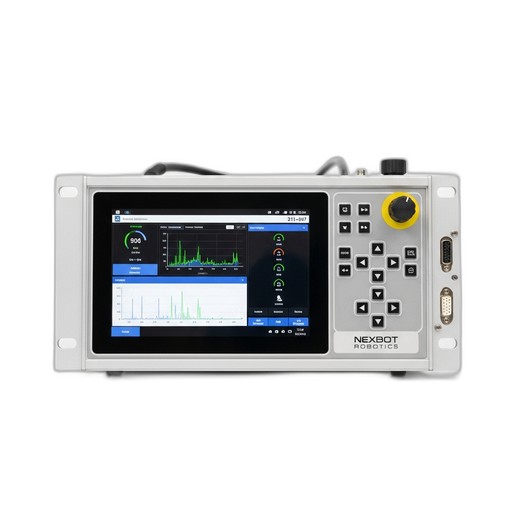
The entire robotic cell was orchestrated by the NexBot Robotics 211-007 Multi-Axis Robot Controller. Its high-performance processing and real-time communication over the EtherCAT protocol allowed for seamless and synchronized operation between the robot and the CNC machines, ensuring that the robot was always ready for the next cycle the moment a machine was finished.
Inside the Robotic Cell: A Synergy of Precision Components
The implemented solution consisted of the MA012-010 robot arm mounted on a pedestal between two CNC lathes and one vertical mill. A custom infeed/outfeed conveyor system presented raw billets to the robot and carried away finished parts for inspection.
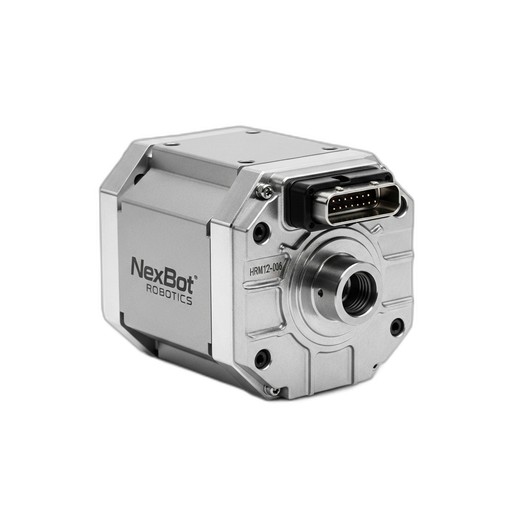
The reliability of the system is built on the quality of its core components. The exceptional precision of the MA012-010 arm is, in part, attributable to its internal drive systems. Key joints utilize high-precision components like the NexBot Drives HRM121-006 Harmonic Gearbox. This component's zero-backlash design and high torque density are fundamental to translating the controller's commands into the smooth, exact, and highly repeatable motions required for flawless machine tending. This internal engineering quality gave AeroForge the confidence that the system would perform reliably, shift after shift, with minimal maintenance.
Safety was paramount. The cell was enclosed with safety fencing and light curtains, ensuring that the robot would immediately halt its operation if a person entered the work envelope, allowing operators to work safely alongside their automated counterparts.
The Results: Measurable Gains in Productivity and Quality
The transition to robotic automation delivered transformative results for AeroForge Components within the first six months of operation:
- 35% Increase in Machine Throughput: By eliminating manual changeover delays and optimizing the loading sequence, overall machine utilization increased by 35%. The robot worked consistently through breaks and shift changes, maximizing productive hours.
- Enabled 'Lights-Out' Manufacturing: The automated cell allowed AeroForge to run a full, unattended third shift, dramatically increasing their total production capacity without a proportional increase in labor costs. This led to an estimated 20% reduction in cost-per-part.
- 90% Reduction in Scrap Rate: The MA012-010's ±0.02 mm repeatability virtually eliminated part misloads, a primary cause of scrapped parts. The scrap rate for this cell dropped by 90%, leading to significant material cost savings and improved profitability.
- Improved Workplace Ergonomics: Skilled CNC operators were redeployed from strenuous manual labor to higher-value roles, including robotic cell supervision, quality assurance, and programming for new parts. This improved job satisfaction and eliminated the risk of repetitive strain injuries.
Conclusion: A Blueprint for Future Automation
The successful implementation of the NexBot Robotics MA012-010 arm has provided AeroForge Components with more than just a solution to a bottleneck; it has provided a blueprint for the future. The significant gains in productivity, quality, and operational flexibility have proven the value of automation. The company is now planning to replicate this cell design in other areas of their facility, leveraging the power and precision of NexBot Robotics to secure their position as an industry leader.