The Challenge: Bottlenecks and Downtime at AeroForge Components
AeroForge Components, a specialized manufacturer of precision-machined metal parts for the aerospace sector, faced a critical growth barrier. Their CNC machining center, a hub of production, was plagued by inefficiencies. The manual process of loading and unloading heavy metal blanks was slow, physically demanding, and led to inconsistent cycle times. More critically, it was a source of recurring, unplanned downtime that disrupted production schedules and threatened delivery deadlines.
The primary culprits were twofold. First, the existing automation attempt on one of their machines suffered from unreliable cabling. Cables running to the robot's end-of-arm tooling were managed with simple ties and wraps, leaving them exposed to abrasion, snagging, and damage from metal chips and coolant. This resulted in intermittent connection failures and costly cable replacements, stopping the line for hours at a time. Second, their part detection system was inconsistent, leading to machine errors and scrapped parts. The team lacked the deep robotics expertise to diagnose these issues efficiently or operate the cell with full confidence, leading to a cautious, slower-than-optimal pace.
The Solution: A Strategic Partnership with NexBot Robotics
Recognizing the need for a robust and holistic solution, AeroForge's engineering team partnered with NexBot Robotics. The goal was not just to automate another machine but to create a reliable, safe, and highly productive robotic cell that could serve as a model for future expansion. The solution focused on three key areas: reliable component-level hardware, robust system infrastructure, and comprehensive team training.
NexBot proposed a multi-faceted approach:
- Upgrading Part Detection: Implement a high-reliability sensor to ensure accurate and consistent detection of metal blanks before the machining cycle begins.
- Protecting System Cabling: Integrate a purpose-built cable management system to eliminate cable-related downtime.
- Empowering the Workforce: Provide in-depth, on-site training to build operator confidence, ensure safe practices, and improve operational efficiency.
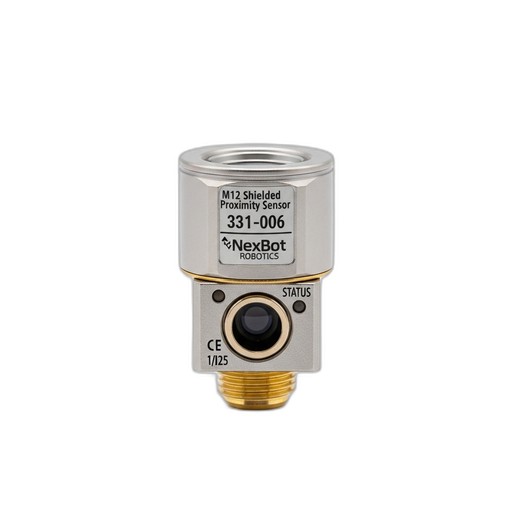
Reliable Part Detection with the NXB-SNS-331-006 Sensor
The first step was to solve the inconsistent part detection. The NexBot team specified the NexBot Drives 331-006 Inductive Proximity Sensor (NXB-SNS-331-006). This M12 shielded sensor was chosen for its precise 4 mm sensing range, perfect for confirming that a metallic blank was correctly seated in the CNC chuck.
Its IP67 rating ensures flawless operation even when exposed to the harsh cutting fluids and metal shavings common in a CNC environment. The sensor's non-contact nature prevents any wear and tear from physical interaction. Furthermore, its integration via the IO-Link protocol provided significant advantages. It simplified wiring and allowed the control system to gather diagnostic data, enabling proactive maintenance alerts before a potential failure could occur. This small but critical component immediately eliminated false starts and reduced the risk of tool crashes, saving both time and material.
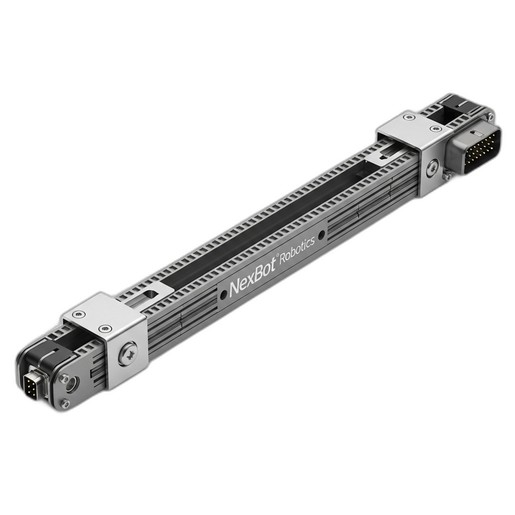
Eliminating Cable Failures with the NXB-CBL-541-005 Cable Carrier
To address the primary cause of downtime—cable damage—the robot was fitted with the NexBot Robotics 541-005 Cable Carrier (NXB-CBL-541-005). This rugged drag chain was designed specifically for the dynamic movements of industrial robots. It neatly housed all power, communication (including the PROFINET network), and sensor cables, guiding them along a defined path and protecting them from external hazards.
The cable carrier's design prevents cables from kinking, stretching, or abrading against machine surfaces. By enforcing a minimum bend radius, it drastically extends the lifecycle of the cables within. Installation was straightforward, and the carrier immediately brought a new level of organization and reliability to the cell. The once-frequent troubleshooting sessions for intermittent signal loss became a thing of the past.
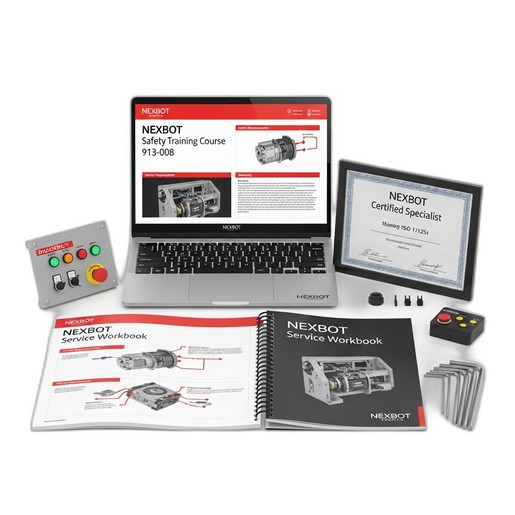
Empowering the Team Through NXB-TRN-913-008 Safety Training
Hardware alone does not guarantee success. AeroForge understood that their team's skill and confidence were paramount. They invested in the NexBot Safety Training Course 913-008 On-Site Certification. This intensive 2-day course was conducted directly at AeroForge's facility, using their new robotic cell for hands-on learning.
The NexBot instructor covered everything from fundamental robot operation and programming to, most importantly, comprehensive safety protocols and risk assessment. Maintenance staff and operators learned to identify potential hazards, understand safety circuits, and perform their duties confidently within the automated environment. This training transformed the team's relationship with the technology from one of apprehension to one of ownership. Operators became more adept at optimizing robot paths and recovering from minor errors, further reducing delays.
The Results: Measurable Gains in Productivity and Safety
The combined impact of the NexBot solution was transformative for AeroForge Components. Within three months of implementation, the company documented significant, measurable improvements:
- Throughput Increased by 35%: The new robotic cell consistently outperformed manual loading, producing over a third more parts per shift.
- Unplanned Downtime Reduced by 80%: Cable-related failures, once a weekly headache, were virtually eliminated. The reliability of the NXB-SNS-331-006 sensor also contributed to this dramatic reduction.
- Cycle Time Consistency Improved: Consistent part placement and operator confidence led to a more stable and predictable production rhythm, improving overall plant scheduling.
- Zero Recordable Safety Incidents: The comprehensive training provided by the NXB-TRN-913-008 course instilled a culture of safety, resulting in a perfect safety record for the new cell.
Conclusion: A Blueprint for Automation Success
AeroForge Components' success story demonstrates that successful industrial automation is about more than just the robot. It requires a systematic approach that considers every element of the cell—from the smallest sensor to the protective cable carrier to the knowledge of the people who operate it. By partnering with NexBot Robotics and investing in reliable components and professional training, AeroForge not only solved their immediate production challenges but also built a robust foundation for future growth and innovation.