The Challenge: A Bottleneck in Precision Manufacturing
AeroForge Components, a leading supplier of precision-machined parts for the aerospace industry, faced a critical growth constraint. Their state-of-the-art CNC machining centers were capable of incredible precision, but their output was throttled by the manual process of loading and unloading heavy, semi-finished metal billets. This machine tending task was repetitive, physically demanding, and created a significant bottleneck that limited overall plant efficiency.
Highly skilled machinists, whose expertise was better suited for complex machine setup, programming, and quality assurance, were spending a substantial portion of their shifts on this low-value manual labor. The inconsistency of manual loading times led to variable cycle times and unpredictable output. Furthermore, the risk of ergonomic injuries was a constant concern for the plant's management. AeroForge knew that to meet increasing demand and maintain their competitive edge, they needed to automate.
The Solution: Strategic Automation with NexBot Robotics
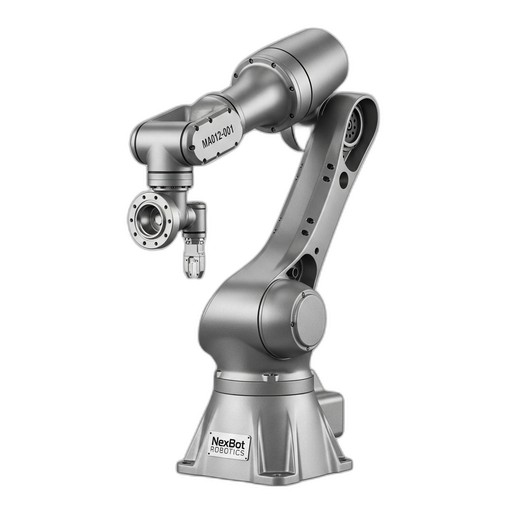
After a thorough evaluation of their options, the engineering team at AeroForge selected the NexBot Robotics MA012-001 6-Axis Robot Arm as the core of their new automated manufacturing cell. The decision was based on several key factors that aligned perfectly with their operational needs:
- Payload and Reach: The MA012-001's 25 kg payload capacity was ideal for handling the full range of their workpieces, from smaller components to larger billets, with a comfortable safety margin. Its impressive 1710 mm reach allowed a single robot to be strategically placed to service two adjacent CNC machines, maximizing the return on their investment.
- Precision and Versatility: The 6-axis articulation provided the dexterity required to pick parts from various orientations in a staging area and precisely place them into the CNC chucks. This flexibility was crucial for accommodating future changes in part design and production flow.
- Industrial Durability: Designed for harsh manufacturing environments, the robust construction of the MA012-001 assured AeroForge of its ability to withstand the rigors of a multi-shift operation, including exposure to coolant mist and metal shavings.
Implementation: A Partnership Beyond Hardware
AeroForge's vision was not just to install a robot, but to build a truly smart and adaptable automation system. This is where the NexBot ecosystem proved invaluable. The implementation process was a multi-faceted success, focusing on both technology and human capital.
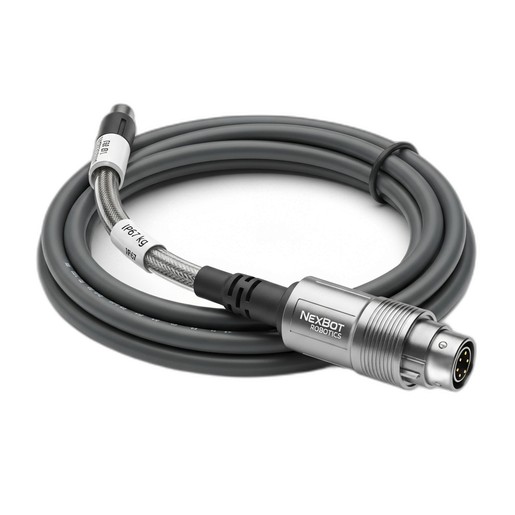
The physical installation was straightforward. The robot was integrated into a cell layout that included input and output conveyors. High-quality components, such as the NexBot Robotics PWR511-001 Motor Power Cable, were specified to ensure reliable power delivery and minimize the risk of downtime from component failure. The robot’s native EtherCAT communication protocol allowed for seamless, high-speed integration with the existing CNC machine controllers and cell safety systems.
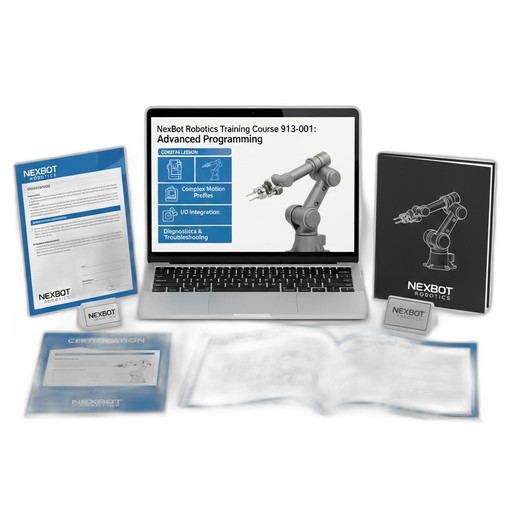
The most critical element of the project's success, however, was empowering the AeroForge team. Two of their lead engineers enrolled in the NexBot Robotics Training Course 913-001 for Advanced Programming. This intensive 4-day course went far beyond basic pick-and-place routines. The team learned to implement complex logic for part recognition, create advanced motion paths to optimize cycle times, and fully integrate I/O signals for handshaking with the CNC machines. This training transformed them from simply robot operators into true automation specialists, capable of adapting, troubleshooting, and optimizing the cell independently.
The Results: Measurable Gains in Productivity and Quality
Within three months of going live, the automated cell delivered transformative results that exceeded AeroForge's initial projections:
- 40% Increase in Throughput: By eliminating manual loading delays and optimizing the machine tending cycle, the cell consistently produced 40% more completed parts per shift from the two serviced CNC machines.
- 24/7 Lights-Out Capability: The automated cell enabled AeroForge to run a full, unattended third shift, dramatically increasing their production capacity without a proportional increase in labor costs.
- Improved Machinist Utilization: Skilled machinists were freed from repetitive manual labor. They now focus on higher-value activities, including programming new jobs, managing the performance of multiple automated cells, and conducting advanced quality control, leading to increased job satisfaction and skill development.
- Enhanced Consistency and Quality: The robot's repeatable precision in placing parts into the machine chuck eliminated inconsistencies from manual loading, resulting in a measurable reduction in part-to-part variation and a lower scrap rate.
- Drastic Reduction in Ergonomic Risk: The elimination of manual lifting and repetitive motions for the machine tending task has created a safer work environment for the team.
Conclusion: The Future of Smart Manufacturing at AeroForge
The successful implementation of the NexBot Robotics MA012-001 has become a blueprint for AeroForge's factory of the future. By combining powerful, reliable hardware with a strategic investment in advanced programming training, they didn't just solve a bottleneck—they created a new operational standard. The project demonstrated that true automation success is a partnership between robust technology and empowered people. AeroForge Components is now planning to replicate this success, with two more automated cells scheduled for deployment in the next fiscal year, solidifying their position as an industry leader in efficiency and innovation.