The Challenge: Precision and Consistency Under Pressure
AeroForge Components, a leading supplier of high-tolerance parts for the aerospace industry, faced a critical bottleneck in their turbine assembly line. The process involved press-fitting a delicate composite bearing into a machined metal housing—a task demanding immense precision. The required insertion force had to be within a narrow window; too little force resulted in a loose fit and potential part failure in the field, while too much could fracture the expensive composite bearing, rendering the entire assembly useless.
The manual process relied on highly skilled technicians using hydraulic presses with basic pressure gauges. This approach was fraught with challenges. Operator fatigue led to inconsistencies, cycle times varied significantly, and the scrap rate hovered around an unacceptable 5%. Each scrapped assembly represented a significant financial loss and production delay. Furthermore, the open design of the manual press stations posed ergonomic risks and required extensive administrative safety controls. AeroForge knew that to meet growing demand and maintain their reputation for quality, they needed to automate.
Crafting the Solution: An Integrated Automation Strategy
AeroForge’s engineering team designed a robotic workcell to take over the press-fitting task. Their goal was not just to automate the motion but to imbue the system with a sense of 'touch' that could replicate and exceed the skill of their best technicians. This required a carefully selected set of components that worked together seamlessly. Their search for a robust, integrated solution led them to NexBot Robotics.
The final design centered on a six-axis industrial robot equipped with custom end-of-arm tooling. To achieve the required process control and ensure operator safety, three key NexBot products were chosen:
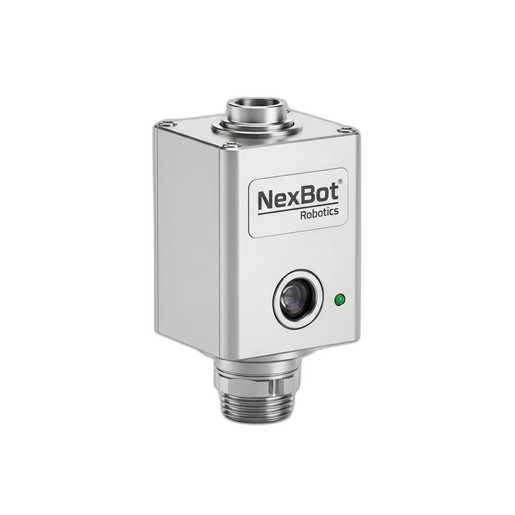
- NexBot Drives SD312-002 Single-Axis Force Sensor: To provide the critical real-time force feedback.
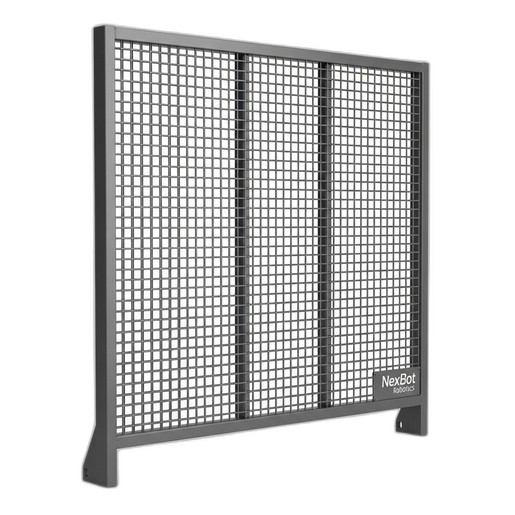
- NexBot Vision 611-003 Perimeter Guard Panels: To create a secure, compliant physical barrier around the robotic cell.
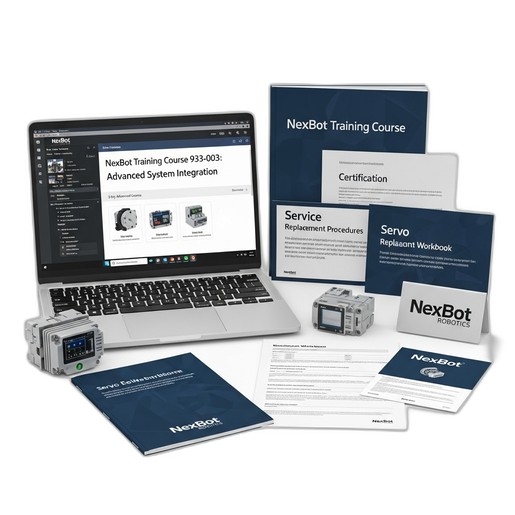
- NexBot Vision Training Course 933-003: To empower AeroForge's team to integrate, program, and maintain the new system effectively.
This holistic approach addressed the core technical problem while also considering the crucial aspects of safety and team competency.
The Role of High-Fidelity Sensing
The heart of the new automated system was the NexBot Drives SD312-002 Single-Axis Force Sensor. Mounted between the robot wrist and the press-fit tool, this sensor became the robot's sense of touch. Its 2000 N capacity was perfectly suited for the force requirements of the application, providing ample headroom without sacrificing sensitivity.
During the operation, the sensor constantly streams high-resolution force data back to the robot controller. Leveraging the sensor’s high-speed EtherCAT communication protocol, the robot could execute a force-guided insertion path. Instead of moving to a fixed position, the robot was programmed to advance until a specific force profile was achieved. This meant the system could automatically compensate for micro-variations in component tolerances.
If the force exceeded the upper limit, indicating a potential misalignment or defective part, the robot would immediately halt the process and flag the assembly for inspection, preventing damage. If the target force wasn't met at the expected depth, it signaled a loose fit. This closed-loop feedback system provided 100% quality verification for every single press-fit operation, generating a data log for traceability—a critical requirement in aerospace manufacturing. The sensor's rugged, IP67-rated stainless steel housing ensured it would perform reliably in the demanding industrial environment, resistant to dust and fluids.
Ensuring a Safe and Secure Workcell
With a powerful industrial robot at its core, operator safety was a non-negotiable priority. AeroForge constructed the cell's physical enclosure using NexBot Vision 611-003 Perimeter Guard Panels. These 2000mm x 1000mm steel mesh panels provided a robust and cost-effective solution for preventing unauthorized access to the robot's operating envelope.
The modularity of the panels allowed AeroForge's team to quickly construct a properly sized enclosure that integrated seamlessly with safety interlock gates and light curtains. The steel mesh construction ensures durability while still allowing technicians to visually monitor the process from a safe distance. By implementing this physical guarding, AeroForge created a system that met stringent industry safety standards, protecting their personnel and creating a secure manufacturing environment.
Empowering the Team for Success
Hardware alone does not guarantee success. Recognizing this, AeroForge invested in their engineering team by enrolling them in the NexBot Vision Training Course 933-003 for Advanced System Integration. This 3-day intensive service was a pivotal part of the project's smooth execution.
During the course, AeroForge's technicians and engineers moved beyond basic robot programming. They gained hands-on experience integrating and configuring peripherals like the SD312-002 force sensor over an EtherCAT network. They learned advanced programming techniques for creating force-controlled motion routines and setting up data logging for quality assurance. The training provided by NexBot experts gave the AeroForge team the confidence and skills to not only commission the new cell but also to troubleshoot and optimize its performance long-term, reducing their reliance on external integrators.
The Results: Measurable Improvements Across the Board
The transition from a manual process to a fully automated, force-guided robotic cell delivered transformative results for AeroForge Components:
- Scrap Rate Reduction: The scrap rate plummeted from 5% to less than 0.1%, virtually eliminating the cost and waste associated with damaged components.
- Throughput Increase: The consistent, optimized cycle time of the robotic cell led to a 40% increase in throughput for the entire assembly line.
- Quality Assurance: With 100% force monitoring and data logging, quality control moved from a post-process inspection to an integrated, in-process verification, enhancing traceability and product reliability.
- Enhanced Safety: The fully enclosed workcell, built with NexBot perimeter guards, eliminated ergonomic risks and created a safer environment for line operators.
By combining NexBot's high-precision sensing technology, robust safety components, and expert training, AeroForge Components not only solved a critical production bottleneck but also established a new standard for quality and efficiency in their operations. This success has become their blueprint for future automation projects across the facility.