The Challenge: Aging Automation and Production Bottlenecks
AeroForge Dynamics, a key supplier of high-strength chassis components for the automotive industry, built its reputation on precision and reliability. However, their primary robotic welding line, a workhorse for nearly a decade, was beginning to show its age. The fleet of NexBot R-Series robots, once the pinnacle of efficiency, was becoming a source of significant production bottlenecks.
The core issues were twofold. First, years of high-cycle operation had led to mechanical wear in the major robot joints. This resulted in subtle positional inaccuracies, causing weld deviations that increased the part rejection rate. Second, intermittent electrical faults were plaguing the line. Technicians were spending hours chasing down 'ghost' errors, which were often traced back to aging I/O hardware struggling to maintain stable communication with the welding power sources. Unplanned downtime was escalating, threatening production targets and straining the maintenance team.
Facing the daunting capital expense of a full line replacement, the plant management at AeroForge sought a more sustainable, cost-effective solution to extend the life of their valuable assets.
A Strategic Partnership for Modernization
Instead of a complete rip-and-replace strategy, AeroForge partnered with NexBot Robotics to develop a comprehensive life-extension program. The plan focused on three key pillars: empowering their in-house maintenance team, restoring the robots' mechanical integrity, and upgrading critical electrical components for enhanced reliability. This targeted approach promised to restore performance and improve reliability without the cost and disruption of a full system overhaul.
Pillar 1: Empowering the Team with Advanced Training
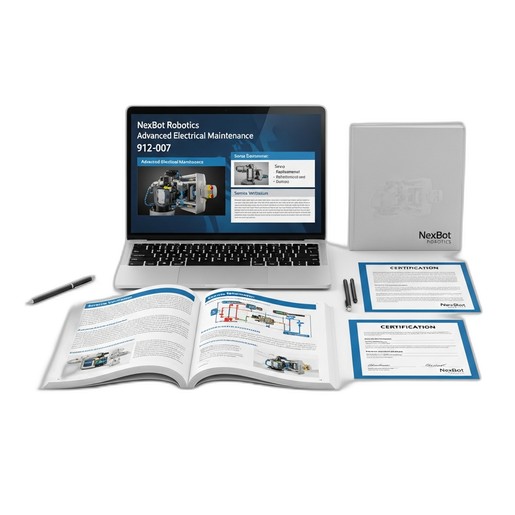
The foundation of the project was upskilling AeroForge's own maintenance staff. A core group of technicians was enrolled in the NexBot Robotics Training Course 912-007 Advanced Electrical Maintenance. This intensive 3-day, hands-on course went beyond basic troubleshooting, diving deep into the electrical architecture of NexBot systems. The team learned advanced diagnostic techniques, how to interpret complex schematics, and best practices for replacing and commissioning control components.
This training was transformative. It equipped the AeroForge team with the confidence and expertise to not only diagnose the intermittent electrical issues but also to execute the planned hardware upgrades themselves. This investment in personnel development was critical, fostering a sense of ownership and reducing future reliance on external service contractors.
Pillar 2: Restoring Mechanical Precision with Joint Overhaul Kits
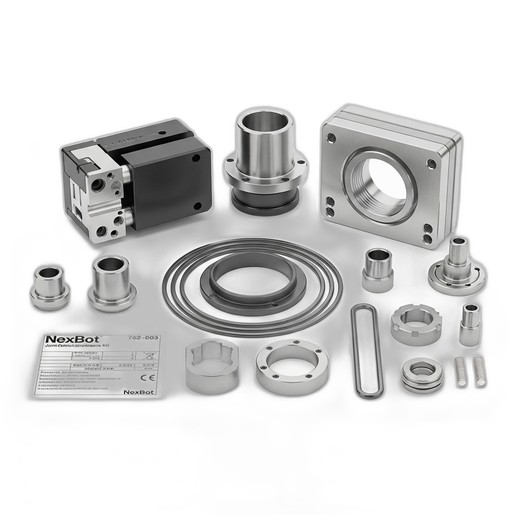
With the team trained and ready, the next step was to address the root cause of the robots' positional drift: mechanical wear. Using the NexBot Vision 762-003 Joint Overhaul Hardware Kit, the technicians performed a scheduled, systematic overhaul of the major axes on each robot during a planned shutdown.
This wasn't just a matter of tightening a few bolts. The comprehensive kit provided everything needed to restore the joints to factory specifications. The high-tensile Grade 12.9 socket head cap screws replaced fatigued fasteners, while precision-machined alignment dowels ensured perfect kinematic realignment. The included stainless steel shim sets allowed technicians to meticulously eliminate backlash that had developed over millions of cycles. By restoring the rigidity and precision of each joint, the robots could once again perform their welding paths with the accuracy required for zero-defect manufacturing.
Pillar 3: Enhancing System Reliability with I/O Upgrades
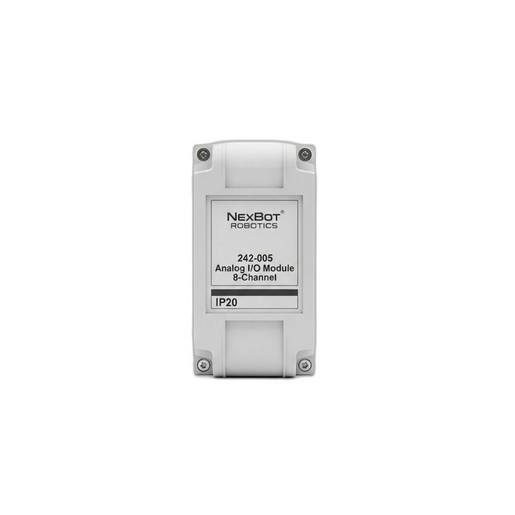
To solve the persistent electrical faults, the team targeted the data communication layer between the robot controllers and the welding equipment. The original analog I/O modules had become a common point of failure. They were replaced with the NexBot Robotics 242-005 Analog I/O Module 8-Channel.
This upgrade provided an immediate boost in signal integrity and reliability. The new 24VDC modules offered more robust circuitry and cleaner signal processing, eliminating the noise and intermittent dropouts that had caused so many production halts. This ensured the robot controller received consistent, accurate feedback on welding parameters like voltage and wire feed speed, which was crucial for maintaining weld quality. The service-ready design of the modules made the swap-out process efficient, minimizing the time each robot was offline.
Measurable Results: A Resounding Success
The impact of the three-pronged modernization program was immediate and dramatic. Within the first quarter of completing the project, AeroForge Dynamics reported:
- An 85% reduction in unplanned downtime related to the robotic welding line.
- An 18% increase in overall throughput due to improved robot speed, accuracy, and reliability.
- A 40% decrease in part rejection rates, directly attributed to the restoration of welding precision.
- Significant operational cost savings by avoiding a multi-million dollar capital investment in new robots and reducing the need for emergency service calls.
Conclusion: Extending Asset Life and Boosting Performance
The AeroForge Dynamics case study is a powerful testament to the value of strategic maintenance and targeted upgrades. By investing in their team's skills with NexBot training and using genuine NexBot maintenance kits and components, they were able to revitalize their existing automation assets. They not only solved their immediate production issues but also established a more robust, in-house maintenance protocol for the future. This project proves that with the right partnership and products, manufacturers can unlock significant performance gains and extend equipment life, achieving a powerful return on their investment.