Industrial robots are marvels of modern engineering, performing tasks with a speed and precision that far exceed human capabilities. But what are the fundamental technologies that enable this performance? It’s not a single breakthrough, but a symphony of interconnected systems working in perfect harmony. In this technology deep dive, we'll dissect the anatomy of a typical robotic arm, focusing on three critical areas: the mechanical precision of its joints, the reliability of its communication network, and the physical protection of its vital components.
The Core of Precision: Motion Control & Gearbox Technology
At the heart of every fluid robotic movement is an advanced motion control system. This system translates digital commands into precise physical motion. However, the software is only as good as the hardware it controls. The single most critical component for translating motor rotation into powerful, accurate arm movement is the gearbox, or speed reducer, located at each joint.
For high-demand applications requiring uncompromising accuracy, cycloidal gearboxes are a leading choice. Unlike traditional planetary or harmonic drive systems, a cycloidal gearbox offers a unique combination of high torque capacity, exceptional rigidity, and near-zero backlash. Backlash, the small amount of play or slop between gear teeth, is the enemy of robotic precision. In tasks like welding, dispensing, or intricate assembly, even a minuscule amount of backlash can lead to significant errors at the end of the robot's arm (the end-effector).
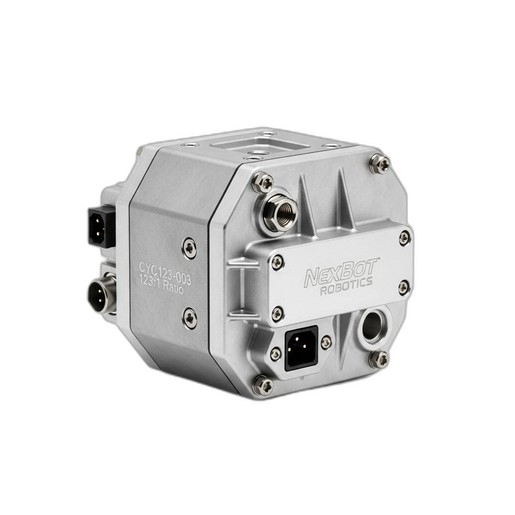
The NexBot Vision CYC123-003 Cycloidal Gearbox exemplifies these principles. Its zero-backlash design ensures that the moment the motor moves, the robot arm moves, with no delay or positional error. Furthermore, its high torsional stiffness prevents the joint from 'winding up' or flexing under heavy loads, a crucial factor for maintaining path accuracy during rapid acceleration or when handling significant payloads. The 123:1 reduction ratio allows a high-speed, low-torque motor to be converted into the low-speed, high-torque force needed to move the robot's linkages with authority and control, delivering up to 250 Nm of torque for demanding tasks.
The Lifeline: Robust Communication Protocols & Connectors
A robot's motion control system is its brain, and its gearboxes are its muscles. But the nervous system that connects them is the communication network. In a factory environment—filled with electromagnetic interference (EMI), vibrations, moisture, and dust—this network must be incredibly robust. Industrial Ethernet protocols have become the standard for this high-stakes communication, offering the speed and reliability needed for real-time control.
PROFINET is one such protocol, designed for deterministic data exchange. 'Deterministic' means that data packets are guaranteed to arrive within a specific, predictable timeframe. This is non-negotiable for robotics; a delayed command to stop or change direction could result in a damaged product or a dangerous collision. The protocol ensures synchronized motion across all of the robot's axes, which is essential for complex, multi-joint movements.
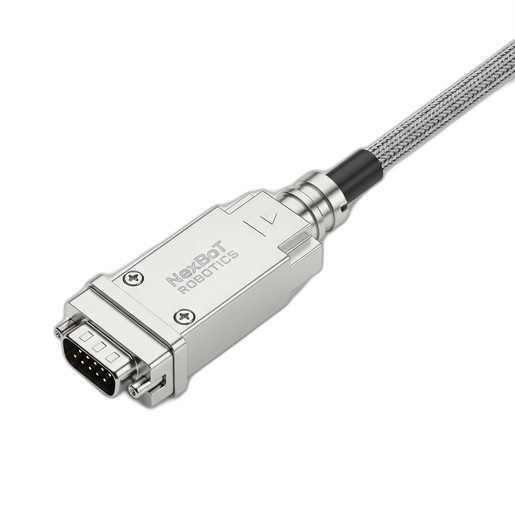
However, the protocol is only as reliable as its physical medium. The cables and connectors that carry these critical signals must be able to withstand the harsh realities of the factory floor. This is where industrial-grade connectors become paramount. The NexBot Vision 532-003 Rectangular Connector is engineered for this exact purpose. Its IP67 rating signifies that it is completely dust-tight and can withstand immersion in water up to one meter deep. This level of protection is vital for robots operating in environments with cutting fluids, wash-down procedures, or fine particulates. The secure 24-pin connection ensures that all necessary data and power lines for sensors, actuators, and safety circuits are maintained without signal degradation, even amidst constant vibration and movement.
The Guardian: Protecting Critical Components
While internal components like gearboxes and internal wiring are engineered for performance, they still require external protection to ensure a long and reliable service life. The joints of a robot are areas of constant movement and are often exposed to the most significant environmental threats, from accidental impacts to the ingress of contaminants.
This is where specialized component protection plays a crucial role. While it may seem like a simple part, a well-designed joint cover is an integral part of a robot's long-term maintenance and reliability strategy. These covers are the first line of defense against dust, debris, chemical splashes, and weld spatter that could otherwise work their way into the sensitive gearing and encoder mechanisms within the joint.
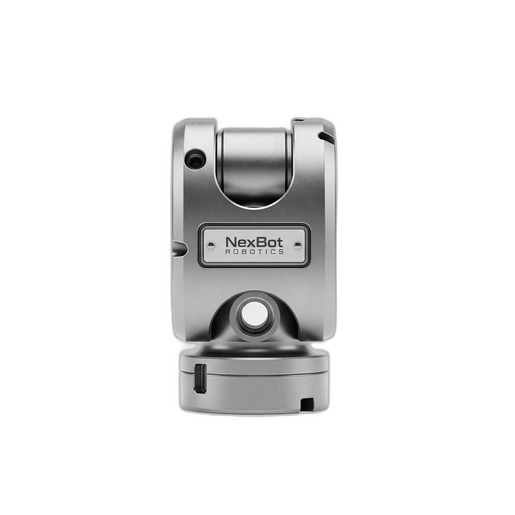
Products like the NexBot Vision 821-003 Polymer Joint Cover are designed not just for protection, but also for serviceability. Manufactured from durable polymers resistant to industrial chemicals and impacts, these covers are engineered for a precise fit on specific robot models, ensuring complete coverage without hindering the robot's range of motion. A proper fit prevents contaminants from bypassing the seal and makes installation and removal during maintenance cycles straightforward. By shielding the high-precision, high-value components within, these covers reduce preventive maintenance requirements and prevent the kind of abrasive wear that can lead to premature failure of a robot's most critical mechanical parts.
In conclusion, a modern industrial robot is a testament to systems integration. Its spectacular performance is not born from a single component, but from the seamless collaboration of high-precision mechanics like cycloidal gearboxes, deterministic communication networks built on robust connectors, and the essential protective elements that ensure their longevity. Understanding this anatomy is key to deploying, maintaining, and maximizing the value of automation in any industrial setting.