When we discuss industrial robot safety, the conversation often gravitates toward advanced sensors, light curtains, collaborative functionalities, and the all-important emergency stop (E-stop) button. These are, without question, critical elements of a modern safety ecosystem governed by standards like ISO 13849. However, a safety strategy that focuses only on these external controls misses the most fundamental layer: the mechanical and structural integrity of the robot itself.
True, durable safety isn't just about how a robot stops; it's about ensuring it doesn't fail unexpectedly in the first place. A catastrophic mechanical failure can render even the most sophisticated safety circuit useless. This is why a holistic approach to safety and compliance must begin from the inside out, focusing on the quality of core components and the rigor of maintenance schedules.
The Unseen Pillars of Robot Safety
Every industrial robot is a complex assembly of high-performance mechanical and electronic systems working in perfect concert. The safety of the entire cell depends on the continued, predictable performance of each component. While a safety-rated PLC can halt motion in milliseconds, it cannot prevent a gearbox from seizing or a critical bolt from vibrating loose. These mechanical failures represent a significant, and sometimes overlooked, operational risk.
A comprehensive risk assessment must therefore extend beyond external collision risks and operator interactions. It needs to scrutinize the potential for component-level failures and their consequences. What happens if a brake fails? What is the risk if a joint drive experiences excessive backlash or a complete lock-up? The answers to these questions highlight the necessity of building safety into the very fabric of the machine.
Risk Assessment from the Inside Out: Key Mechanical Checkpoints
A proactive safety posture involves identifying and mitigating risks before they can manifest. For industrial robotics, this means focusing on the components that bear the most stress and are most critical to predictable motion.
Fastener Security and Vibration
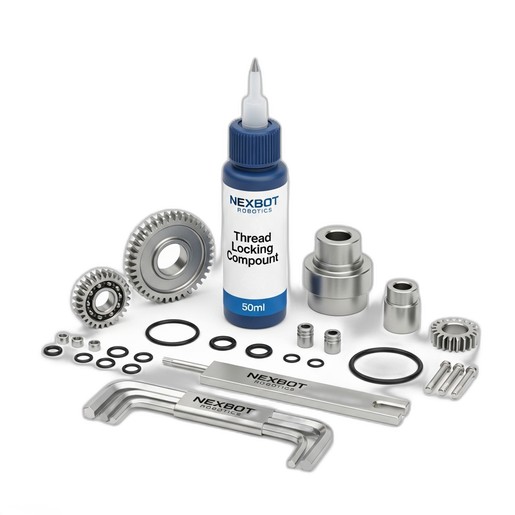
Industrial robots are high-vibration environments. The constant acceleration, deceleration, and articulation of the arm can gradually loosen critical fasteners over thousands of cycles. A loose bolt on a gearbox housing, end-effector mount, or structural joint can lead to misalignment, excessive wear, and ultimately, catastrophic failure. This is not a hypothetical risk; it's a well-understood mechanical challenge. Applying a high-quality thread locking compound, such as the NexBot Thread Locking Compound (NXB-CON-TLC-050), during assembly and maintenance is a simple but non-negotiable step. It ensures that fasteners remain torqued to specification, securing critical components against the relentless forces of vibration and maintaining the robot's structural integrity.
Drive System Reliability
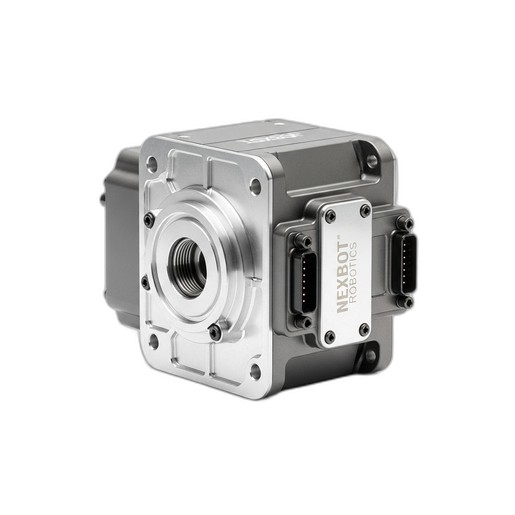
At the heart of a robot's articulation are its drive systems, particularly the gearboxes. These components translate motor power into precise, high-torque motion. A component like the NexBot Harmonic Gearbox HR-30 (NXB-GBX-HRM-030) is engineered for high precision and durability. However, like any mechanical component, it has a finite service life and is subject to wear. A gearbox failure can result in a loss of position control, causing the arm to drift, stutter, or drop its payload. Specifying robust, high-endurance gearboxes is the first step. The second, equally important step is monitoring them for signs of wear—such as increased noise, vibration, or positioning errors—and replacing them according to the manufacturer's guidelines.
Proactive Maintenance: The Ultimate Safety Protocol
This brings us to the most powerful tool in the mechanical safety arsenal: a strict, proactive maintenance program. Adhering to the manufacturer's recommended service intervals is not merely a suggestion for optimal performance; it is a core requirement for sustained safety and compliance. It is the process by which you systematically replace parts that are nearing the end of their predictable service life before they can fail.
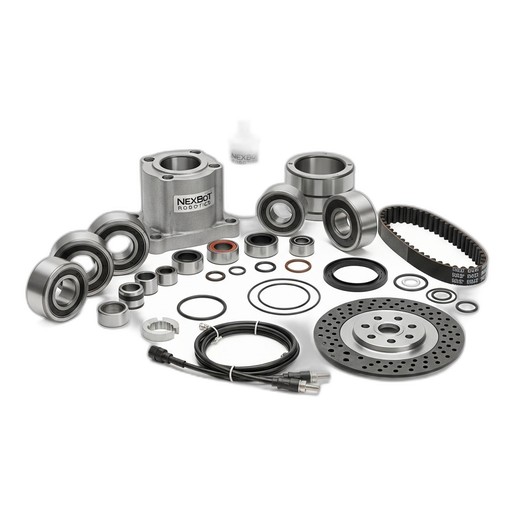
Using a comprehensive, OEM-specified kit is essential for this process. The NexBot R-20 Major Overhaul Kit (NXB-KIT-R20-5000), for example, is designed for a robot's 5,000-hour service interval. It includes not just one or two high-wear items, but a complete set of critical components: bearings, seals, grease, timing belts, brake discs, and even a new cable set. Performing a major overhaul with a complete kit like this ensures that the entire joint assembly is restored to its original operating specifications. This systematic approach eliminates the guesswork and prevents a scenario where a new bearing is installed next to a worn-out seal, creating a new potential point of failure. Following these prescribed maintenance cycles is a direct investment in the operational safety and longevity of your automation assets.
Integrating Mechanical Safety into Your Compliance Strategy
Achieving and maintaining safety compliance is an ongoing commitment. To build a truly robust safety plan, integrate these mechanical considerations into your standard procedures:
- Specify for Reliability: When acquiring new systems, look beyond payload and reach. Scrutinize the specifications of core components like gearboxes and bearings. Durability is a safety feature.
- Follow Rigorous Assembly Procedures: Ensure that all maintenance and repair work adheres to manufacturer torque specifications and uses prescribed consumables like thread lockers.
- Adhere Strictly to Maintenance Schedules: Treat scheduled downtime for maintenance not as a cost, but as a critical safety function. Use only OEM-approved overhaul kits to guarantee compatibility and quality.
- Train Your Team: Ensure maintenance technicians understand not just how to replace a part, but why that replacement is critical for the safety of the entire system and the personnel working alongside it.
By placing mechanical integrity at the center of your safety strategy, you create a more resilient, reliable, and fundamentally safer automated environment. The E-stop will always be the last line of defense, but a well-maintained, mechanically sound robot may ensure you never have to use it.