In the world of industrial automation, data is the lifeblood of efficiency, quality, and uptime. For decades, the communication between control systems and field-level devices like sensors and actuators has been dominated by simple on/off (discrete) or variable (analog) signals. While reliable, this approach is a one-way street with limited information. Today, a transformative technology is fundamentally changing this paradigm: IO-Link.
IO-Link is not another complex fieldbus. Instead, it is a standardized, point-to-point serial communication protocol (IEC 61131-9) that operates beneath the fieldbus level. It creates a digital communication channel over the same standard 3-wire cables used for traditional sensors, unlocking a wealth of data and control capabilities previously unimaginable. Think of it as upgrading a simple light switch to a smart dimmer that can not only be controlled remotely but can also report its energy usage, bulb health, and operational hours. This is the leap IO-Link brings to the factory floor.
The Core Advantages of an IO-Link Ecosystem
The adoption of IO-Link is accelerating for several key reasons that directly address the pain points of modern manufacturing. These benefits create a powerful business case for upgrading to intelligent devices.
1. Radically Simplified Installation and Wiring
Traditional robotic cells can be a maze of complex wiring. A single advanced sensor might require a multi-conductor shielded cable to carry analog signals, discrete triggers, and configuration inputs. With IO-Link, this is replaced by a standard, unshielded M8 or M12 cordset. This universal approach drastically reduces wiring complexity, minimizes potential points of failure, lowers material costs, and significantly speeds up both installation and maintenance. The 'plug-and-play' nature means a technician can replace a device quickly without needing to terminate multiple wires, ensuring minimal downtime.
2. Advanced Diagnostics and Data Transparency
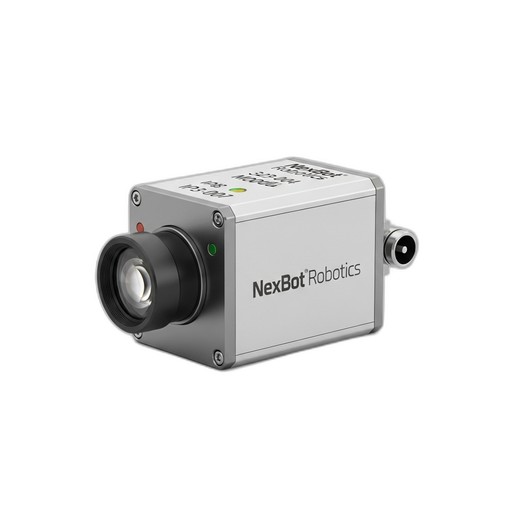
This is where IO-Link truly shines. An IO-Link-enabled device is no longer a 'black box.' It can communicate a wide range of diagnostic information back to the controller. For example, the NexBot Robotics 323-004 Vision Lighting Module is more than just a source of 1200 lumens. With IO-Link, it becomes an intelligent node in the automation network. It can report its internal temperature, total hours of operation, and even signal if its LED intensity is degrading over time. This data enables predictive maintenance; instead of waiting for a light to fail and ruin a batch of inspections, the system can flag the component for replacement during the next scheduled maintenance window. This transparency prevents costly unplanned downtime and improves overall equipment effectiveness (OEE).
3. Dynamic Remote Configuration
Manufacturing is rarely static. Production lines need to be flexible to handle different products and variants—a concept known as 'Batch Size 1'. IO-Link allows device parameters to be stored in the controller and sent to the device on-the-fly. Using our vision lighting module example again, imagine a cell inspecting two different parts: one with a matte finish and one with a reflective surface. With a traditional light, a technician might have to manually adjust the intensity. With IO-Link, the PLC can automatically send a command to the NXB-SNS-323-004 to set its brightness to 80% for the matte part and 40% for the reflective one, ensuring optimal illumination for every single inspection without manual intervention. This remote parameterization is a cornerstone of agile and flexible automation.
IO-Link in a Modern Robotic Cell
To understand the impact, let's visualize a typical automated process, such as robotic welding. The cell is a complex system where multiple components must work in perfect harmony.
At the heart of quality control is the machine vision system. Its success is critically dependent on consistent and controlled lighting. The NexBot Robotics 323-004 Vision Lighting Module provides the high-intensity, diffuse illumination needed for the camera to accurately identify the part and locate the weld seam. Through IO-Link, the system continuously verifies that the light is operating within its specified parameters. Any deviation is immediately flagged, protecting the integrity of the entire process. This isn't just a light; it's a self-monitoring critical component.
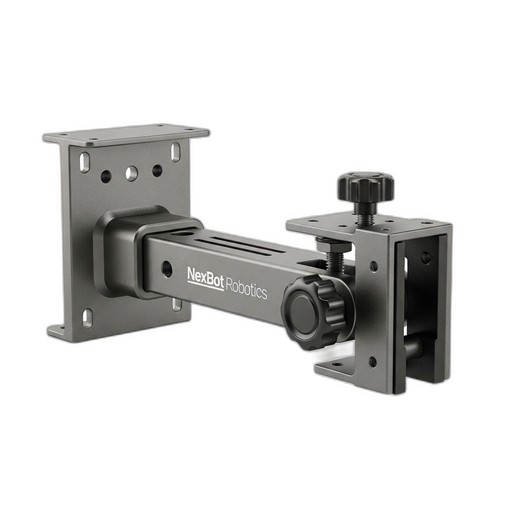
The entire cell operates within a carefully designed safety system. While components like the NexBot Robotics 612-005 Adjustable Light Curtain Mount Set are mechanical, they are integral to positioning the safety devices that protect personnel. In an advanced system, these safety light curtains can also be connected to IO-Link Safety masters, providing detailed diagnostic data about beam alignment, blockages, and device status, further enhancing the cell's intelligence and reliability.
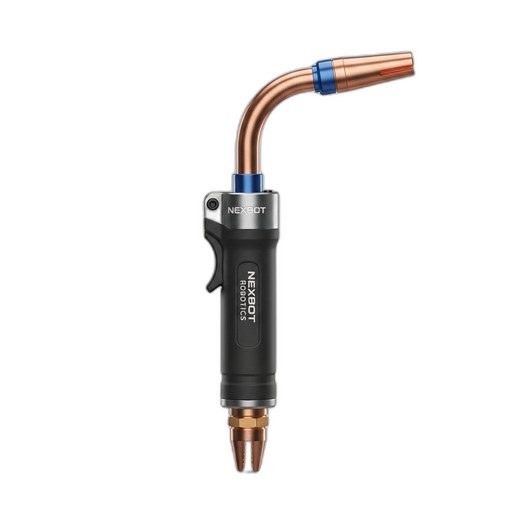
The robot's primary task is performed by its End-of-Arm Tooling (EOAT), such as the NexBot Robotics MIG431-004 Welding Torch. While a high-power device like this 400A torch may not use IO-Link directly for its primary function, the sensors that monitor its gas flow, wire feed, and temperature can be IO-Link enabled. This creates a complete data picture of the entire welding process, from the initial vision-guided alignment to the final execution of the weld, all communicated over a streamlined and intelligent network.
Paving the Way for Industry 4.0
IO-Link is more than an incremental improvement; it is a foundational technology for Industry 4.0 and the Industrial Internet of Things (IIoT). By providing a simple, cost-effective way to extract vast amounts of data from the lowest level of the automation pyramid—the sensors and actuators—it fuels the analytics, machine learning, and digital twin models that define the smart factory. It breaks down data silos, providing a clear, unambiguous digital signal from every corner of the production line.
As you design or upgrade your robotic systems, consider the power of intelligent devices. By choosing components that speak the digital language of IO-Link, you are not just simplifying wiring; you are building a more robust, flexible, and data-rich operation prepared for the future of manufacturing.