In any automated facility, industrial robots are the engines of productivity. They operate with precision and endurance far beyond human capabilities, but they are not infallible. Like any high-performance machine, they require regular, proactive maintenance to ensure longevity, safety, and peak operational efficiency. Neglecting maintenance doesn't just risk a component failure; it risks unplanned downtime, production bottlenecks, and costly emergency repairs that can cripple a manufacturing line.
This guide provides a framework for establishing a robust preventive maintenance (PM) program for your industrial robotics, focusing on the critical service intervals and key components that demand your attention. By moving from a reactive 'fix-it-when-it-breaks' model to a proactive, schedule-based approach, you can unlock the full potential of your automation investment.
The Foundation: Your Preventive Maintenance (PM) Schedule
A successful PM program is built on a schedule that is tied directly to the robot's operational use, not just the calendar. The most common metric for robotic maintenance is operating hours. A robot running a single shift five days a week will have vastly different maintenance needs than one running 24/7. Your schedule should be tiered, with simple daily checks and more intensive procedures at longer intervals.
- Daily Checks: Visual inspections for leaks, loose fasteners, damaged cables, and unusual noises. Check end-of-arm tooling (EOAT) for proper function.
- Weekly Checks: More thorough inspection of cables and hoses for wear and tear. Clean vision system lenses and sensors. Verify safety circuit functionality.
- Major Service Intervals (e.g., 1,000, 4,000, 10,000 hours): These are comprehensive services involving the replacement of wear parts, lubrication, and in-depth inspections of mechanical and electrical systems.
The Critical 1,000-Hour Service
The first major service interval is a crucial milestone in a robot's life. It sets the precedent for future reliability. At this stage, key consumables have reached the end of their initial service life and require replacement to prevent accelerated wear on more expensive core components. This is where a comprehensive maintenance kit becomes invaluable, ensuring you have all the necessary, specification-correct parts on hand.
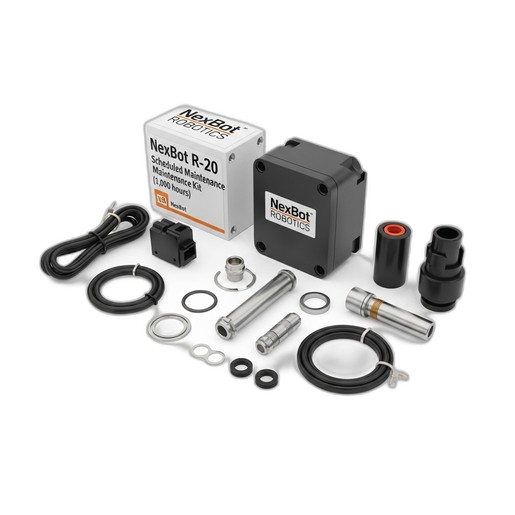
The NexBot R-20 Scheduled Maintenance Kit (1,000 hours) is designed specifically for this purpose. Let's break down its contents and why each is critical:
- Seals & O-Rings: These components are essential for keeping lubricants in and contaminants out of the robot's joints and gearboxes. Over time, they can become brittle or worn, leading to leaks that starve gearboxes of lubrication and allow dust or moisture to cause internal damage.
- Grease Cartridge: Industrial robot gearboxes operate under immense pressure. The grease is not just a lubricant; it's a critical component that manages heat and friction. Using the correct type and amount of grease is non-negotiable. An all-in-one kit prevents the common mistake of using an incorrect or contaminated lubricant.
- Encoder Battery: The encoder battery provides power to maintain the robot's positional data when the main power is off. If this battery fails, the robot loses its 'memory' of its exact position. This results in a lengthy and complex re-mastering or re-homing procedure, causing significant downtime. Proactive replacement is a simple task that prevents a major headache.
- Filter Set: The robot's control cabinet and internal motors often have cooling fans with filters. Clogged filters restrict airflow, leading to overheating of critical electronics like servo drives. This can cause intermittent faults, reduced performance, and eventual component failure.
Beyond Consumables: Inspecting Core Components
While a 1,000-hour service focuses heavily on replacing wear items, it's also the perfect opportunity to inspect the broader health of the robotic system.
Drive Systems and Electronics
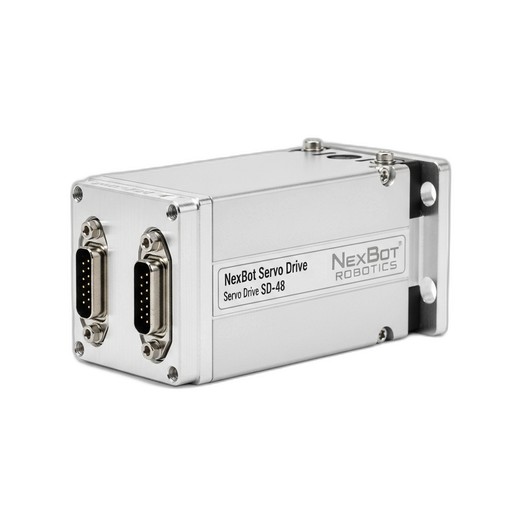
Listen to the robot as it moves through its typical cycle. Any new whining, grinding, or clicking sounds can be an early indicator of bearing or gearbox wear. In the control cabinet, inspect the servo drives for any fault codes or status light warnings. The NexBot Servo Drive SD-48, for example, is a critical component that translates control signals into precise motion. During a PM check, ensure its connections are secure, ventilation is unobstructed, and all diagnostic indicators show normal operation. Keeping these drives cool and free of dust is paramount for their longevity.
Mechanical and Structural Integrity
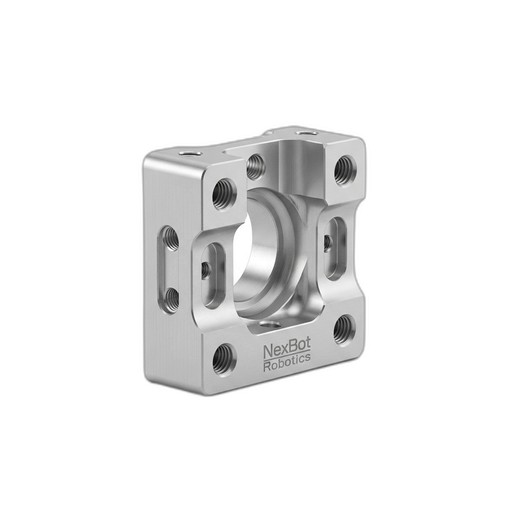
Vibration and repetitive motion can cause fasteners to loosen over time. As part of your PM, check the torque on all critical mounting bolts, including those securing the robot to its base and those holding major components together. This includes hardware like the NexBot Servo Mounting Bracket for R-20. While a solid piece of metal may not seem like a maintenance item, its fasteners must remain secure. A visual inspection can also reveal stress fractures or damage from any past collisions, ensuring the robot's structural stability and positional accuracy.
The Power of a Checklist
To ensure consistency and accountability, every PM task should be guided by a detailed checklist. This document should be specific to the robot model and application. It serves as both a guide for the technician and a record of the work performed.
A sample 1,000-hour checklist might include:
- Safety Lockout/Tagout: Verify robot is de-energized before starting work.
- Backup: Create a full backup of the robot controller's software and programs.
- Consumables Replacement:
- Replace all axis seals and O-rings.
- Replace encoder battery.
- Replace controller cabinet air filters.
- Lubrication:
- Re-grease all specified joints using the correct grease cartridge.
- Clean up any excess or old grease residue.
- Inspection:
- Check all mounting bolts (base, servo brackets) for proper torque.
- Inspect teach pendant cable for damage.
- Inspect all external cables and hoses for chafing or wear.
- Check servo drive connections and status indicators.
- Functional Test:
- Power on the system and check for any new error codes.
- Run the robot through its full range of motion at low speed.
- Execute a production cycle and verify positional accuracy.
- Sign-off: Technician signs and dates the completed checklist.
By embracing a proactive maintenance culture built around scheduled service intervals and comprehensive component kits, you transform maintenance from an unpredictable expense into a strategic investment. You ensure greater safety, higher performance, and maximum uptime, allowing your robotic assets to deliver the value they were designed for, year after year.