The landscape of industrial manufacturing is undergoing a seismic shift. Gone are the days of siloed, single-task robots bolted to the factory floor, repeating one motion for years. Today, we are firmly in the era of Industry 4.0, a revolution defined by connectivity, data, and intelligent automation. This new paradigm demands systems that are not only powerful but also flexible, communicative, and adaptable. While the robotic arm often gets the spotlight, the true enablers of this transformation are the sophisticated components working tirelessly behind the scenes. In this article, we'll explore the key trends shaping the future of automation and the foundational technologies making it possible.
The Drive for Smarter, Connected Motion
Modern robotics applications, from intricate assembly to high-speed pick-and-place operations, demand a level of precision and speed that was once unimaginable. The trend is moving away from simple, pre-programmed paths toward dynamic, responsive motion. This is powered by advancements in drive technology. High-performance servo drives are the heart of this evolution, translating digital commands into flawless physical movement.
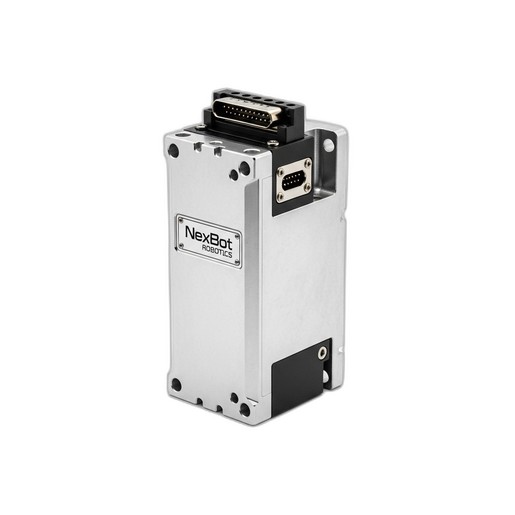
Components like the NexBot Drives SD131-006 Single-Axis Servo Drive exemplify this trend. It's no longer enough for a drive to simply move a motor. Today's drives must be intelligent network nodes. The inclusion of communication protocols like EtherCAT is critical, allowing for real-time, high-bandwidth data exchange between the robot controller, drives, sensors, and other peripherals. This seamless communication enables complex, synchronized movements across multiple axes, reduces latency, and provides a wealth of diagnostic data for predictive maintenance. The ability to deliver precise torque control, such as the 6 Nm offered by modern drives, ensures that robots can handle delicate tasks with finesse and heavy-duty operations with unwavering power, all while operating efficiently on standard 400VAC power systems.
Unlocking Factory Floor Flexibility Through Versatile Deployment
As production cycles shorten and product customization increases, manufacturers need the ability to reconfigure their production lines quickly. The traditional model of a static factory floor is giving way to a more dynamic, modular environment. This trend has placed a new emphasis on how robots are physically integrated into the workspace.
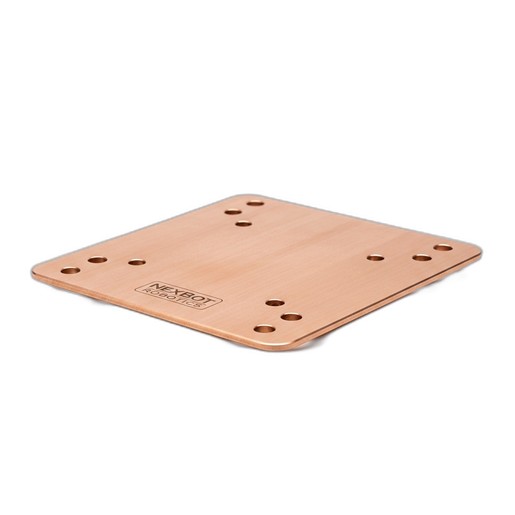
Robotic mounting systems are at the forefront of this push for flexibility. While a solid foundation is non-negotiable for safety and accuracy, that foundation no longer has to be a permanent fixture in the center of the floor. Robust solutions like the NexBot Robotics 641-007 Robot Floor Mounting Plate provide the necessary stability for heavy-payload applications while being part of a system designed for specification-driven planning and easier redeployment when lines change.
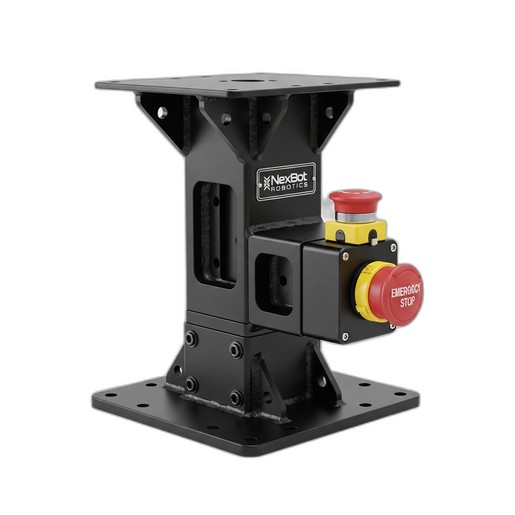
More transformatively, manufacturers are looking beyond the floor to maximize their usable space. Wall and ceiling-mounted robots are becoming increasingly common in tasks like machine tending, palletizing, and part transfer. This approach frees up valuable floor space for human operators, AGVs, and other equipment. A component like the NexBot Drives 642-006 Ceiling Or Wall Robot Mount is engineered to safely support significant payloads—often up to 150 kg or more—in inverted or sideways orientations. This trend of creative deployment is a cornerstone of the lean, efficient 'factory of the future,' allowing for denser, more productive cell designs.
The Convergence of Power and Data in Industry 4.0
Industry 4.0 is ultimately about creating a connected ecosystem where data drives decisions. Every component in an automation system is a potential data source. The most significant trend is the fusion of operational technology (OT) on the factory floor with information technology (IT) in the back office.
This convergence is visible in the components themselves. A modern servo drive doesn't just execute commands; it reports back on its status, temperature, current draw, and potential errors. A sophisticated mounting plate isn't just a piece of steel; it's a precisely engineered component with a known lifecycle, enabling service-ready installation and data-driven replacement planning. When this data is aggregated and analyzed, it unlocks powerful capabilities:
- Predictive Maintenance: Algorithms can predict when a servo drive might fail based on its operational data, allowing for maintenance before a costly shutdown occurs.
- Digital Twins: Real-time data from the factory floor can feed a virtual model of the production line, allowing engineers to simulate changes and optimize processes without physical intervention.
- Enhanced Efficiency: By analyzing performance data across hundreds of components, managers can identify bottlenecks and areas for improvement with unparalleled clarity.
Building the Future on a Solid Foundation
The future of industrial automation is intelligent, connected, and incredibly flexible. As robots become more capable, the importance of the underlying ecosystem of components—the drives that provide precise motion, the mounts that enable versatile deployment, and the networks that carry critical data—only grows. By embracing these trends and investing in a robust and interoperable foundation, manufacturers can build the resilient, efficient, and adaptive operations necessary to thrive in the next industrial age.