Introduction: The Evolution of Robot Safety
For decades, the symbol of industrial robot safety was the physical cage—a formidable barrier separating human workers from powerful, high-speed automated systems. While effective, this approach created rigid workflows and significant floor space limitations. Today, the landscape of automation is changing. The rise of collaborative robots and more flexible manufacturing paradigms demands a more sophisticated, integrated approach to safety. Modern safety isn't just about barriers; it's a holistic system built on risk assessment, intelligent monitoring, and the inherent reliability of every single component.
Achieving this level of safety and compliance is not just a regulatory hurdle; it's a strategic advantage. A well-designed safe system protects personnel, prevents costly equipment damage, minimizes downtime, and ultimately fosters a more productive and flexible operational environment. This article will guide you through the foundational pillars of modern robot safety, from initial risk assessment to the critical role of high-integrity components.
The Cornerstone: The Risk Assessment Process
Before any safety measures are implemented, a thorough risk assessment must be conducted. This is the mandatory first step outlined in major global safety standards, including ISO 12100. A risk assessment is a systematic process to identify all potential hazards associated with the robotic cell throughout its lifecycle—from installation and normal operation to maintenance and decommissioning.
The process typically involves:
- Hazard Identification: What aspects of the robot system could cause harm? This includes mechanical hazards (crushing, impact), electrical hazards, and process-related hazards (hot surfaces, sharp materials).
- Risk Estimation: For each hazard, determine the potential severity of injury and the probability of its occurrence. This helps prioritize which risks require the most robust mitigation.
- Risk Evaluation: Decide if the estimated risk is acceptable or if it needs to be reduced. This evaluation is guided by regulatory requirements and the company's own safety policies.
- Risk Reduction: If the risk is unacceptable, implement protective measures to reduce it to an acceptable level. This can be achieved through inherently safe design, safeguarding (guards, light curtains), and providing clear information for users (warning signs, training).
Only after a comprehensive risk assessment can you effectively design and implement a safety system that is both compliant and practical for your specific application.
Decoding Functional Safety: An Introduction to ISO 13849-1
When risk reduction relies on control systems, we enter the realm of functional safety. ISO 13849-1 is the preeminent standard for the safety of machinery control systems. It provides a clear methodology for designing and validating safety-related parts of a control system (SRP/CS).
A key concept in ISO 13849-1 is the Performance Level (PL), which ranges from PLa (lowest) to PLe (highest). The required Performance Level (PLr) for a specific safety function (e.g., an emergency stop, a light curtain mute) is determined directly by your risk assessment. Achieving the required PL involves considering several factors:
- Category: The system's architecture and its tolerance to faults.
- Mean Time to Dangerous Failure (MTTFd): A measure of the reliability of the components used.
- Diagnostic Coverage (DC): The system's ability to detect its own internal faults.
- Common Cause Failures (CCF): Measures taken to prevent a single event from causing multiple system failures.
The integrity of the entire safety function is only as strong as its weakest link. This is why selecting high-quality, reliable components is not just a best practice—it's a core requirement for building a compliant safety system.
The Critical Role of Components in System Integrity
Every component in a robotic cell, whether it's part of a rated safety function or not, contributes to the overall safety and predictability of the system. Unreliable components introduce variables that can lead to unexpected behavior, creating hazards and causing downtime. Let's examine how specific components underpin a safe and robust system.
Reliable Communication: The Nervous System
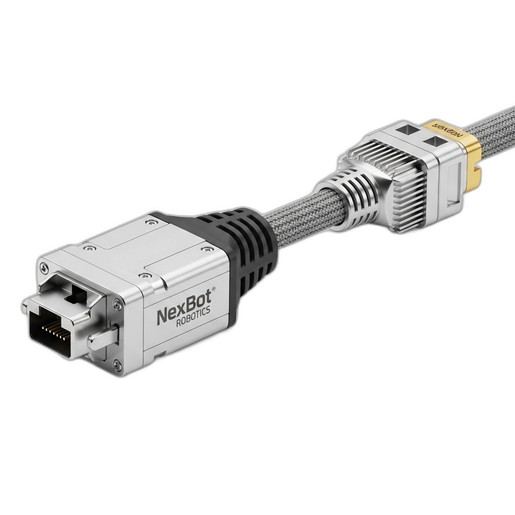
Safety controllers constantly communicate with sensors, drives, and other devices. The integrity of this communication is paramount. Industrial Ethernet protocols like PROFINET are often used for both standard and safety-rated communication (e.g., PROFIsafe). A disruption or degradation of this signal can cause a safety function to fail or trigger a false stop. Using high-quality, properly shielded cables is essential. The NexBot PROFINET Patch Cable (NXB-CBL-NET-002) is designed for the rigors of the industrial floor, ensuring stable, error-free data transmission. This reliability is the bedrock upon which safety-critical communication is built.
Positional Accuracy and Feedback
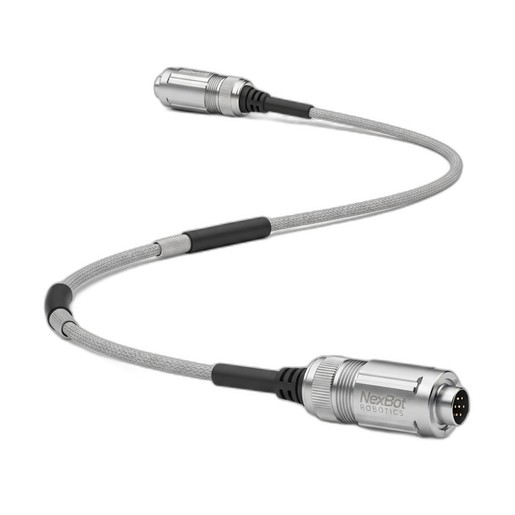
Many advanced safety functions, such as Safe Limited Speed (SLS) or Safe Stop 1 (SS1), rely on the control system knowing the robot's precise position and speed at all times. This information comes from encoders located in the robot's joints. If an encoder signal is lost or corrupted, the safety controller loses its ability to monitor the robot's state, potentially leading to a dangerous situation. The connection from the encoder to the controller is therefore a critical link. A robust, specification-driven component like the NexBot Encoder Cable for R-20 J3 (NXB-CBL-ENC-R20-J3) ensures that this vital feedback loop remains intact, providing the accurate data needed for safety functions to operate as intended.
Predictable End-of-Arm Tooling (EOAT)
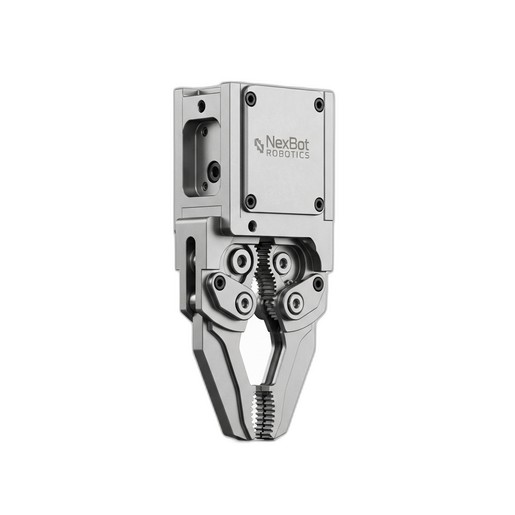
While an end-effector like a gripper may not always be a formally safety-rated component, its behavior is central to the application's risk profile. A gripper that drops a heavy part or applies incorrect force can create a significant hazard. The NexBot ELC412-001 Electric Gripper contributes to a safer system through its predictability and control. With adjustable force control up to 400N and reliable IO-Link communication, operators can ensure the gripper handles parts securely without crushing them. This level of control reduces the risk of dropped objects and allows for safer interaction in collaborative or semi-collaborative tasks, directly supporting the findings of the risk assessment.
Conclusion: Safety as a Continuous Process
Building a safe robotic system is not a one-time event. It is a continuous process of assessment, implementation, validation, and maintenance. It begins with a thorough understanding of the risks involved and requires a commitment to using components that provide the reliability and performance necessary to meet stringent safety standards like ISO 13849.
By prioritizing a structured risk assessment and selecting high-integrity components for everything from communication and feedback to end-of-arm tooling, you can build an automated system that is not only compliant but also robust, efficient, and, most importantly, safe for everyone who works with it.