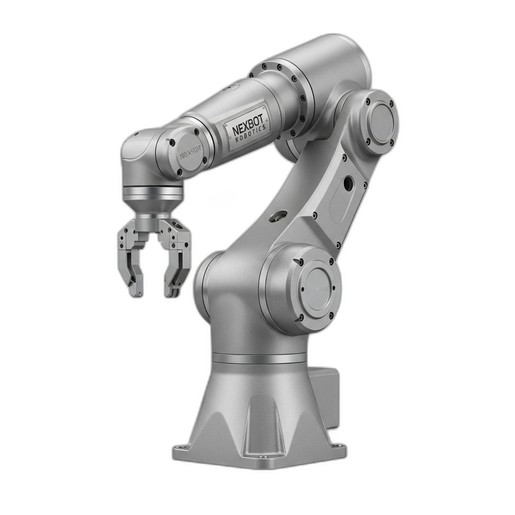
In the world of industrial automation, speed, precision, and uptime are often the primary metrics of success. However, underlying all of these is a foundational principle that cannot be compromised: safety. A robotic system that isn't safe is not only a risk to personnel but also a threat to production continuity and regulatory compliance. Integrating a powerful system like the NexBot R-20 Articulated Robot into your facility requires a holistic safety strategy that extends from initial design to lifelong maintenance.
This guide will walk through the core tenets of building a safe, compliant, and productive robotic workcell, demonstrating that safety isn't a barrier to performance—it's an enabler.
The First Step: Comprehensive Risk Assessment
Before a single component is installed, a thorough risk assessment must be conducted. This process, often guided by standards like ISO 12100, involves systematically identifying all potential hazards associated with the robot's operation. For a medium-payload robot like the NexBot R-20, which is capable of moving a 50kg payload at high speeds, these hazards are significant and can include:
- Impact and Crushing: The primary risk from the robot arm's movement.
- Entanglement: The potential for personnel or equipment to be caught in the robot's joints.
- Ejected Parts: Hazards from a failure in the end-of-arm tooling (EOAT) or the workpiece itself.
- Unexpected Motion: Caused by control system errors, component failure, or software glitches.
The goal of the assessment is to identify these risks, evaluate their severity and likelihood, and then define mitigation strategies to reduce them to an acceptable level. This crucial first step dictates the entire design of the workcell's safety system.
Designing a Safe Workcell: Layers of Protection
Once risks are identified, you can design a system of safeguards. Modern robot safety is not about a single solution but a layered approach that provides redundant protection.
Physical and Virtual Guarding
The most common form of safeguarding is physical guarding—fences, doors with safety interlocks, and protective barriers that create a clear boundary between the robot's workspace and human operators. Complementing this are presence-sensing devices like:
- Light Curtains: Create an invisible barrier of infrared light. If the beam is broken, the robot immediately enters a safe state.
- Safety Scanners: Use lasers to monitor a defined floor area, often with configurable warning and safety zones. A person entering the warning zone might slow the robot, while entering the safety zone triggers a full stop.
The Integrity of Safety-Related Components
A safety system is only as strong as its weakest link. This principle extends to every component within the robot's control system. The robot itself, like the NexBot R-20, is designed with safety-rated motion and emergency stop circuits. However, the components that connect and support it are equally critical.
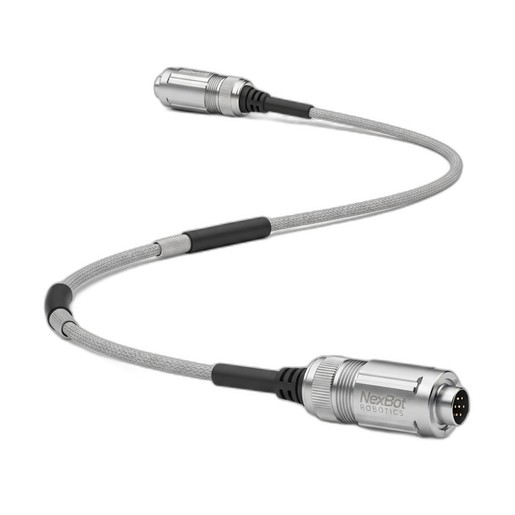
Consider a component as fundamental as an encoder cable. The NexBot Encoder Cable for R-20 J3 is more than just a wire; it's a vital data link that communicates the precise position of the robot's joints to the controller. Using a non-specified or damaged cable could lead to signal degradation, causing the controller to misinterpret the robot's position and potentially leading to erratic, unsafe movements. Ensuring every component, from the robot to its cables, is specification-driven and installed correctly is essential for maintaining the system's overall Performance Level (PL) as defined by ISO 13849.
The Overlooked Pillar: Safe Maintenance and Training
Many of the most serious robotics-related accidents occur not during normal operation but during maintenance, programming, and troubleshooting when personnel must enter the workcell. This is where standardized procedures and comprehensive training become paramount.
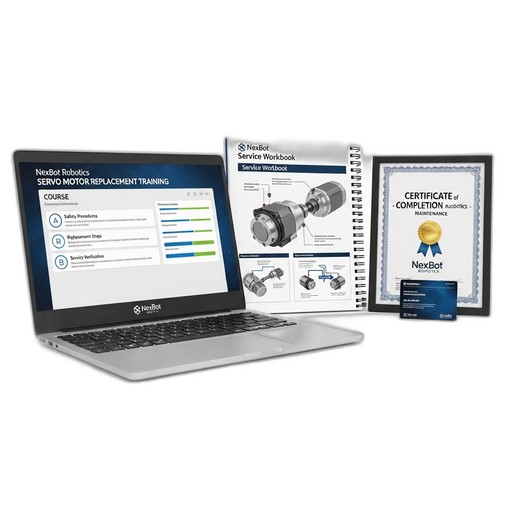
A maintenance task like replacing a servo motor involves powering down high-voltage systems, handling heavy components, and ensuring the robot is recalibrated correctly upon completion. Performing these tasks without proper training introduces enormous risk. This is precisely why specialized courses like the Servo Motor Replacement Online Training are so valuable. This training goes beyond the mechanical steps; it instills a safety-first workflow, covering:
- Lockout/Tagout (LOTO) Procedures: The non-negotiable process of de-energizing and securing equipment to prevent unexpected startups.
- Safe Handling and Tooling: Using the correct equipment to manipulate heavy motors and components.
- Diagnostic Best Practices: Safely identifying the root cause of a problem without creating new hazards.
- Verification and Testing: Ensuring the robot is returned to a known, safe, and fully operational state after the repair.
Investing in maintenance training is a direct investment in your team's safety and your facility's compliance. It transforms a potentially hazardous task into a predictable, safe, and efficient procedure.
A Lifecycle Approach to Compliance
Achieving safety and compliance is not a one-time event. It is a continuous lifecycle that begins with risk assessment, is built into the physical design, and is upheld through rigorous, well-trained maintenance practices. By integrating robust hardware like the NexBot R-20, using high-integrity components for every connection, and empowering your team with the knowledge to perform service safely, you create an automated system that is not just productive and reliable, but fundamentally secure.