The Challenge: Precision Bottlenecks in Aerospace Manufacturing
AeroComponent Dynamics, a mid-sized manufacturer of high-tolerance parts for the aerospace industry, faced a critical growth challenge. Their CNC machining centers were state-of-the-art, but the manual process of loading and unloading parts created a significant bottleneck. This reliance on manual labor led to inconsistent cycle times, limited the potential for overnight shifts, and introduced ergonomic risks for their skilled operators. With demand for their components surging, they needed a solution that could increase machine utilization, improve consistency, and ensure a safe working environment without requiring a massive facility overhaul.
The Solution: An Integrated Automation Cell
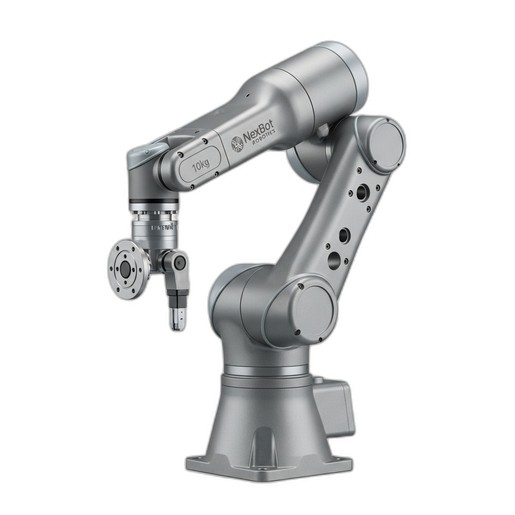
After a thorough evaluation, AeroComponent Dynamics partnered with an integrator to design a compact, flexible automation cell. The core of this new system was the NexBot Safety SA011-008 6-Axis Robot Arm. Its 10kg payload capacity was perfectly suited for the aluminum and titanium blanks they processed, and its 1300mm reach allowed a single robot to service two CNC machines simultaneously, maximizing the return on their investment.
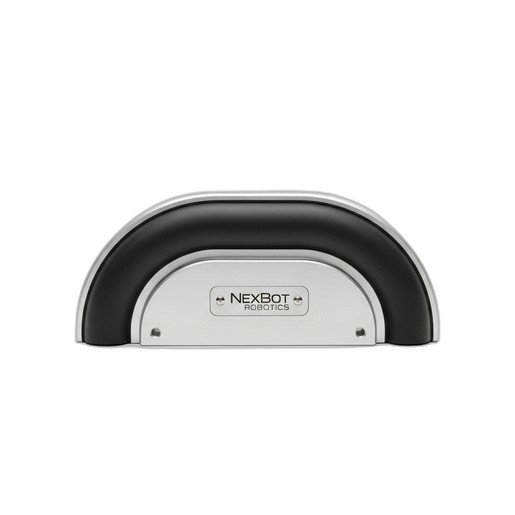
The integration team focused on creating a robust and safe system. Key to this was the implementation of multiple layers of protection. For close-quarters work and to protect both the high-value CNC machines and any personnel in the area, the robot's end-of-arm-tooling was fitted with the NexBot Drives 632-006 Collision Sensor Bumper. This pressure-sensitive bumper provides immediate feedback upon contact, halting the robot's motion far faster than vision systems alone, preventing costly crashes and enhancing operator confidence when working near the cell.
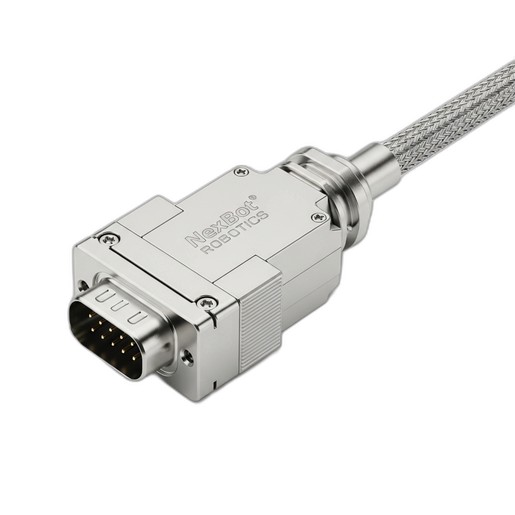
Reliability was paramount. The constant motion of the robot and the harsh industrial environment, with potential exposure to coolant mist and vibrations, demanded secure connections. The control cabinet and robot interface were wired using the NexBot Robotics 532-005 Rectangular Connector. Its rugged, 32-pin design and IP67 rating ensured a stable, environmentally sealed connection for power and data, eliminating a common point of failure in less robust systems.
Implementation and Integration
The project moved from concept to full operation in under three months. The SA011-008 robot arm's support for the EtherCAT protocol allowed for high-speed, deterministic communication with the central PLC, ensuring precise synchronization with the CNC machine doors and chucks. The IO-Link protocol on the 632-006 Collision Sensor simplified wiring and provided valuable diagnostic data back to the control system, making troubleshooting straightforward.
Operators were trained not just to oversee the robotic cell but also to perform basic programming for new parts, empowering them to adapt the system to changing production needs. The robot's compact footprint meant it could be installed between the existing machines without disrupting the established workflow of the facility, a critical factor for the space-conscious manufacturer.
Measurable Results: A New Era of Efficiency
The impact of the NexBot robotics solution was immediate and significant. Within the first six months of operation, AeroComponent Dynamics recorded the following improvements:
- Increased Machine Uptime: By enabling consistent loading/unloading and facilitating 'lights-out' operation on second and third shifts, overall machine uptime increased by a remarkable 25%.
- Reduced Cycle Times: The robot's speed and consistency reduced the average part-to-part cycle time by 40% compared to the manual process.
- Improved Part Quality: Precise and repeatable handling of components minimized the risk of drops or improper loading, leading to a 15% reduction in scrapped parts due to handling errors.
- Enhanced Worker Safety: The automation of repetitive lifting and reaching tasks eliminated a major source of ergonomic strain for operators, who could now focus on higher-value tasks like quality control and process optimization. There have been zero reported ergonomic incidents in the cell since its commissioning.
Conclusion: Strategic Automation Drives Growth
The success at AeroComponent Dynamics demonstrates how strategic automation can solve critical production challenges. By selecting a versatile robot arm like the NexBot SA011-008 and supporting it with best-in-class safety components and reliable connectors, they not only solved their immediate bottleneck but also built a scalable platform for future growth. Their investment has paid dividends in throughput, quality, and safety, positioning them as a more competitive player in the demanding aerospace market.