The Challenge: Manual Inconsistencies in a Critical Aerospace Process
AeroComponent Solutions, a specialized manufacturer of composite parts for the aerospace industry, faced a persistent challenge in their assembly line: the manual application of structural adhesives. This critical process involved bonding high-strength composite materials, where bond integrity is paramount for safety and performance. The manual process was not only labor-intensive but also prone to inconsistencies. Operators, despite their high skill level, struggled to maintain perfect bead size, placement, and volume across thousands of parts.
Furthermore, verifying the adhesive's cure was a significant bottleneck. The exothermic reaction of the two-part epoxy is a key indicator of a successful bond, but visual inspection alone was insufficient to confirm a uniform cure. This led to a high scrap rate, costly rework, and potential for in-field failures, creating a clear need for a more precise, repeatable, and verifiable solution.
The Solution: A Collaborative System for Precision and Verification
To address these challenges, AeroComponent Solutions partnered with NexBot Robotics to deploy an integrated automation cell. The solution was centered around three key NexBot products designed to work in concert:
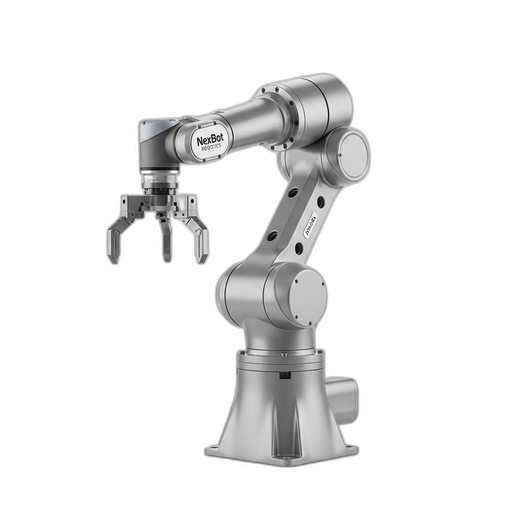
- NexBot Robotics FLR022-007 Collaborative Robot Arm (NXB-ROB-FLR022-007): This versatile cobot, with its 10 kg payload and 1300 mm reach, was chosen for its high precision and collaborative safety features. It was tasked with dispensing the adhesive, ensuring a perfectly consistent application every time.
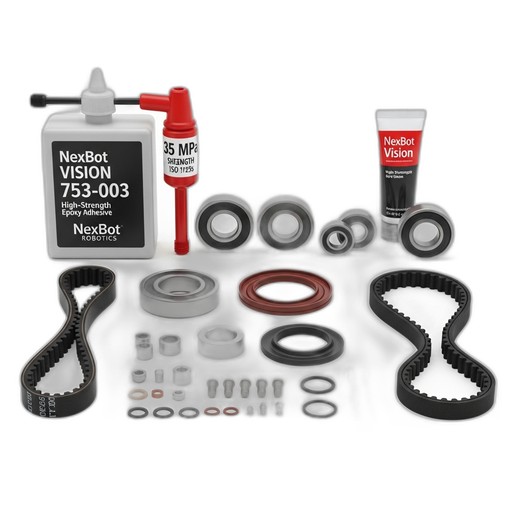
- NexBot Vision 753-003 High-Strength Epoxy Adhesive (NXB-KIT-753-003): This two-part structural adhesive was already the standard for its exceptional 35 MPa shear strength. Automating its application with the FLR022-007 would unlock its full performance potential by eliminating human error.
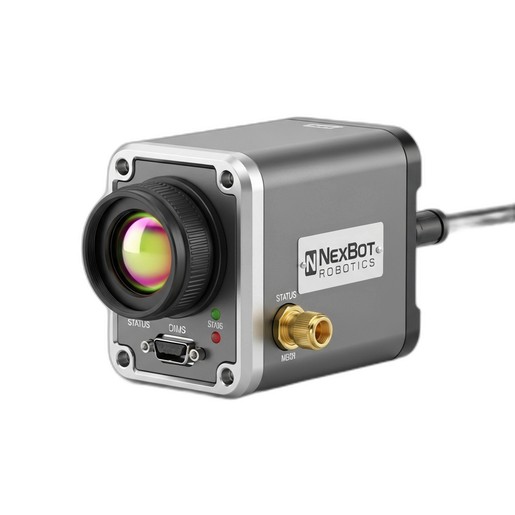
- NexBot Robotics 341-005 Thermal Camera (NXB-SNS-341-005): Mounted on a separate stand overlooking the curing station, this compact thermal camera was the key to automated quality control. Its 320x240 resolution was ideal for monitoring the heat signature generated during the epoxy's exothermic curing process.
The workflow was redesigned for automation. The FLR022-007 cobot, equipped with a precision dispensing end-effector, would meticulously apply the NexBot 753-003 epoxy to each component. After application, the part would move to a curing station where the 341-005 Thermal Camera would capture a thermal map. The system's software would then analyze this map to verify that the cure was proceeding uniformly across the entire bond line, instantly flagging any anomalies or cold spots that could indicate a faulty bond.
Implementation: Seamless Integration for Maximum Impact
The integration of the NexBot system was remarkably efficient. Both the FLR022-007 cobot and the 341-005 Thermal Camera utilize the EtherCAT protocol, which simplified communication and allowed for high-speed, synchronized data exchange between the robot controller and the vision system. AeroComponent’s engineering team was able to set up and program the cobot's dispensing path in under a day, thanks to its intuitive user interface.
The thermal imaging system was calibrated to identify the specific temperature range expected from the NXB-KIT-753-003 adhesive's exothermic reaction. Pass/fail criteria were established based on temperature uniformity and peak heat levels, transforming a subjective inspection process into an objective, data-driven quality gate.
Because the FLR022-007 is a collaborative robot, it could be deployed alongside human workers with minimal physical guarding after a comprehensive risk assessment. This allowed operators to focus on higher-value tasks like part preparation and final assembly, while the cobot handled the repetitive and strenuous dispensing task.
Measurable Results: A New Standard in Quality and Efficiency
The impact of the NexBot Robotics solution was immediate and significant. Within six months of full implementation, AeroComponent Solutions reported the following results:
- Defect Rate Reduction: The automated dispensing and thermal verification process led to a 40% reduction in parts rejected for bonding flaws. The system could identify potential issues far earlier than manual inspection, saving materials and labor.
- Throughput Increase: By automating the dispensing and inspection cycle, the overall process time per part was reduced, resulting in a 25% increase in production throughput for the entire assembly line.
- Improved Material Usage: The cobot's precision eliminated over-application of the expensive NXB-KIT-753-003 adhesive, leading to a 15% reduction in consumable costs.
- Enhanced Traceability: Every part was now accompanied by a complete thermal data log of its cure, providing unprecedented quality assurance and traceability for their aerospace clients.
- Return on Investment (ROI): The combined savings from reduced scrap, increased throughput, and optimized material use resulted in a full return on investment in just 14 months.
Conclusion: The Future of Aerospace Manufacturing is Collaborative
The success at AeroComponent Solutions demonstrates the power of integrating collaborative robotics with advanced sensor technology. By combining the precision of the NexBot FLR022-007 cobot with the insightful data from the 341-005 Thermal Camera, they transformed a challenging manual process into a highly reliable, efficient, and data-rich automated system. This case proves that automation is not just about speed, but about achieving a new level of quality and consistency that is essential in demanding industries like aerospace.