The Challenge: Navigating Growth in a Demanding Industry
AeroForge Components, a mid-sized manufacturer of precision parts for the aerospace industry, faced a classic dilemma: growing demand was straining their existing production capacity. Their CNC machining center, a critical part of their workflow, was serviced by an aging robotic cell that had become a significant bottleneck. The cell suffered from frequent, unpredictable downtime, often traced back to worn cabling and intermittent communication faults. Furthermore, their in-house engineering team, while skilled in basic robot maintenance, lacked the advanced expertise to integrate newer, more efficient automation or troubleshoot complex system-level issues. The result was missed production targets, rising maintenance costs, and the growing risk of losing contracts to more agile competitors.
"We were constantly fighting fires," explained the Lead Manufacturing Engineer at AeroForge. "One shift, it would be a servo cable faulting out. The next, a communication error between the robot and the PLC. We knew we needed to upgrade, but we were concerned about the complexity and the potential for a long, costly integration process with outside contractors."
The Solution: A Dual Investment in People and Parts
AeroForge's leadership decided on a two-pronged strategy to modernize their facility, starting with the problematic CNC tending cell. Their goal was not just to replace old hardware but to build a foundation of in-house expertise and system reliability that could be replicated across their plant.
Empowering the Engineering Team
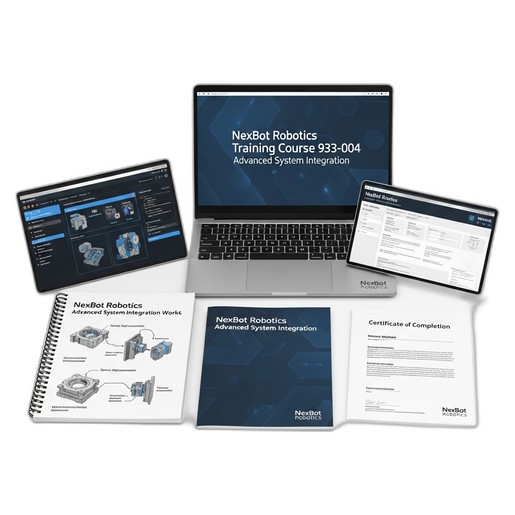
First, they addressed the skills gap. Two of their senior engineers were enrolled in the NexBot Robotics Training Course 933-004 Advanced System Integration (NXB-TRN-933-004). This intensive, five-day course provided the hands-on experience they needed to move beyond routine tasks. They delved into advanced programming logic, complex I/O configurations, and the nuances of integrating robots with other machinery using industrial communication protocols.
"The training was a game-changer," the engineer noted. "We went from being reactive to proactive. We learned how to properly architect a robust control system from the ground up, not just how to fix a single component. It gave us the confidence to manage the entire upgrade project ourselves, which saved us a significant amount on third-party integrator fees."
Building a Foundation of Reliability
Armed with their new knowledge, the AeroForge team designed the upgraded cell with a focus on eliminating the previous points of failure. They knew from experience that in a high-cycle application like machine tending, the quality of peripheral components is just as important as the robot itself. This is where they turned to NexBot's portfolio of industrial-grade components.
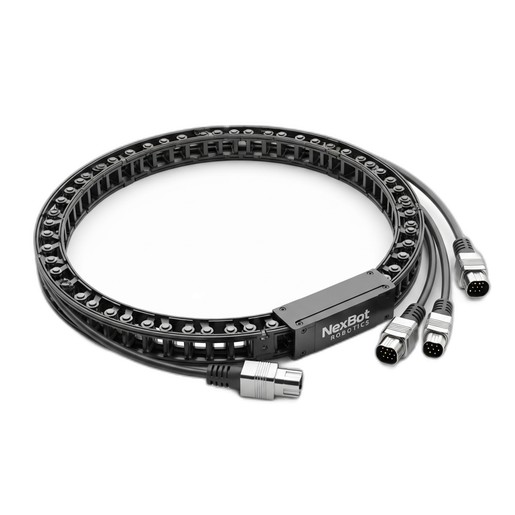
To combat the persistent cable wear issues, they specified the NexBot Vision 541-003 Cable Carrier (NXB-CBL-541-003). Unlike their previous solution, which offered inadequate support and protection, this robust drag chain was designed specifically for the dynamic movements of an industrial robot. It ensured all data and power lines were securely guided, preventing abrasion, pinching, and stress on the connectors.
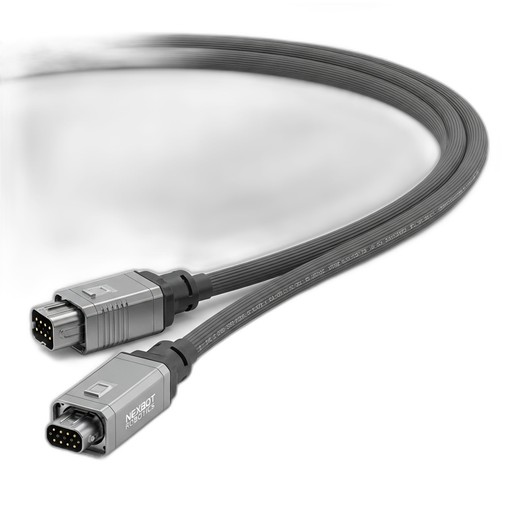
For the critical link between the servo drives and motors, they selected the NexBot Robotics PWR511-004 Motor Power Cable (NXB-SRV-PWR511-004). This high-flexibility cable was built to withstand millions of cycles without degradation. Critically, its superior shielding and construction guaranteed stable 480VAC power delivery and interference-free PROFINET communication—the backbone of their new control system. This eliminated the intermittent data dropouts that had plagued their old cell, leading to more consistent and predictable robot performance.
The Results: A New Benchmark for Productivity and Uptime
The impact of the upgraded cell was immediate and profound. Within the first quarter of operation, AeroForge recorded metrics that exceeded their most optimistic projections:
- 25% Increase in Throughput: The new cell's speed and reliability allowed them to service the CNC machine more efficiently, dramatically increasing the number of finished parts per shift.
- 80% Reduction in Unplanned Downtime: By addressing the root causes of failure with superior training and components, downtime related to the robotic cell virtually disappeared. The team now spends their time on value-added tasks, not emergency repairs.
- Improved Part Quality: The consistent, precise movements of the robot, enabled by stable power and communication, led to a measurable reduction in handling errors and scrap rate.
- Significant ROI: The combination of increased output, reduced downtime, and savings on external integration fees resulted in a full return on investment in under 12 months.
Conclusion: The Blueprint for Future Automation
The success at AeroForge Components demonstrates a crucial lesson in modern manufacturing: successful automation is an ecosystem. It requires not only advanced robotics but also a deep investment in the skills of the people who manage them and an unwavering commitment to the quality of every component in the system. By pairing the advanced knowledge from NexBot's training with the proven reliability of NexBot's cable management and power delivery solutions, AeroForge didn't just fix a bottleneck—they created a new, scalable blueprint for smart, sustainable growth.