The Challenge: A Bottleneck in Precision Assembly
Apex Automotive Components, a Tier 1 supplier of precision-machined parts, faced a significant challenge on its new transmission housing assembly line. The introduction of a more complex component design was causing frequent errors in their existing robotic pick-and-place cell. The legacy system struggled with inconsistent part presentation, leading to dropped parts, misalignments, and costly production halts. The result was a scrap rate nearing 15%, missed delivery targets, and a cycle time that was 30% longer than projected.
The engineering team at Apex identified a three-part problem: their robot's programming was too simplistic for the new task's variability, the existing gripper lacked the consistent force needed to handle the new component securely, and safety protocols limited the robot's operational speed, creating a ceiling on potential throughput improvements.
A Strategic Solution with NexBot Robotics
Seeking a comprehensive solution, Apex partnered with NexBot Robotics to address their challenges head-on. The strategy focused on upgrading key hardware and, crucially, upskilling their technical team to unlock the full potential of their automation investment.
The solution involved three core components:
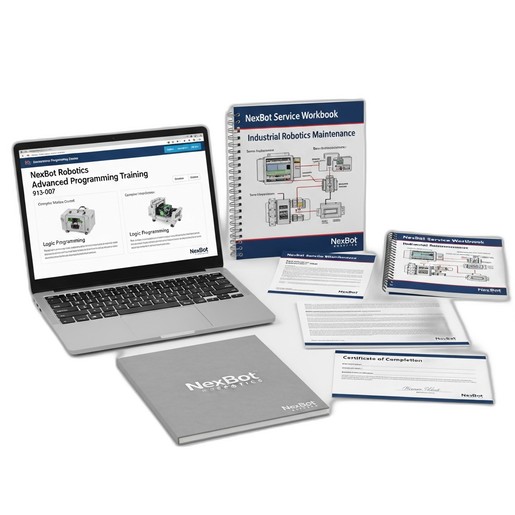
- Advanced Operator Proficiency: Two of Apex's lead robotics technicians were enrolled in the NexBot Robotics Advanced Programming Training Course (NXB-TRN-913-007). The goal was to move beyond basic point-to-point programming and master complex motion control and logic.
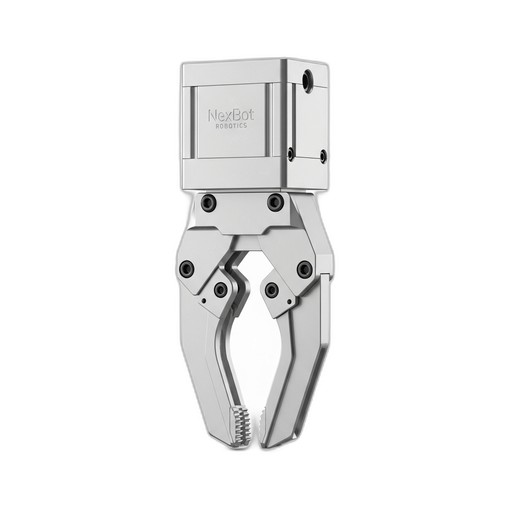
- Enhanced End-of-Arm Tooling: The robot's existing end-effector was replaced with the NexBot Drives PNU411-006 Pneumatic Gripper. This accessory was selected for its reliable gripping force and robust design, ensuring consistent handling of the new transmission components.
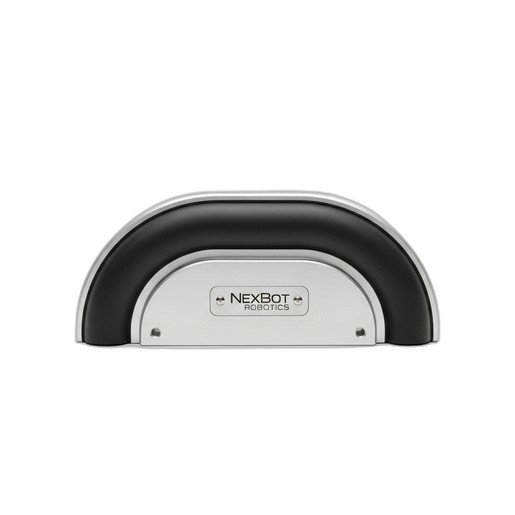
- Smarter Safety Integration: To enable faster cycle times without compromising safety, the cell was retrofitted with the NexBot Drives 632-006 Collision Sensor Bumper. This component provides immediate feedback upon contact with an unexpected object, allowing for a safe stop and protecting both the robot and the surrounding equipment.
Implementation and Skill Empowerment
Upon completing the intensive 3-day training course, the Apex technicians returned with a new level of expertise. They were now equipped to implement sophisticated logic that could account for slight variations in part positioning and orientation. They completely overhauled the robot's program, optimizing motion paths for efficiency and integrating conditional routines that dramatically reduced handling errors.
"The advanced training was a game-changer," reported the lead technician at Apex. "We learned how to write logic that could adapt to the real world, not just the perfect CAD model. It gave us the confidence to push the system to its full capability."
The installation of the new hardware was seamless. The PNU411-006 Pneumatic Gripper provided the consistent 6 Nm of torque required to securely handle the components throughout the high-acceleration motion paths. This single change virtually eliminated the problem of dropped parts.
Simultaneously, the integration of the Collision Sensor Bumper allowed the team to safely increase the robot's operating speed. The IO-Link protocol simplified the connection to their existing control system, and the bumper's reliable performance meant they could reduce the safety-related dwell times that had previously slowed the cycle.
Measurable Results and a Clear ROI
The combined impact of advanced training, superior end-of-arm tooling, and intelligent safety systems delivered transformative results for Apex Automotive Components. Within three months of implementation, the assembly line was not just meeting but exceeding its production targets.
Key performance indicators showed dramatic improvement:
- Throughput Increase: The overall line throughput increased by 25%, allowing Apex to meet increased customer demand.
- Cycle Time Reduction: The average cycle time per unit dropped from 45 seconds to 34 seconds.
- Scrap Rate Reduction: The error-prone process was stabilized, and the scrap rate plummeted from 15% to under 3%—an 80% reduction.
- Return on Investment (ROI): Based on the combined savings from reduced scrap, increased output, and minimized downtime, Apex calculated a full return on their investment in NexBot Robotics solutions in just nine months.
By taking a holistic approach—investing in their people's skills as well as in best-in-class hardware—Apex Automotive turned a critical production liability into a competitive advantage, demonstrating the power of a well-integrated automation strategy.