The Challenge: High-Mix Production Meets Inflexible Automation
Apex Manufacturing, a key supplier of precision-machined components for the automotive industry, faced a growing challenge. While their CNC machines were state-of-the-art, the surrounding automation couldn't keep pace with the increasing demand for high-mix, low-volume production runs. Their existing robotic cell, dedicated to a single machine, was a bottleneck.
The primary issues were twofold. First, the robot's work envelope was fixed, meaning it could only tend one CNC machine. Servicing adjacent machines or a quality control station required manual intervention, creating significant idle time. Second, each new production run, involving a different part geometry, required a manual end-of-arm tooling (EOAT) swap. This process was slow, often taking 15-20 minutes, and introduced the risk of human error in connecting pneumatic lines and sensors. The result was excessive downtime between jobs, reduced overall equipment effectiveness (OEE), and a struggle to meet tight customer deadlines.
The Solution: A Strategic Upgrade for Extended Reach and Versatility
To remain competitive, Apex needed a solution that was both flexible and efficient. They partnered with an integrator to redesign their CNC tending cell, building the new system around three key components from NexBot Robotics.
The goal was to create a single, dynamic robotic cell capable of servicing two CNC machines, a deburring station, and a final inspection point. This required extending the robot's reach, eliminating manual tool changes, and programming a more complex series of operations.
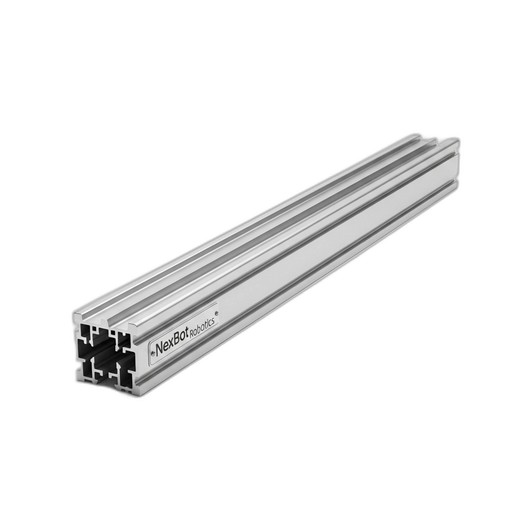
Extending the Work Envelope with the NexBot 643-004 Linear Rail
The foundation of the new cell was the NexBot Robotics 643-004 Linear Rail Track. This 4-meter track transformed the static robot into a mobile automation unit. By mounting the robot on the track, it could seamlessly traverse the entire length of the cell, accessing both CNC machine doors, the parts buffer, and the inspection station. The rail's specified repeatability of ±0.05 mm was critical, ensuring the robot could consistently and accurately position itself for loading and unloading operations at each station without requiring complex vision-based adjustments for every cycle. This single component effectively allowed one robot to perform the work that would have previously required two or three separate arms, dramatically improving asset utilization.
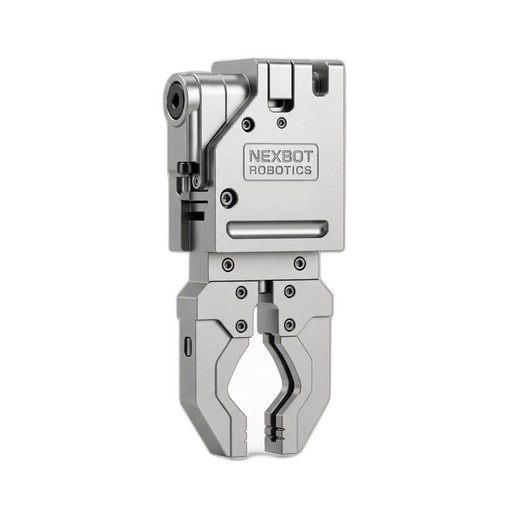
Achieving Zero-Downtime Changeovers with the 421-004 Automatic Tool Changer
To solve the tooling bottleneck, the team integrated the NexBot Robotics 421-004 Automatic Tool Changer. This device was mounted to the robot's wrist, allowing it to autonomously swap EOATs in seconds. A custom-built rack held three different grippers: one for raw material billets, one for delicate finished parts, and a third with a pneumatic deburring tool.
When a production job changed, the robot would simply return its current gripper to the rack, disengage the fail-safe pneumatic lock, move to the next required gripper, and lock it into place. The entire changeover process, which once took 20 minutes of a skilled technician's time, was now completed in under 10 seconds, completely unmanned. With a payload capacity of 25 kg, the tool changer easily handled the weight of the grippers and parts, providing a robust and reliable connection for all pneumatic and electrical signals.
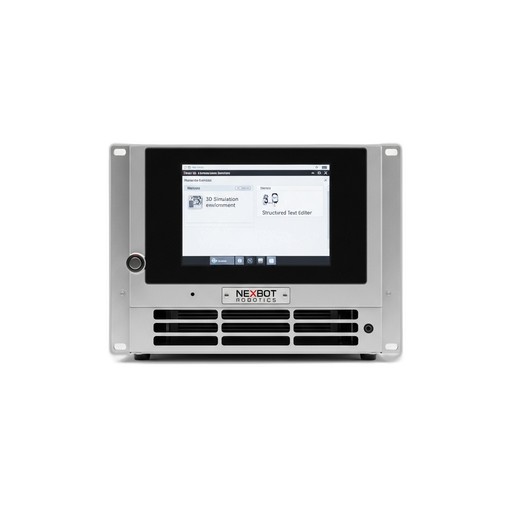
Unlocking Advanced Programming with the 231-004 Software License
This newly complex and dynamic cell required a sophisticated programming approach. Apex's engineers utilized the NexBot Robotics 231-004 Programming Software License to design and validate the entire workflow. The software's intuitive 3D simulation environment proved invaluable. Engineers were able to build a digital twin of the entire cell, including the robot, the linear track, the CNC machines, and the tool changing rack. They could program and test every movement, sequence, and potential fault condition offline, without risking a single piece of physical equipment. This virtual commissioning process drastically reduced on-site integration time and allowed them to optimize robot paths for maximum speed and efficiency before the system was even assembled.
The Results: Measurable Gains and a Rapid ROI
The impact of the integrated NexBot Robotics solution was immediate and significant. Apex Manufacturing tracked several key performance indicators before and after the implementation:
- Throughput Increased by 35%: By servicing multiple machines and eliminating changeover downtime, the cell was able to produce significantly more parts per shift.
- Machine Utilization Rose by 40%: The CNC machines, previously waiting for manual intervention, now experienced near-continuous operation.
- Changeover Time Reduced by 99%: What once took 20 minutes was now an automated, 10-second task.
- Improved Operator Safety: Technicians were no longer required to enter the robot cell for routine tool changes, reducing their exposure to potential hazards.
The financial return was just as compelling. Based on the increased output and labor savings, Apex calculated a full return on investment (ROI) for the project in just 14 months. The success of this cell has now become a blueprint for automation upgrades across their entire facility.