The Challenge: Declining Performance in a High-Stakes Production Line
Vanguard Automotive Components, a respected Tier 1 supplier, built its reputation on precision and reliability. However, a critical robotic welding cell in their sub-assembly line was beginning to show its age. The six-axis robot, a workhorse for nearly a decade, was experiencing issues that directly impacted the bottom line: inconsistent weld quality leading to increased scrap, frequent unplanned downtime, and growing concerns about its legacy safety system.
Productivity had dipped by over 10% in the past year alone. The root causes were multifaceted. Mechanical wear in the robot's major joints led to positioning errors that compromised weld integrity. The original analog control interface was suffering from signal noise, causing erratic behavior in the welding arc controller. Furthermore, the cell's aging floor mats were causing nuisance stops, interrupting production and frustrating operators. A complete cell replacement was financially unfeasible, so Vanguard needed a targeted, cost-effective solution to restore performance and ensure safety.
A Three-Pronged Approach to Modernization
Instead of a full rip-and-replace, Vanguard's engineering team partnered with NexBot Robotics to develop a strategic upgrade plan focused on three key areas: mechanical restoration, control system integrity, and safety system modernization. This approach would breathe new life into their existing asset, maximizing ROI while addressing all critical performance and safety gaps.
Pillar 1: Restoring Mechanical Precision with Joint Overhaul
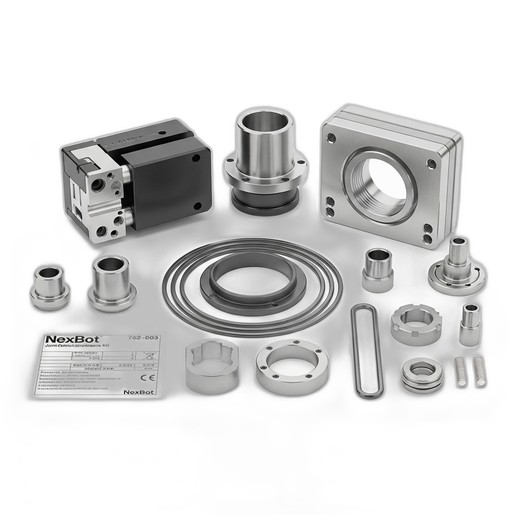
The primary source of inconsistent welds was traced back to mechanical slop in the robot's wrist and base joints. Years of high-speed, repetitive motion had led to microscopic wear, accumulating into significant positioning inaccuracies at the tool tip. To combat this, the team scheduled a planned maintenance window to perform a complete joint overhaul.
They utilized the NexBot Vision 762-003 Joint Overhaul Hardware Kit (NXB-KIT-762-003). This comprehensive kit provided everything needed to restore the joints to factory specifications. The maintenance technicians replaced critical fasteners with new Grade 12.9 high-tensile socket head cap screws, ensuring maximum clamping force. Precision-machined alignment dowels were used to re-establish the exact orientation between joint castings, eliminating any accumulated positioning error. The included shim set allowed for micro-adjustments, dialing in the joint preload to eliminate backlash without causing binding.
By systematically rebuilding the most critical axes, Vanguard restored the robot's mechanical rigidity. The immediate result was a dramatic improvement in path accuracy and repeatability, laying the foundation for consistent, high-quality welds.
Pillar 2: Enhancing Process Control with Clean Analog Signals
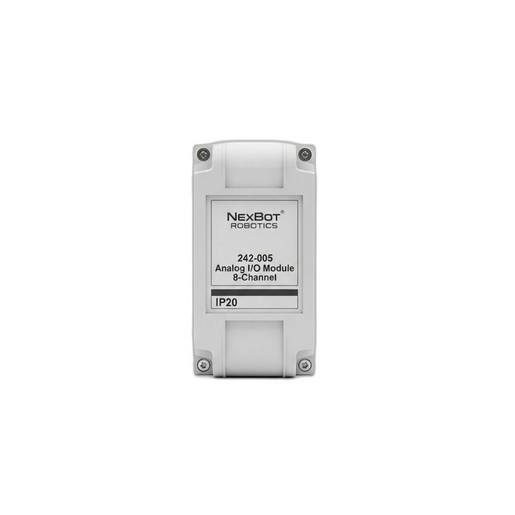
With the robot's mechanical issues resolved, the team turned to the control system. The welding process relied on real-time feedback from a current sensor to maintain a stable arc. The old I/O card was picking up electrical noise from nearby high-power equipment, resulting in a fluctuating signal that confused the process controller. This caused variations in weld penetration and an increase in product defects.
The solution was to replace the outdated component with the NexBot Robotics 242-005 Analog I/O Module (NXB-GEN-242-005). This modern, 8-channel module was designed for the harsh electrical environments of industrial settings. Its superior signal conditioning and filtering capabilities provided a clean, stable, and accurate data stream from the sensor to the robot controller. Installation was straightforward, as the 24VDC module was a direct fit for their existing control cabinet's power system.
With a reliable analog signal, the welding controller could now make precise, real-time adjustments. The result was a dramatic reduction in weld inconsistencies, virtually eliminating defects caused by process control fluctuations.
Pillar 3: Fortifying Safety and Uptime
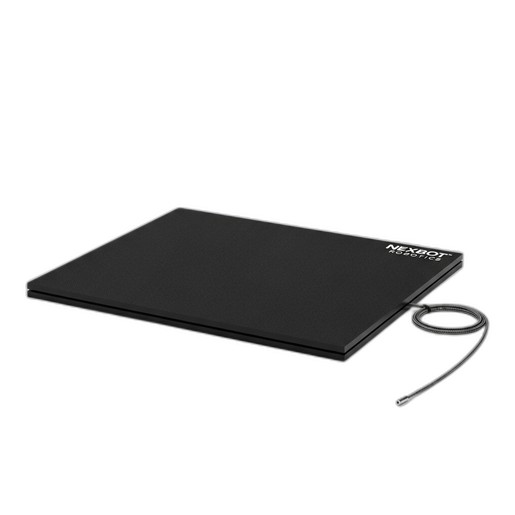
The final piece of the puzzle was the cell's safety system. The original pressure mats were worn and overly sensitive, leading to false alarms that halted production whenever a tool cart rolled by or a cable was dropped. This not only eroded productivity but also tempted operators to consider unsafe workarounds.
To create a reliable and compliant safety zone, the team installed the NexBot Drives 631-006 Pressure Safety Mat (NXB-GEN-631-006). These robust, industrial-grade mats were installed around the perimeter of the robotic cell. Engineered to distinguish between incidental contact and an operator stepping into the work envelope, the new mats eliminated the nuisance stops that had plagued the old system. This simple upgrade had a dual benefit: it created an unequivocally safe environment for personnel while simultaneously boosting uptime by preventing unnecessary production halts.
The Results: A New Lease on Life for a Critical Asset
The combined impact of these three targeted upgrades was transformative. Within three months of completing the project, Vanguard Automotive Components recorded significant, measurable improvements:
- Throughput Increased by 15%: By eliminating nuisance stops and improving cycle consistency, the cell was able to produce more parts per shift.
- Unplanned Downtime Reduced by 40%: The combination of proactive mechanical maintenance and reliable new components drastically cut down on unexpected production halts.
- Scrap and Rework Decreased by 25%: With improved robot accuracy and stable process control, weld quality became highly consistent, leading to a significant drop in non-conforming parts.
- Enhanced Safety Compliance: The new safety system brought the cell up to modern standards, ensuring operator protection and peace of mind.
Vanguard's story is a powerful testament to the value of strategic maintenance and modernization. By investing in high-quality components from NexBot Robotics to address specific points of failure, they avoided a capital-intensive replacement project, extended the life of their robotic asset, and achieved a remarkable return on investment through tangible gains in productivity, quality, and safety.