The Digital Nervous System of Automation
In any modern manufacturing facility, industrial robots operate with a speed and precision that can seem almost alive. This seamless motion is not magic; it is the result of a sophisticated digital nervous system—a network of communication protocols that transmit data and commands in fractions of a millisecond. Just as a biological nervous system has different pathways for reflexes and conscious thought, a robotic system uses different protocols for different tasks. Understanding this hierarchy is key to designing, integrating, and maintaining efficient automation cells. Two of the most prevalent and powerful protocols in this ecosystem are EtherCAT and IO-Link. While they often work in tandem, they serve fundamentally different purposes, from the core motion of a robot arm to the intelligent feedback from its gripper.
The Backbone: High-Speed Motion with EtherCAT
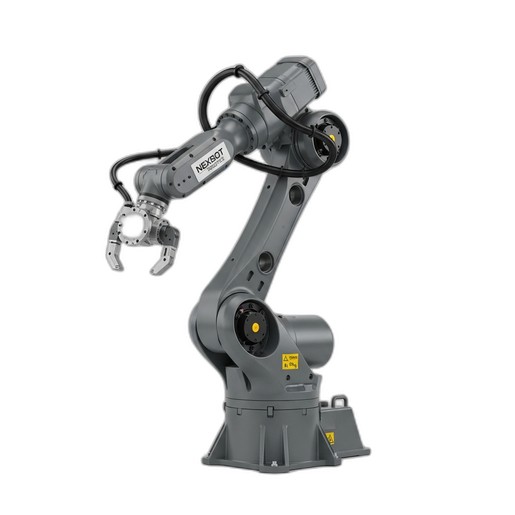
At the heart of any high-performance robot is the need for deterministic, real-time communication. All axes of motion must be perfectly synchronized to execute a programmed path accurately. This is the domain of industrial fieldbuses, and EtherCAT (Ethernet for Control Automation Technology) is a leading protocol for these demanding applications. EtherCAT is an Industrial Ethernet protocol renowned for its exceptional performance and speed. It processes data 'on the fly,' meaning data packets are read and written by network nodes as they pass through, rather than being fully received and re-transmitted at each stop. This unique architecture results in extremely low latency and minimal jitter, ensuring that commands from the robot controller reach the servo drives with predictable, microsecond-level precision. For a large, powerful robot like the NexBot Safety LA013-008 6-Axis Robot Arm, this is non-negotiable. Coordinating six axes to move a 120 kg payload across a 2700 mm reach requires a communication backbone that can handle immense amounts of data without delay. Whether the task is high-speed pick-and-place, intricate welding, or heavy-duty machine tending, the robust, high-bandwidth nature of EtherCAT provides the foundational stability and speed required for the arm's core movements.
The Fingertips: Smart Sensing with IO-Link
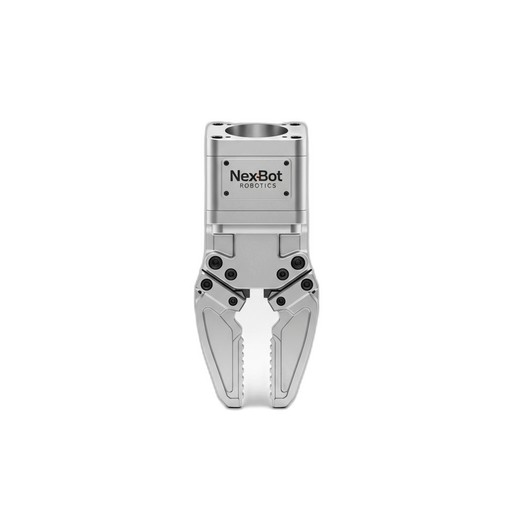
While EtherCAT manages the robot's powerful limbs, another layer of communication is needed for the 'fingertips'—the sensors and actuators at the end of the arm. This is where IO-Link comes in. IO-Link is not a fieldbus; it is a point-to-point serial communication protocol designed to connect smart sensors and actuators to a higher-level system. It operates over standard, unshielded 3-wire cables, simplifying wiring and reducing installation costs. The true power of IO-Link lies in its ability to unlock the intelligence within end-of-arm tooling (EOAT). A traditional gripper might only offer a binary open/close signal. An IO-Link-enabled device, such as the NexBot Drives VAC413-006 Vacuum Gripper, transforms this simple tool into a source of rich data. Through IO-Link, the gripper can communicate not just its state but also critical diagnostic information: Is the vacuum level sufficient for a secure grip? What is the device's internal temperature? How many cycles has it run? This data enables smarter, more adaptive automation. The robot can verify a successful pick before moving, adjust grip parameters on the fly for different parts, and provide early warnings about potential issues, like a developing leak in a vacuum line.
A Symbiotic Relationship: How They Work Together
EtherCAT and IO-Link are not competitors; they are collaborators in a hierarchical system. The IO-Link device (the gripper) connects to an IO-Link Master. This master module acts as a gateway, collecting data from multiple IO-Link devices and concentrating it. The IO-Link Master then connects as a node on the main EtherCAT network. This architecture creates a clear and efficient flow of information:
- Robot Controller: The central brain issues high-level commands.
- EtherCAT Network: Transmits time-critical motion commands to the LA013-008 robot arm's servo drives with maximum speed and synchronization.
- IO-Link Master: Communicates on the EtherCAT network, translating commands for the end-effector.
- IO-Link Device: The VAC413-006 gripper receives commands and sends back rich status and diagnostic data via the IO-Link Master.
This layered approach keeps the high-speed EtherCAT network free from the lower-priority chatter of sensor data, ensuring motion control is never compromised. Simultaneously, it provides the controller with a wealth of process data from the EOAT, enabling Industry 4.0 concepts like condition monitoring and process optimization.
The Impact on Uptime and Maintenance
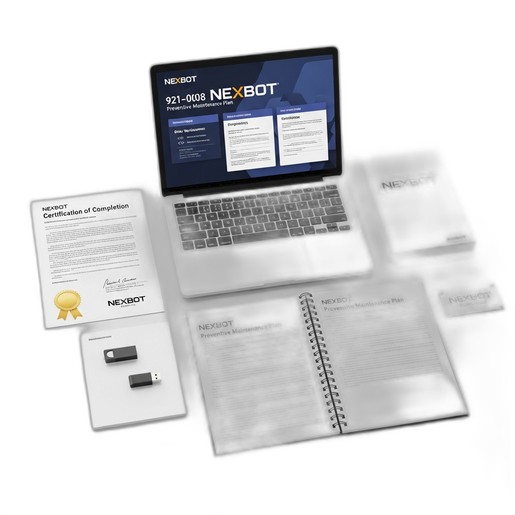
The diagnostic capabilities unlocked by this communication architecture have a profound impact on operational reliability. The data flowing from an IO-Link gripper can be a powerful tool for predictive maintenance. A gradual decline in reported vacuum pressure might indicate a worn seal or a clogged filter, allowing technicians to address the issue during scheduled downtime before it causes a dropped part and a costly line stoppage. This data-driven approach is the foundation of modern maintenance strategies. While smart components provide the raw data, translating it into actionable insights and scheduled service is crucial for maximizing an automation investment. A structured service agreement like the NexBot Safety 921-008 Preventive Maintenance Plan complements this technology perfectly. It ensures that the warnings provided by the system's digital nervous system are acted upon by trained technicians, who perform regular inspections, lubrication, and component replacements to guarantee maximum operational uptime.
In conclusion, EtherCAT and IO-Link are two sides of the same coin, each essential for the performance and intelligence of modern robotic systems. EtherCAT provides the raw speed and precision for powerful motion control, while IO-Link delivers the nuanced data and flexibility needed for intelligent end-effectors. Together, they form a robust and scalable communication framework that drives the next generation of industrial automation.