The Unseen Framework of Robot Safety
In the world of industrial automation, the power, speed, and precision of robotic arms are celebrated drivers of productivity. Yet, behind every efficient robotic cell is an equally sophisticated, often unseen, framework of safety. As robots and humans work in closer proximity, ensuring the operational integrity of safety systems is not just a best practice—it's a fundamental requirement. At the heart of this framework are two cornerstone standards for functional safety: ISO 13849-1 and IEC 62061. These standards provide a quantifiable way to assess the reliability of safety-related control systems, using metrics known as Performance Level (PL) and Safety Integrity Level (SIL), respectively. This deep dive will demystify these critical ratings and explain why components certified to these high standards are non-negotiable for modern automation.
What is Functional Safety?
Before we dissect PL and SIL, we must first define 'functional safety'. It refers to the part of a system's overall safety that depends on it operating correctly in response to its inputs. In simpler terms, it's about active safety systems that can detect a potentially dangerous condition and trigger a protective or corrective action to prevent a hazardous event or mitigate its consequences. For a robotic cell, this could be an emergency stop button, a light curtain, or a door interlock. The goal of functional safety standards is to minimize risk by specifying the required level of performance for these safety functions.
Understanding Performance Level (PL) with ISO 13849-1
ISO 13849-1 is a widely adopted standard for the safety-related parts of control systems. It uses Performance Levels (PL) to categorize the ability of a safety component or system to perform its function under foreseeable conditions. The levels range from PLa (lowest) to PLe (highest), with each level corresponding to a specific probability of dangerous failure per hour.
Achieving a particular PL is not arbitrary; it's a calculated result based on several key factors:
- Category: This refers to the system's architecture and its behavior in the event of a fault. Categories range from B (basic) to 4 (high-integrity, redundant architecture).
- Mean Time to Dangerous Failure (MTTFd): This metric estimates the average time before a dangerous failure is likely to occur in a component. It is categorized as low, medium, or high.
- Diagnostic Coverage (DC): This measures the system's ability to detect dangerous faults within itself. A system with high DC can identify and react to more potential failures.
- Common Cause Failures (CCF): This accounts for the possibility of multiple components failing simultaneously due to a single event (e.g., a power surge). Measures must be in place to mitigate these risks.
By analyzing these parameters, engineers can design a safety circuit—like the one controlling access to a robot cell—and verify that it meets the required Performance Level determined by a risk assessment.
Demystifying Safety Integrity Level (SIL) with IEC 62061
Parallel to ISO 13849-1 is IEC 62061, another prominent standard that uses Safety Integrity Levels (SIL) to classify the reliability of safety-related electrical control systems. For the machinery sector, the relevant levels are SIL1, SIL2, and SIL3, with SIL3 representing the highest level of integrity and risk reduction.
SIL is determined primarily by the Probability of Dangerous Failure per Hour (PFHd). Like PL, achieving a specific SIL requires a rigorous design and validation process that considers architectural constraints, fault tolerance, and diagnostic capabilities. A component's SIL rating is a powerful indicator of its reliability in a safety-critical application.
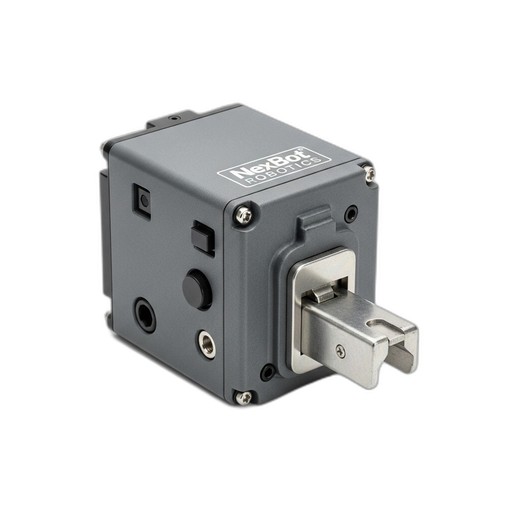
This is where components like the NexBot Robotics 621-007 Door Interlock become essential. This device is rated for PLe and SIL3, the highest levels for their respective standards. This dual certification signifies that it has been designed and tested to an extremely high degree of reliability. When integrated into a robot cell's access gate, it provides a trusted signal to the robot controller, ensuring that all hazardous motion ceases before an operator can enter the workspace. Using a pre-certified, high-integrity component like this drastically simplifies the design and validation process for the overall safety system.
PLe vs. SIL3: Which One Matters?
For engineers designing safety systems, a common question is whether to follow ISO 13849-1 (PL) or IEC 62061 (SIL). While they originate from different standards bodies and use different terminologies and calculation methods, their goals are the same. For machinery, PLe and SIL3 are considered largely equivalent in terms of the safety performance they represent. The choice often comes down to industry preference, regional regulations, or the specific type of control system being used (e.g., hydraulic and pneumatic systems are better covered by ISO 13849-1).
The advantage of components that carry both ratings, like the NXB-GEN-621-007, is flexibility. It allows system integrators to meet the requirements of either standard without sourcing different parts, streamlining both design and inventory management.
The System is the Sum of its Parts
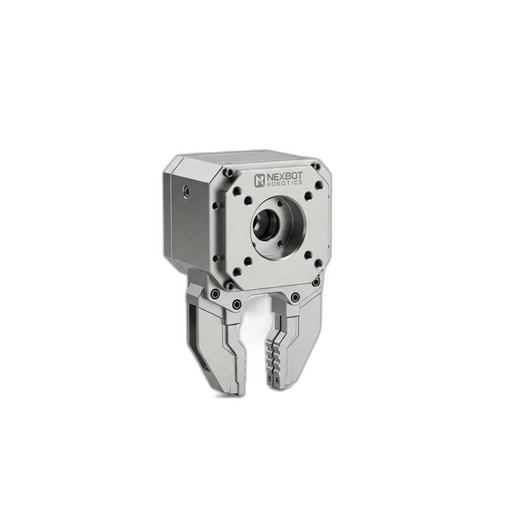
A robust safety system is a chain where every link matters. A PLe/SIL3-rated door interlock is a critical link, but it's part of a larger ecosystem of operational integrity. For instance, the safety logic must also ensure that processes like automated tool changes are sequenced correctly. An automatic tool changer like the NexBot Drives 421-006 relies on the robot being in a safe, stationary position before it can lock or unlock an end-effector. The safety interlock guarantees the 'safe position' by preventing human access during motion, while the control system ensures the robot itself follows the correct procedure.
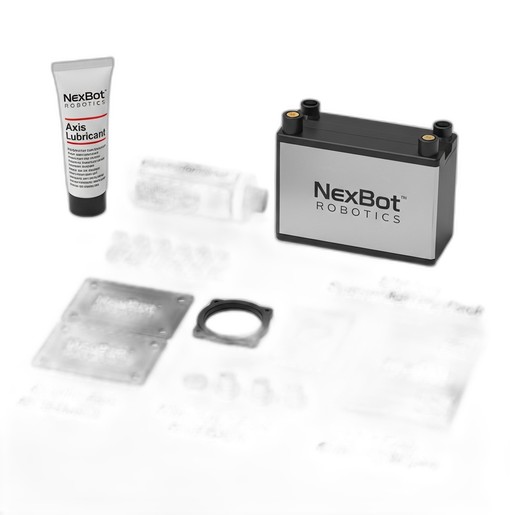
Furthermore, the foundation of all safety is predictable machine behavior. This predictability is only possible through diligent and regular maintenance. Adhering to scheduled service intervals, using manufacturer-approved parts from a kit like the NexBot Robotics 761-004 Maintenance Kit, ensures that the robot's mechanical and electrical systems perform as expected. Worn components or degraded lubricants can lead to unpredictable movements, which can challenge even the best-designed safety systems. Therefore, proactive maintenance is an integral part of a holistic functional safety strategy.
Conclusion: Building on a Foundation of Trust
Functional safety standards like ISO 13849-1 and IEC 62061 provide the essential language and metrics for building trustworthy robotic systems. Understanding the meaning behind PLe and SIL3 ratings allows engineers and facility managers to make informed decisions about component selection and system design. By choosing components certified to the highest levels of integrity and supporting them with robust operational procedures and meticulous maintenance, we create automation environments that are not only highly productive but also fundamentally safe.