The Unnegotiable Priority: Safety in Modern Robotics
As industrial automation becomes more sophisticated and integrated into our production lines, the conversation around safety has evolved. It's no longer just about physical barriers and emergency stops. Today, achieving a safe robotic workcell requires a holistic approach, encompassing risk assessment, certified hardware, and intelligent monitoring. The goal is to create an environment where humans and robots can work productively and, above all, safely. This commitment isn't just about protecting personnel; it's about ensuring operational uptime, protecting valuable equipment, and complying with rigorous international standards like ISO 13849-1.
At the heart of this standard are two critical metrics: Performance Level (PL) and Safety Integrity Level (SIL). These classifications define the ability of safety-related parts of a control system to perform a safety function under foreseeable conditions. For demanding industrial applications, achieving a high rating like PLe (the highest PL) or SIL3 is the benchmark for robust safety, signifying a very low probability of dangerous failure.
The Foundation: Conducting a Thorough Risk Assessment
Before a single safety component is specified, a comprehensive risk assessment must be performed. This systematic process is the foundation upon which your entire safety strategy is built. It involves three key stages:
- Hazard Identification: Systematically identify all potential hazards associated with the robot's operation. This includes mechanical hazards (crushing, impact), electrical hazards, and process-related risks (e.g., from welding or high-pressure fluid spray).
- Risk Estimation: For each identified hazard, estimate the associated risk by considering the severity of potential harm and the probability of its occurrence. Factors include the frequency of exposure to the hazard, the possibility of avoiding it, and the technical and human factors involved.
- Risk Evaluation: Based on the estimation, determine if the risk is acceptable or if risk reduction measures are required. The goal is to reduce all identified risks to a tolerable level, which will in turn determine the required Performance Level (PLr) for your safety functions.
This assessment is not a one-time event. It must be revisited whenever a change is made to the robotic cell, whether it's a new tool, a modified layout, or an updated process.
Building a Compliant Safety System: The Key Components
The results of your risk assessment will guide the design of your safety-related control system. A modern safety architecture is a network of interconnected components working in concert to monitor the environment, control the robot's state, and react instantly to unsafe conditions.
The Central Nervous System: The Safety Controller
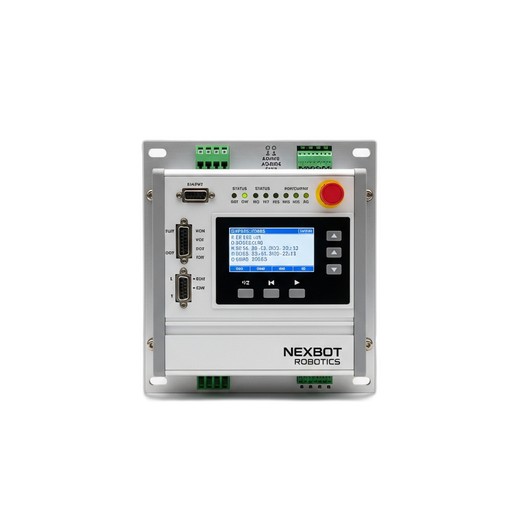
The cornerstone of any modern robot safety system is the safety controller. This specialized programmable logic controller (PLC) is designed specifically to execute safety functions. It receives inputs from various safety devices (like light curtains, laser scanners, and emergency stop buttons) and controls outputs (like robot motor power and brakes) based on its safety logic.
To meet stringent requirements, it's essential to use a controller certified to the appropriate level. For example, the NexBot Robotics 212-004 Safety Controller (NXB-CTL-212-004) is certified to SIL3 and PLe, making it suitable for the most demanding applications. It acts as the brain of the safety operation, reliably processing signals and ensuring the robot enters a safe state when required. Its integration of protocols like EtherCAT FSoE (Fail Safe over EtherCAT) allows for secure, high-speed communication between the safety controller and other devices like drives and I/O modules, creating a cohesive and responsive safety network.
Protecting the Protectors: Hardware Integrity
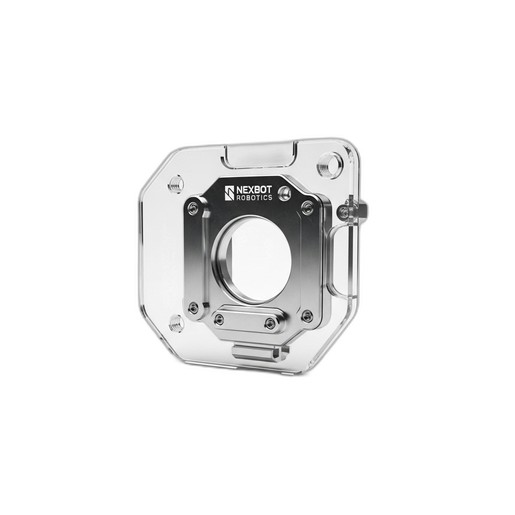
While intelligent controllers and sensors are crucial, the physical integrity of the robot itself is an often-overlooked aspect of safety. A robot that fails due to environmental factors can behave unpredictably, creating a significant hazard that even the best safety system might not be able to mitigate in time. In environments with coolants, washdown procedures, or other fluids, protecting critical components is paramount.
A component like the NexBot Vision 823-003 Splash Guard (NXB-GEN-823-003) plays a vital role in this layered safety approach. Made from durable polycarbonate, it shields sensitive joints and electronics from fluid ingress. By preventing short circuits or corrosion-induced failures, such protective measures ensure the robot operates as designed, maintaining the predictable motion that the safety system is programmed to monitor. This is a prime example of how mechanical protection directly supports the functional safety system.
Ensuring Reliability Through Proactive Maintenance
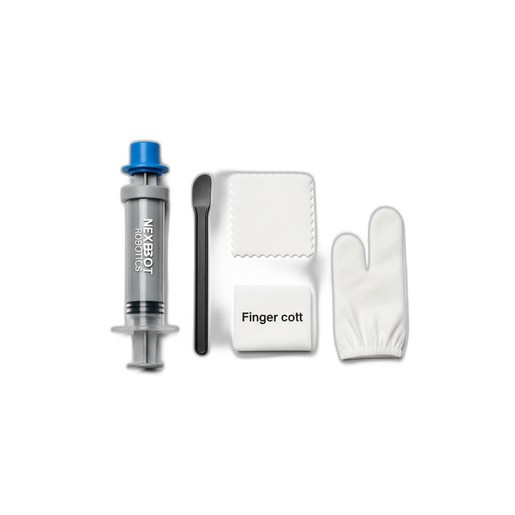
Long-term safety compliance depends on system reliability. A component failure, even in a non-safety-critical part, can lead to unexpected behavior. Overheating is a common cause of electronic component failure, which can affect motor drives, power supplies, and even the controllers themselves. Proper thermal management is therefore a key part of a preventative maintenance strategy that underpins overall system safety.
Using high-quality consumables like the NexBot Drives 752-002 Thermal Compound (NXB-GEN-752-002) ensures efficient heat dissipation from critical components. By maintaining stable operating temperatures, you reduce the risk of premature failure and erratic performance. A reliable system is a safer system, and integrating specification-driven maintenance with quality components contributes to the long-term integrity of your safety functions.
Verification, Validation, and Beyond
Designing and building the system is only part of the process. Once installed, the entire safety system must be rigorously verified and validated. Verification confirms that the system was built according to the design specifications. Validation tests whether the implemented system actually achieves the necessary risk reduction and meets the required SIL/PL rating for every safety function.
This involves functional testing of every input and output, fault injection testing to see how the system reacts to component failures, and a final review of all documentation. Only after successful validation can the robotic cell be considered compliant and safe for operation. Safety is a continuous lifecycle, requiring regular inspections, periodic testing, and reassessment to ensure it remains effective for the life of the machine.