The Unseen Threat to Robotic Uptime
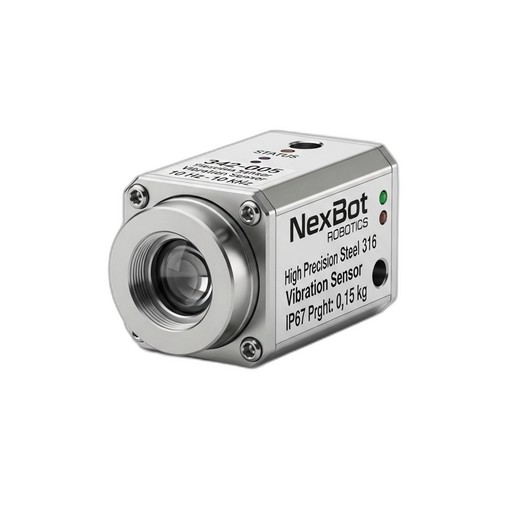
In any automated facility, the rhythmic motion of industrial robots is the heartbeat of production. But beneath this reliable performance lies a constant threat: mechanical wear and tear. A failing bearing, a worn gearbox, or an imbalanced motor can bring an entire line to a halt, leading to costly unplanned downtime. Traditional maintenance schedules, based on fixed intervals, are often inefficient—either performing service too early and wasting resources, or too late, after a catastrophic failure has already occurred. The solution is to shift from a reactive to a predictive maintenance (PdM) strategy, and the key lies in listening to what your robots are telling you through vibration. This is where the NexBot Robotics 342-005 Vibration Sensor becomes an essential tool for any modern manufacturing environment.
Understanding Vibration Analysis in Robotics
Every mechanical system produces a unique vibration signature during normal operation. As components begin to wear, degrade, or fall out of alignment, this signature changes in subtle but measurable ways. Vibration analysis is the process of capturing and interpreting these changes to diagnose developing faults long before they become critical failures. For an industrial robot, sources of vibration can include:
- Gearboxes: Tooth wear, backlash, and lubrication issues.
- Motors and Bearings: Imbalance, misalignment, and bearing race degradation.
- Structural Components: Looseness in joints or mounting hardware.
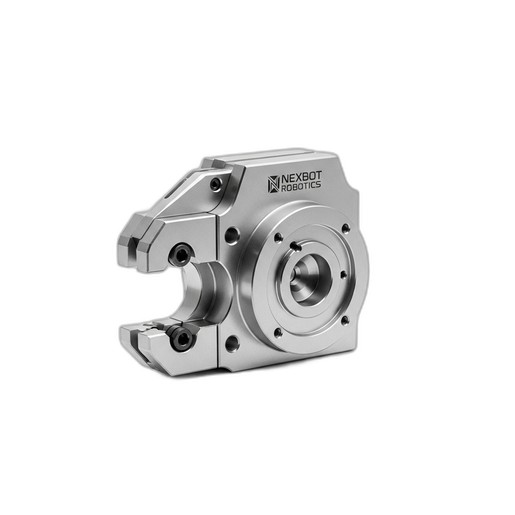
- End-of-Arm Tooling (EOAT): Wear on internal mechanisms of complex tools, like the motor in our NXB-GEN-442-005 Sanding and Polishing Tool.
By establishing a baseline vibration profile for a healthy machine, any deviation can be flagged as a potential issue, allowing maintenance teams to schedule repairs proactively.
A Deep Dive into the NexBot 342-005 Sensor
The NexBot 342-005 is engineered specifically for the demanding environment of industrial automation, providing the precision and data connectivity required for a successful PdM program.
High-Fidelity Piezoelectric Technology
At the core of the 342-005 is a piezoelectric crystal. This advanced material generates a small electrical charge proportional to the mechanical stress applied to it—in this case, vibration. This technology provides excellent sensitivity and a robust signal, ensuring that even the smallest anomalies are detected accurately.
Wide Frequency Range for Comprehensive Diagnostics
The sensor features an impressive frequency range of 10 Hz to 10 kHz. This wide spectrum is critical for comprehensive fault detection. Lower frequencies (10 Hz and up) are typically associated with larger mechanical issues like imbalance or misalignment in a robot's primary axes. Higher frequencies (up to 10 kHz) are crucial for identifying the very early stages of bearing and gear tooth defects, which often manifest as high-frequency vibrations long before they are audible or cause significant performance degradation.
Smart Communication with IO-Link
Moving beyond simple analog outputs, the 342-005 utilizes the IO-Link communication protocol. This powerful interface offers several key advantages:
- Simplified Wiring: A standard, unshielded 3-wire cable is all that's needed for power and bidirectional data communication.
- Rich Diagnostic Data: IO-Link allows the sensor to transmit not just the primary vibration data but also device status, operating hours, and error flags.
- Remote Parameterization: Sensor settings can be configured and adjusted remotely from the controller, eliminating the need for manual adjustments on the factory floor.
- Interference Immunity: As a digital protocol, IO-Link is highly resistant to the electrical noise common in industrial settings, ensuring data integrity.
The Importance of a Solid Foundation: The NXB-SNS-812-005 Bracket
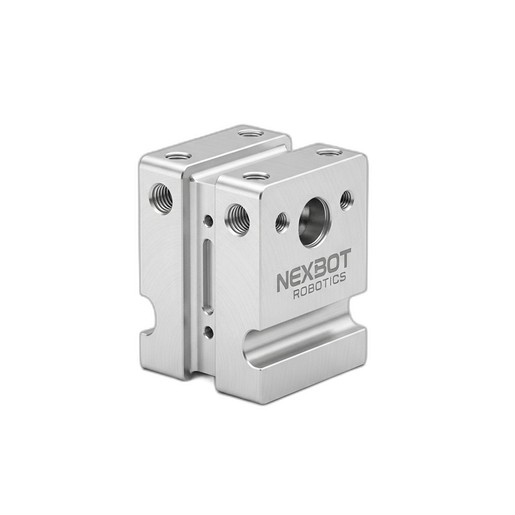
A sensor's data is only as reliable as its installation. An improperly mounted sensor can dampen critical vibration frequencies or introduce extraneous noise, leading to false readings and inaccurate diagnoses. The NexBot Robotics 812-005 Sensor Mounting Bracket is designed to eliminate these variables. Engineered for a precise fit with our sensors and common robotic mounting points, this bracket ensures a rigid, stable connection. This guarantees that the sensor is measuring the vibration of the machine, not the resonance of its own mounting, providing the clean, repeatable data essential for effective trend analysis.
Integrating Vibration Sensing into Your Maintenance Workflow
Deploying the NXB-SNS-342-005 is the first step in building a data-driven maintenance strategy. The typical workflow involves:
- Installation: Securely mount the sensor using the NXB-SNS-812-005 bracket at critical monitoring points, such as robot joint housings or motor casings.
- Connection: Wire the sensor to an IO-Link master, which then connects to your plant's PLC or an edge computing device.
- Baseline Establishment: Run the robot through its normal operating cycles to collect data and establish a 'healthy' vibration baseline.
- Continuous Monitoring: The sensor continuously streams data, which is analyzed by software to detect deviations from the established baseline.
- Alerting & Action: When a predefined threshold is exceeded, the system generates an alert, allowing maintenance teams to investigate the specific robot and plan a scheduled repair, armed with data about the likely nature of the fault.
By adopting this approach, you transform your maintenance department from a cost center focused on emergency repairs into a strategic asset that actively enhances production efficiency and reliability. The NexBot 342-005 Vibration Sensor is more than just a component; it's a gateway to a smarter, more predictable, and more profitable factory floor.