As industrial automation evolves, the interaction between humans and robots becomes more complex and collaborative. Gone are the days when simply erecting a physical cage was the beginning and end of robot safety. Today, a robust safety strategy is built directly into the machine's control system. This is the realm of functional safety—an active approach that relies on the system itself to prevent harm. For any organization deploying robotics, understanding and implementing functional safety standards like ISO 13849 is not just a best practice; it's essential for compliance, operator well-being, and operational uptime.
The Pillars of Functional Safety: Risk Assessment and Performance Levels
At its core, functional safety is about ensuring that a control system reliably executes its safety functions. The process begins not with hardware, but with a thorough risk assessment. This involves identifying all potential hazards a robotic system could pose during its lifecycle, from installation and normal operation to maintenance and decommissioning. For each identified hazard, the goal is to reduce the associated risk to an acceptable level.
This is where Performance Levels (PL), as defined by ISO 13849-1, come into play. A PL (ranging from 'a' to 'e') is a discrete level used to specify the ability of safety-related parts of a control system to perform a safety function under foreseeable conditions. The required PL is determined by the severity of potential injury, the frequency of exposure to the hazard, and the possibility of avoiding the hazard. Achieving a higher PL, like PLd or PLe, requires a system with higher reliability, fault tolerance, and diagnostic coverage.
The Role of High-Fidelity Components in Safety Systems
Functional safety isn't an abstract concept; it's realized through the tangible components that make up the robot's motion control system. The ability to execute a safety function like Safe Torque Off (STO) or Safely-Limited Speed (SLS) depends entirely on the predictability and reliability of the underlying hardware. A control system can only be as safe as its least reliable part.
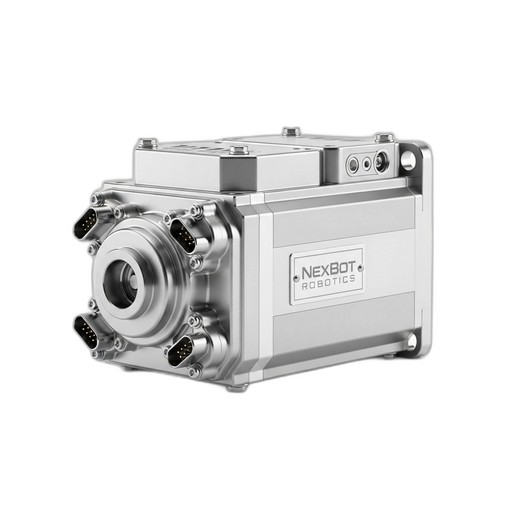
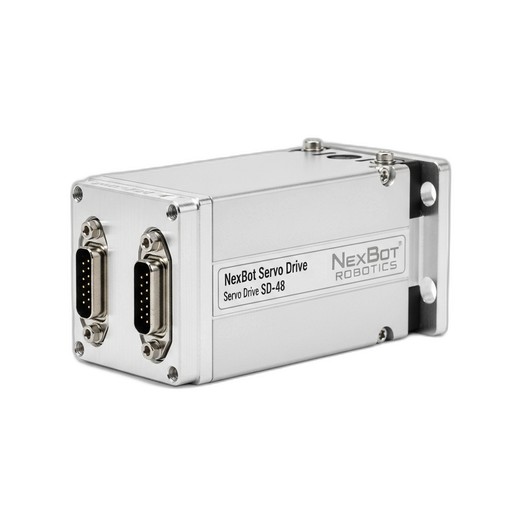
This is why the selection of servo drives and motors is critical. A high-quality drive, such as the NexBot Servo Drive SD-48 (NXB-DRV-SD-048-A), provides the precise, repeatable control necessary for a safety-rated system. When paired with a robust motor like the NexServo AC30 Servo Motor (NXB-SRV-AC-030-A), the system can execute motion commands with a high degree of fidelity. This predictability is the bedrock upon which safety functions are built. When a safety PLC or controller issues a command to halt motion, it relies on the drive and motor to respond instantly and correctly, every single time. Any deviation, latency, or mechanical failure in these core components could compromise the entire safety function.
While components like these are not safety devices in isolation, their quality and performance characteristics are essential prerequisites for building a system that can be certified to a specific Performance Level. Using industrial-grade components designed for specification-driven integration ensures that the system behaves as modeled during the risk assessment phase.
Maintenance: The Unsung Hero of Sustained Compliance
Achieving safety certification is a milestone, not the finish line. A robotic system's safety integrity is only valid as long as it is maintained in its certified state. Mechanical wear, component degradation, and environmental factors can all erode a system's safety performance over time. This makes a proactive, scheduled maintenance program a non-negotiable aspect of long-term safety compliance.
Mechanical components are particularly susceptible to wear that can impact safety. For example, worn seals on a motor could lead to grease leakage or contaminant ingress, potentially causing the motor to behave erratically or fail. An aging encoder battery could result in a loss of position data, leading to unpredictable movements upon startup. These are not just operational issues; they are latent safety hazards.
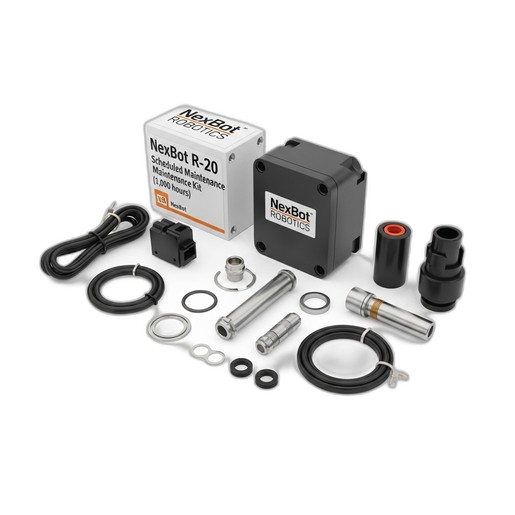
Using comprehensive maintenance kits ensures that all critical wear items are replaced according to a proven schedule, restoring the system to its original operating specifications. The NexBot R-20 Scheduled Maintenance Kit (NXB-KIT-R20-1000) is designed precisely for this purpose. By bundling essential items like seals, O-rings, a fresh grease cartridge, and a new encoder battery, it simplifies the process of performing a thorough 1,000-hour service. This systematic approach to maintenance does more than prevent downtime; it actively preserves the functional safety of the machine by ensuring its core motion components operate within their designed parameters.
Building a Culture of Safety
Ultimately, a safe automated environment is the product of a holistic strategy. It starts with a rigorous design and risk assessment process, is built upon a foundation of reliable and high-performance components, and is sustained through a diligent and consistent maintenance program. By integrating these principles into your automation lifecycle, you can move beyond basic compliance and create a workspace that is not only productive and efficient but fundamentally safe for everyone involved.