The Challenge: Fragile Products and Production Bottlenecks
Aperture Glassworks, a boutique manufacturer of high-end architectural glass panels, faced a critical growth challenge. Their reputation for quality was impeccable, but their manual handling processes were creating significant production bottlenecks. Each glass panel, weighing up to 12 kg, required careful transportation between the cutting, polishing, and inspection stages. This manual process was not only slow but also fraught with risk.
Operators were susceptible to strain injuries, and the delicate nature of the glass meant that even minor mishandling could result in scratches, chips, or complete breakage. The company reported a product damage rate of nearly 8%, a costly figure that directly impacted their bottom line and production schedules. To meet rising demand without compromising on quality or safety, Aperture Glassworks knew they needed to embrace automation.
The Solution: A Precision-Engineered Robotic Cell
After a thorough evaluation, Aperture Glassworks partnered with an integration specialist to design and deploy a compact robotic cell. The solution centered around a 6-axis articulated robot tasked with pick-and-place operations. The success of the entire project hinged on three critical areas: reliable product handling, uncompromising operator safety, and maximum operational uptime. To meet these needs, the integrators selected key components from the NexBot Robotics catalog.
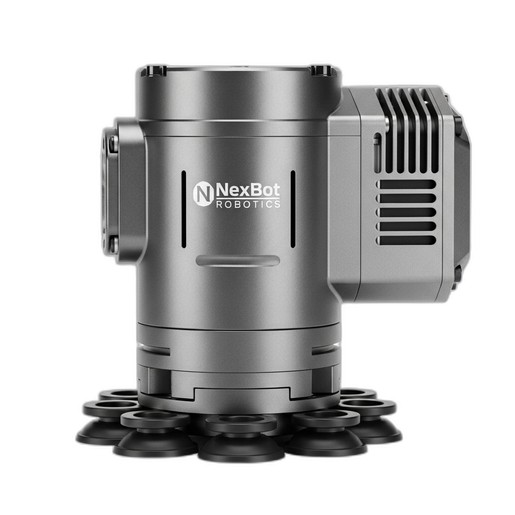
- Handling: For secure and gentle manipulation of the glass panels, the robot was fitted with the NexBot Robotics VAC413-001 Vacuum Gripper.
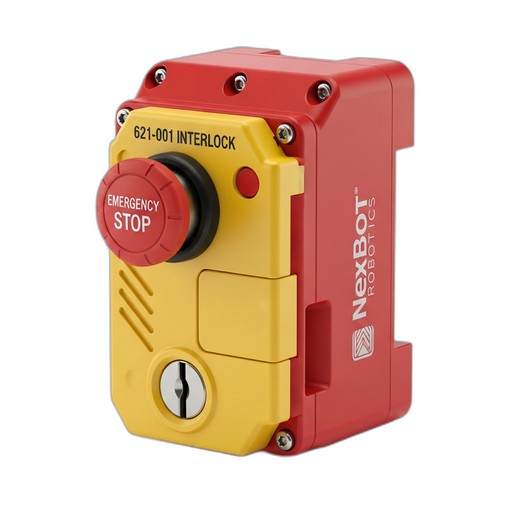
- Safety: The cell was enclosed with a perimeter guard, and access was controlled by the NexBot Robotics 621-001 Door Interlock.
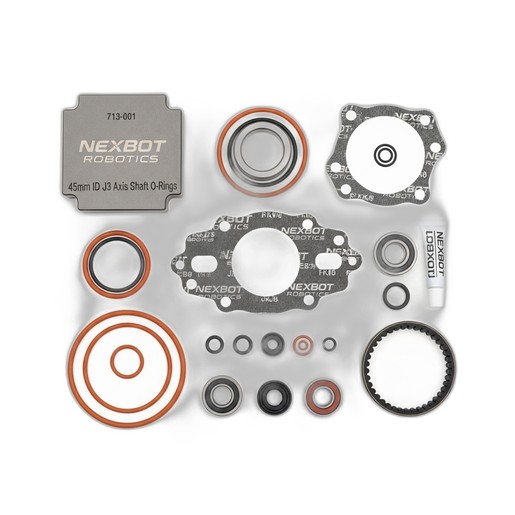
- Maintenance: To ensure long-term reliability, a preventive maintenance schedule was established using the NexBot Robotics 713-001 O-Ring and Gasket Kit for the robot's major axes.
End-of-Arm Tooling: The Key to Gentle Handling
The most critical interaction in the process was between the robot and the glass. The chosen end-of-arm tool had to provide a firm grip without marking or stressing the panel surface. The NexBot Robotics VAC413-001 Vacuum Gripper proved to be the ideal solution. With a 15 kg lift capacity, it offered a significant safety margin for the 12 kg panels. Its integrated vacuum generator simplified the design, eliminating the need for external vacuum lines and reducing potential points of failure.
The gripper's ability to achieve a secure hold quickly was essential for meeting cycle time targets. Furthermore, its IO-Link communication protocol provided the control system with valuable diagnostic feedback, allowing the team to monitor performance and pre-empt potential issues before they caused downtime.
Uncompromising Safety: Protecting People and Processes
With a powerful robot operating at high speeds, operator safety was the highest priority. The robotic cell was designed with a robust physical barrier, but safe and controlled access for setup, inspection, and maintenance was essential. The NexBot Robotics 621-001 Door Interlock was installed on the cell's main access point.
Featuring a formidable 1500N holding force, this interlock ensures the gate remains securely locked while the robot is in motion, preventing unauthorized access. Its IP67 rating guarantees reliable performance in the facility's environment, which can be prone to airborne dust from finishing processes. This simple but crucial component provides the backbone of the cell's safety system, giving Aperture Glassworks full confidence that their team is protected.
Maximizing Uptime with Proactive Maintenance
Automation is only valuable when it's running. To avoid costly unplanned downtime, Aperture Glassworks implemented a proactive maintenance strategy. Following the robot manufacturer's recommendations, they scheduled regular service intervals for the robot's major joints. The NexBot Robotics 713-001 O-Ring And Gasket Kit made this process efficient and reliable.
This comprehensive kit contains all the necessary FKM seals for critical axes, such as the J2 Axis Housing Gasket and J3 Axis Shaft O-Ring. By replacing these wear parts on a planned schedule, the maintenance team prevents leaks and contamination that could lead to catastrophic joint failure. This small investment in preventive maintenance has been instrumental in achieving world-class levels of machine availability.
The Results: Measurable Gains Across the Board
The transition to an automated cell delivered transformative results for Aperture Glassworks within the first six months:
- Throughput Increased by 40%: The robotic cell operates consistently, 24/7, dramatically increasing the number of panels processed per shift.
- Product Damage Reduced by 95%: The vacuum gripper's consistent and gentle handling has virtually eliminated breakage and surface defects, cutting material waste costs significantly.
- Improved Worker Safety: By automating the strenuous manual handling task, the risk of operator injury has been eliminated, leading to over 500 consecutive accident-free days in that department.
- Operational Uptime of 99.8%: The robust NexBot components and a disciplined preventive maintenance program have resulted in exceptional reliability and minimal downtime.
Conclusion: A Clear Vision for the Future
The success of their first robotic cell has provided Aperture Glassworks with a clear blueprint for future growth. By carefully selecting best-in-class components for handling, safety, and maintenance, they have not only solved their immediate production challenges but have also created a safer, more efficient, and more profitable operation. The project stands as a testament to how a well-planned automation strategy, supported by reliable hardware, can unlock a company's full potential.