The Challenge of Automated Surface Finishing
In modern manufacturing, the demand for perfectly finished products has never been higher. From the smooth contours of an automotive body panel to the precise polish on an aerospace turbine blade, surface quality is a direct reflection of product value. For decades, these critical finishing tasks—sanding, polishing, and deburring—have been the domain of skilled human operators. Their ability to feel and adapt pressure in real-time is something traditional automation has struggled to replicate.
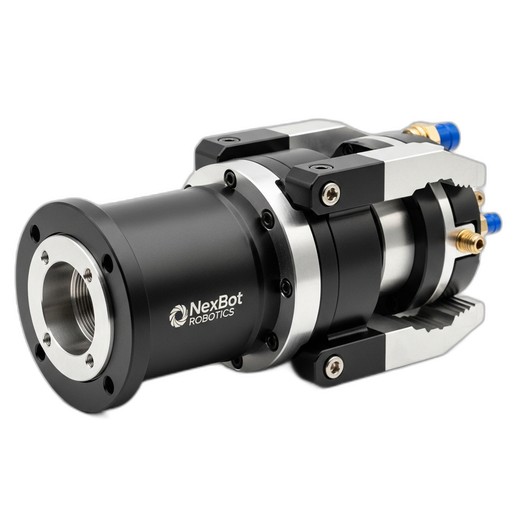
Rigidly programmed robots often fail to account for slight variations in part positioning or surface geometry. This can lead to inconsistent material removal, visible swirl marks, or even damage to the workpiece. The result is a high rate of rework, increased scrap, and a bottleneck in production. To truly unlock the benefits of automation in surface treatment, a more intelligent and adaptive solution is required. This is where the power of active force compliance comes into play, and it’s the technology at the heart of the NexBot Robotics 442-004 Sanding and Polishing Tool.
Unpacking Active Force Compliance
To understand the advantage of the 442-004 tool, it's essential to first understand the technology that drives it. Active Force Compliance is a sophisticated method of motion control that allows a robotic tool to maintain a constant, programmable force against a workpiece, regardless of the robot's path or the part's orientation.
Unlike passive compliance, which relies on springs or other mechanical dampeners to absorb impact, active compliance uses integrated sensors and closed-loop feedback. The tool constantly measures the force being applied at the point of contact. If this force deviates from the setpoint—perhaps because the tool has encountered a curve or an unexpected high spot—an internal actuator makes micro-adjustments in real-time to compensate. This dynamic response mimics the sensitive touch of a human hand, ensuring that the abrasive media is always applied with the exact pressure required for a perfect finish.
Key Features of the NexBot 442-004
The NexBot 442-004 is engineered from the ground up to leverage this technology, providing a robust and reliable solution for the most demanding finishing applications.
- Unmatched Consistency: The core benefit is the flawless, repeatable finish. By maintaining a constant force, the 442-004 eliminates the issues of gouging on edges or failing to sand low spots, problems common with less advanced tooling. Every part that comes off the line meets the same high-quality standard.
- High-Speed Performance: With a powerful motor capable of reaching 8,000 RPM, this tool doesn't sacrifice speed for precision. The high rotational velocity combined with consistent force application allows for rapid material removal and shorter cycle times, directly boosting throughput.
- Adaptability to Complex Geometries: Modern product design often involves complex curves and organic shapes. The 442-004 excels in these scenarios. Its ability to dynamically adjust to contours makes it ideal for finishing everything from furniture and automotive parts to marine propellers and medical implants.
- Simplified Integration and Control: Designed for modern smart factories, the tool operates on standard 24VDC power and communicates via IO-Link. This digital protocol simplifies wiring and allows for easy parameterization, on-the-fly force adjustments, and valuable diagnostic feedback directly from the tool to the main controller.
Applications in Action
The versatility of the NexBot 442-004 makes it a valuable asset across numerous industries:
- Automotive: Preparing body panels for painting, polishing molds for plastic components, and finishing cast aluminum engine parts.
- Aerospace: Deburring and finishing composite airframe components where surface integrity and tight tolerances are mission-critical.
- Woodworking: Performing fine sanding on high-end cabinetry and furniture, achieving a level of quality that is difficult to replicate manually at scale.
- Metal Fabrication: Removing weld beads, breaking edges, and applying a final polish to stainless steel and other metal products.
Building a Complete Finishing Cell
A successful automation project relies on the seamless integration of multiple high-performance components. The 442-004 Sanding and Polishing Tool is a critical piece of the puzzle, but it performs best as part of a well-designed robotic cell.
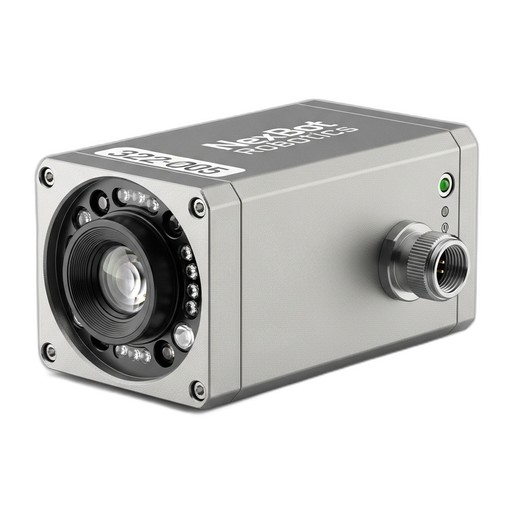
For example, before the finishing process can even begin, the robot needs to know the precise location and orientation of the workpiece. This is a perfect application for the NexBot Robotics 322-005 3D Vision Camera. By generating a precise point cloud of the part, it provides the robot with the data needed to create an accurate tool path, ensuring the 442-004 engages with the surface correctly from the start.
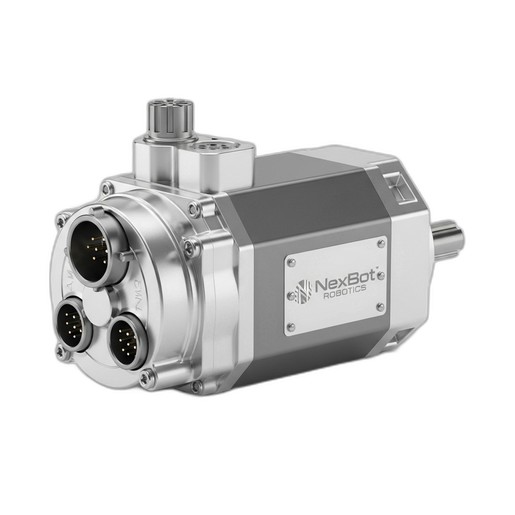
Furthermore, the entire system depends on the robot arm's ability to move smoothly and accurately. The motion of the arm, which carries the end-of-arm tool, must be precise. This is where components like the NexBot Robotics DC112-005 DC Servo Motor become essential. Providing 5.0 Nm of continuous torque, these high-performance servos ensure the robot can carry the tool along its programmed path with the stability and responsiveness needed for the force compliance system to function optimally.
The Future of Automated Finishing is Here
The NexBot Robotics 442-004 Sanding and Polishing Tool represents a significant leap forward in automated surface treatment. By replacing rigid programming with intelligent, adaptive force control, it bridges the gap between manual craftsmanship and industrial-scale automation. For manufacturers looking to improve quality, increase throughput, and reduce the costs associated with manual labor and rework, the integration of active force compliance technology is no longer a luxury—it is a competitive necessity.