The Challenge: The Single-Process Bottleneck
Industrial robots have revolutionized manufacturing by delivering unparalleled speed, precision, and endurance. Traditionally, however, many robotic cells were designed for a single, repetitive task. One robot would be dedicated to welding, another to material handling, and a third to assembly. While effective, this approach introduces inherent limitations. It can lead to a larger factory footprint, increased capital expenditure for multiple robots, and significant downtime during line changeovers. In an era of high-mix, low-volume production, this lack of flexibility is a critical bottleneck, preventing manufacturers from adapting quickly to changing market demands.
What if a single robot could do more? What if it could seamlessly transition from moving a heavy part to performing a delicate welding operation, and then switch again to inspect the finished product? This is the promise of multi-process automation, a strategy that maximizes the value and utilization of every robotic asset on the floor.
The Solution: Dynamic Swapping with Automatic Tool Changers
The key to unlocking this potential lies in End-of-Arm Tooling (EOAT) and, more specifically, the Automatic Tool Changer (ATC). An ATC is a sophisticated device that allows a robot to autonomously connect and disconnect from various end-effectors—such as grippers, welding torches, deburring tools, or sensors—without manual intervention. By automating the tool-swapping process, an ATC transforms a specialized robot into a versatile, multi-functional workhorse.
This technology is a cornerstone of modern, agile manufacturing. It enables a single robotic arm to execute a complex sequence of different tasks, consolidating operations, reducing the number of required robots, and dramatically shrinking the time needed for production changeovers from hours to mere seconds.
Product Spotlight: The NexBot Vision 421-011
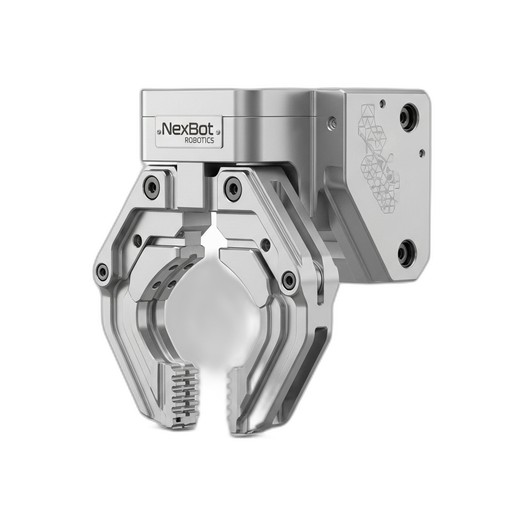
At the heart of a flexible robotic cell is a reliable and robust tool changer. The NexBot Vision 421-011 Automatic Tool Changer is engineered to be that dependable core. Designed for demanding industrial environments, it provides the performance and reliability needed to keep production lines running at peak efficiency.
Key Capabilities:
- Significant Payload Capacity: With a payload rating of 50 kg, the 421-011 is perfectly suited for a wide range of medium-duty applications. It can securely handle substantial grippers for part transfer, heavy-duty welding torches, and complex sensor packages without compromising performance or repeatability.
- High Rigidity and Repeatability: A critical function of an ATC is to create a connection that is just as rigid and precise as a direct-mounted tool. The Vision 421-011 features a highly accurate locking mechanism that ensures minimal deflection and consistent positioning, swap after swap. This is vital for tasks like welding or machining where tool-center-point (TCP) accuracy is paramount.
- Integrated Utilities: The design allows for the pass-through of essential utilities like electrical signals and pneumatic lines, enabling seamless operation of complex end-effectors. This clean integration simplifies cabling and reduces potential snag points, contributing to higher system reliability.
By integrating the Vision 421-011, a manufacturer can design a robotic cell that performs material handling, welding, and quality control, all within the same workspace and with the same robot.
Building a Multi-Functional Robotic Cell
A truly effective automated system relies on more than just one great component; it requires a symphony of parts working in perfect harmony. Let's see how the Vision 421-011 tool changer works alongside other critical NexBot components to create a high-performance, multi-process welding and handling cell.
1. The Welding Operation:
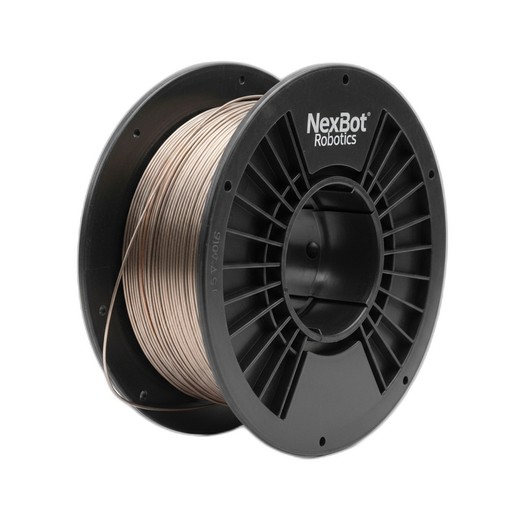
Once the robot uses the 421-011 to pick up its MIG welding torch, the quality of the weld depends entirely on the process and the consumables. This is where the NexBot Robotics 741-007 ER70S-6 MIG Wire becomes essential. In an automated system, consistency is everything. This 0.9mm steel wire is manufactured to tight tolerances to ensure smooth, uninterrupted feeding through the wire drive system. Its chemical composition provides excellent arc stability—a key factor in reducing spatter and achieving deep, uniform penetration. When a robot is executing a precise weld path, the last thing you need is an unstable arc or inconsistent wire. Using a high-performance consumable like the 741-007 ensures that the quality promised by automation is delivered in every weld.
2. The Control System Backbone:
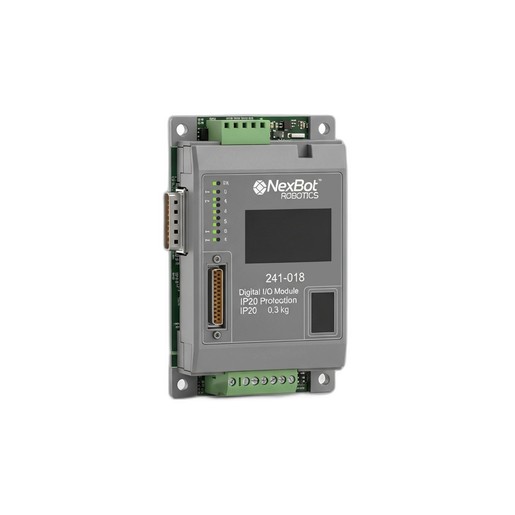
How does the robot controller know that the tool change was successful? How does it activate the welder and monitor its status? This vital communication is handled by I/O modules. The NexBot Drives 241-018 Digital I/O Module serves as the nervous system for the robotic cell. It translates commands from the main controller into actions and relays status information back.
Operating on a standard 24VDC, the 241-018 uses the high-speed EtherCAT protocol for communication. This is crucial in a dynamic cell. When the Vision 421-011 locks a tool in place, sensors confirm the connection, and the 241-018 module transmits this 'tool locked' signal back to the controller in real-time. This deterministic, low-latency communication ensures the robot never attempts to operate with an unsecured tool, guaranteeing safety and process integrity. The I/O module manages the signals for clamping, welding, and part presence, orchestrating the entire sequence of operations with precision.
The Integrated Advantage
By combining these three NexBot products, a manufacturer can achieve significant operational benefits:
- Increased Asset Utilization: A single robot equipped with the Vision 421-011 can achieve utilization rates far exceeding those of a single-task robot, providing a much faster return on investment.
- Reduced Operational Footprint: Consolidating multiple processes into one cell saves valuable floor space, allowing for more efficient factory layouts.
- Unmatched Agility: The ability to quickly swap tools and reprogram the robot allows manufacturers to respond to custom orders or design changes without costly and time-consuming hardware modifications.
- Process Consistency: Integrating high-quality components like the 241-018 I/O module and 741-007 MIG wire ensures that every action, from tool changing to welding, is performed to the highest standard, every single time.
In today's competitive landscape, building flexible, intelligent automation systems is no longer an option—it's a necessity. Components like the NexBot Vision 421-011 Automatic Tool Changer are not just accessories; they are foundational elements that empower manufacturers to build the resilient and adaptable factories of the future.