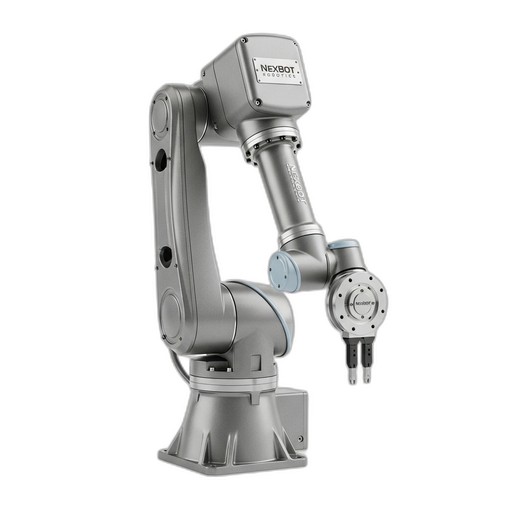
In the world of industrial automation, uptime is everything. An unexpected halt in production can lead to significant financial losses and missed deadlines. For facilities relying on advanced robotic systems like the NexBot Robotics MA012-010 6-Axis Robot Arm, a robust preventive maintenance plan isn't just a good practice—it's a fundamental requirement for long-term success. While these machines are built for durability, they contain critical wear parts that require regular attention. Among the most crucial of these are the timing belts.
The Unsung Hero: Understanding the Role of Timing Belts
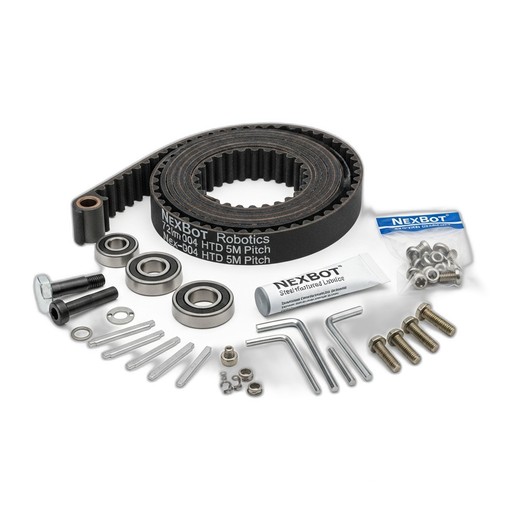
A 6-axis robot arm achieves its incredible precision through a symphony of motors, gears, and belts working in perfect harmony. Timing belts are responsible for transferring rotational power from the motors to the robot's joints with extreme accuracy. A high-quality belt, such as the NexBot Robotics 721-004 Timing Belt, uses a specialized tooth profile like the HTD 5M pitch to ensure positive engagement with pulleys, eliminating slip and minimizing backlash. This precise power transmission is directly responsible for the robot's ability to achieve its specified repeatability—in the case of the MA012-010, an impressive ±0.02 mm. When a timing belt degrades, this precision is the first thing to suffer, leading to process errors, quality control issues, and eventually, complete failure.
Key Indicators of Timing Belt Wear
Proactive maintenance means identifying problems before they bring your production line to a standstill. Your technicians should be trained to look for specific signs of timing belt fatigue during routine inspections. Catching these indicators early can turn a potential multi-hour shutdown into a quick, scheduled component swap.
Key warning signs include:
- Visual Damage: Look for cracks on the back of the belt, fraying along the edges, or excessive glazing on the tooth surfaces. Any visible damage is a clear sign that the belt's structural integrity is compromised.
- Tooth Wear (Shearing): The teeth of the belt should be well-defined. If they appear worn down, rounded, or as if they are being 'sheared' off at the base, the belt is nearing the end of its life and can no longer engage the pulley correctly.
- Loss of Tension: A properly tensioned belt feels taut. If the belt feels slack or loose, it can lead to tooth jumping, which causes inaccurate movements and can damage both the belt and the pulley.
- Increased Noise: A healthy robot operates with a predictable, smooth sound. An increase in operational noise, such as a high-pitched whining, grinding, or clicking from a specific joint, often points to a worn belt or bearing.
- Debris Accumulation: Finding black, rubbery dust inside the robot's joint housing is a tell-tale sign that the belt material is breaking down from friction and wear.
Establishing a Proactive Maintenance Schedule
A 'run-to-failure' approach is a recipe for disaster in automated environments. Instead, a scheduled maintenance plan is essential. While the exact intervals depend on the robot's duty cycle, payload, and operating environment, a general framework can be adapted to your specific needs.
- Daily Checks (Pre-shift): A quick visual and auditory check. Operators should listen for any new or unusual noises during the robot's warm-up cycle.
- Weekly Inspections: A more detailed visual inspection of accessible components. Check for any fluid leaks or debris accumulation around the robot base and joints.
- Quarterly/Bi-Annual Inspections: This is when a more thorough inspection of wear parts like timing belts should occur. It involves powering down and locking out the robot to safely open access panels and examine the belts for the wear indicators listed above. Check and document belt tension according to the manufacturer's specifications.
When a replacement is necessary, it is critical to use genuine OEM parts. Using a third-party belt might seem like a cost-saving measure, but it can jeopardize the entire system. The NexBot Robotics 721-004 Timing Belt is specifically engineered to match the performance requirements of our robots, ensuring that the machine's payload capacity, speed, and repeatability are maintained. An incorrect belt can lead to premature failure, damage to motors and gearboxes, and a loss of the precision you invested in.
The Value of Professional Services in Maintenance
While routine inspections and minor part replacements can often be handled by in-house maintenance teams, major overhauls or post-repair validation require expert knowledge. After a significant maintenance event, how do you guarantee the robot is returned to its exact factory specifications for performance and safety? This is where professional services become invaluable.
Services like the NexBot Safety 931-008 On-Site Commissioning are not just for initial installation. They can be leveraged to re-validate a robot's operational parameters after major repairs. A certified technician can perform advanced diagnostics, recalibrate joint positions, and verify that the entire system is functioning safely and optimally. This provides peace of mind and ensures that your maintenance efforts have successfully restored the robot to its peak condition, ready to continue its work with the highest level of precision and reliability.