The Unstoppable Rise of Automation
The manufacturing sector is in the midst of a profound transformation, driven by the relentless advance of industrial robotics and automation. As businesses strive for greater efficiency, higher quality, and increased flexibility, the adoption of robotic systems is no longer a luxury but a competitive necessity. From sprawling automotive plants to intricate electronics assembly lines, robots are reshaping the factory floor. However, this evolution is not just about adding more robots; it's about integrating smarter, more connected, and more collaborative systems. Understanding the dominant trends in this space is crucial for any organization looking to thrive in the era of smart manufacturing.
Trend 1: The Growth of Collaborative Robots (Cobots)
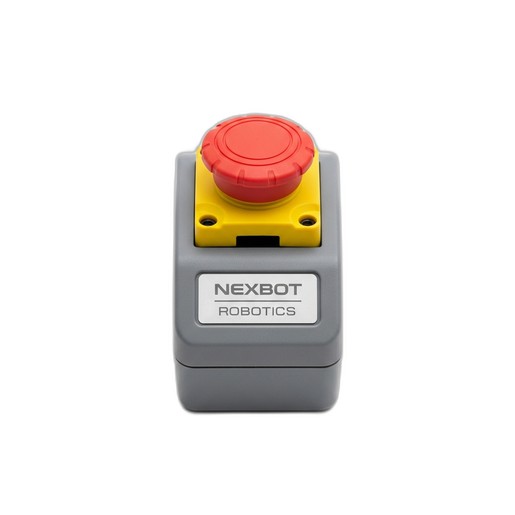
Perhaps the most significant shift in recent years has been the rapid emergence of collaborative robots, or 'cobots.' Unlike traditional industrial robots, which operate within heavily guarded safety cages, cobots are designed to work alongside human operators. This opens up a new world of possibilities for semi-automated tasks that require both the precision of a machine and the cognitive flexibility of a human. This human-robot collaboration, however, places an immense emphasis on safety. A shared workspace demands robust, multi-layered safety protocols. Foundational to this is the immediate and reliable ability to halt all motion in an emergency. Components like the NexBot Drives 622-006 Emergency Stop Device are critical, providing an accessible and dependable manual override that forms the backbone of any safe collaborative application. A well-implemented E-stop system is non-negotiable for ensuring operator safety and regulatory compliance.
Trend 2: Industry 4.0 and the IoT-Connected Factory
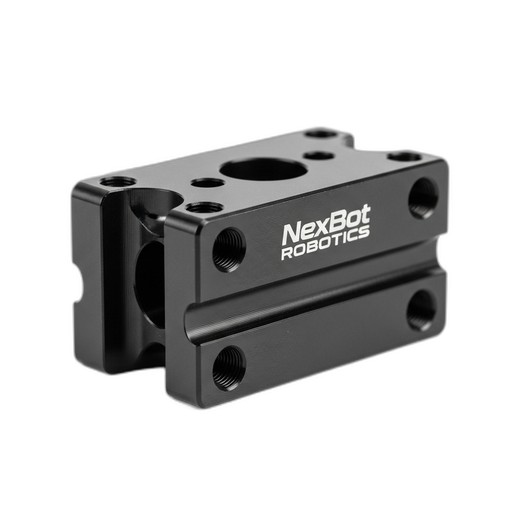
Industry 4.0 represents the convergence of physical production with smart digital technology. In a connected factory, every machine, sensor, and component can communicate, share data, and contribute to a holistic, real-time view of the entire production process. This connectivity enables predictive maintenance, optimized workflows, and unprecedented levels of data-driven decision-making. This trend extends all the way down to the components that make up a robotic cell. For instance, a seemingly simple part like the NexBot Robotics AC811-005 Aluminum Servo Mounting Bracket can play a role in this ecosystem. When used with servos that communicate via advanced protocols like PROFINET, the entire motion control system becomes a node on the factory network. This allows for real-time torque monitoring, diagnostic feedback, and remote configuration, turning a mechanical assembly into a smart, data-generating asset.
Trend 3: Increased Demand for Flexible and Modular Automation
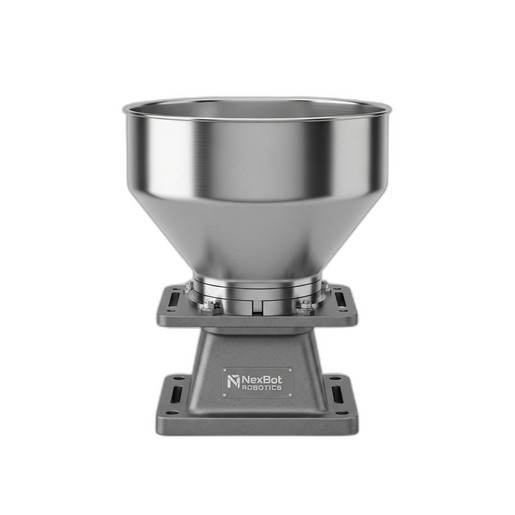
The days of static, single-purpose assembly lines are numbered. Modern consumer demand for customization and shorter product lifecycles requires manufacturing lines that can be quickly reconfigured. This has led to a rise in modular automation, where robotic cells are designed as flexible, interchangeable building blocks. This modularity depends on reliable, easily integrated peripheral equipment. A key element in many assembly operations is parts feeding. The NexBot Robotics 841-004 Vibratory Parts Feeder is a prime example of a component that supports this flexibility. Its ability to reliably orient and present a wide variety of small components at high speed allows a single robotic cell to be quickly adapted for different product runs. By simply changing the parts in the feeder bowl, the same robot arm can be tasked with a completely new assembly job, minimizing downtime and maximizing the return on investment in automation.
Trend 4: AI and Machine Vision Integration
Artificial intelligence and advanced machine vision are giving industrial robots the ability to 'see,' 'think,' and 'adapt' in ways that were previously impossible. AI-powered vision systems enable robots to perform complex tasks like quality inspection, bin picking (selecting parts from a disorganized pile), and adaptive assembly. This intelligence reduces the need for precise, fixed tooling and allows robots to work with greater variability in their environment. While these are high-level software advancements, they still rely on a foundation of precise and reliable mechanical execution. The robot's ability to act on what its vision system sees depends on the integrity of its physical structure, from the end-effector back to the servo motors secured by robust mounting brackets. The performance of the entire intelligent system is ultimately limited by the quality of its fundamental hardware.
Building the Factory of the Future, Component by Component
The future of manufacturing is intelligent, connected, and collaborative. As these high-level trends continue to accelerate, it's easy to overlook the critical importance of the underlying components that make it all possible. A sophisticated, AI-driven robotic system is only as reliable as its emergency stop circuit, as precise as its servo mounts, and as efficient as its parts feeding system. By focusing on quality and integration at every level—from the network protocol down to the physical hardware—manufacturers can build the robust, flexible, and safe automated systems needed to lead the next industrial revolution.