The era of Industry 4.0 is not on the horizon; it's here. Smart factories are becoming the standard, driven by a convergence of digital technology and advanced automation. At the heart of this transformation lies industrial robotics, a field experiencing rapid evolution. Staying ahead of these trends is no longer just an advantage—it's a necessity for competitiveness and growth. Let's explore the key developments shaping the future of manufacturing and how a holistic approach to technology, maintenance, and skills is crucial for success.
Trend 1: The Proliferation of Collaborative Robots (Cobots)
For years, industrial robots were confined to safety cages, performing heavy-duty, repetitive tasks away from human workers. The rise of collaborative robots, or cobots, has shattered this paradigm. Designed to work safely alongside people, cobots are tackling tasks that require both robotic precision and human dexterity and problem-solving. This trend is democratizing automation, making it accessible to small and medium-sized enterprises (SMEs) that previously found traditional robotics too costly or complex. Cobots are now being deployed in everything from assembly and quality inspection to packaging and machine tending, augmenting human capabilities rather than replacing them.
Trend 2: AI and Machine Learning as the Brains of the Operation
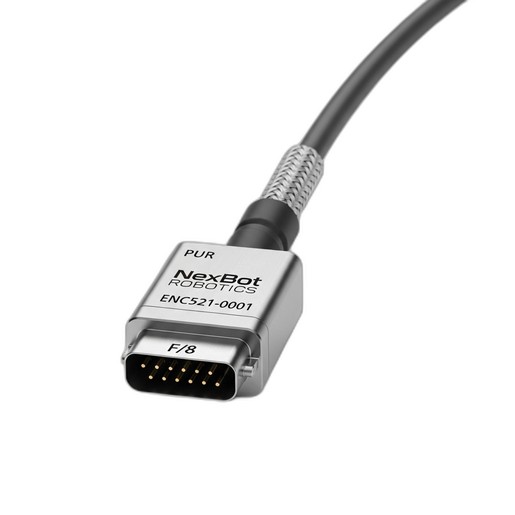
If robots are the muscle of the modern factory, Artificial Intelligence (AI) and Machine Learning (ML) are increasingly the brains. AI is transforming robots from simple programmed machines into intelligent partners capable of adapting to their environment. AI-powered vision systems allow robots to identify and handle a wider variety of objects, while ML algorithms optimize motion paths for greater efficiency and energy savings. Furthermore, this intelligence extends to the robot's own health. By analyzing operational data, ML models can predict when a component is likely to fail, enabling a shift from reactive repairs to predictive maintenance. This entire ecosystem of intelligence relies on flawless data communication. The precision and reliability of every signal, from motor position to sensor feedback, are paramount. This is why foundational components, such as high-quality encoder cables like the NexBot Robotics ENC521-001, are critical infrastructure. Without a clean, consistent data stream, the potential of AI and ML cannot be fully realized.
Trend 3: A Focus on Total Cost of Ownership and Proactive Maintenance
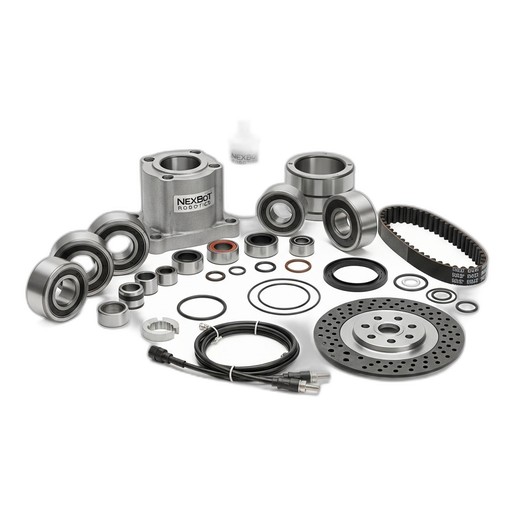
The conversation around automation is maturing from initial acquisition cost to Total Cost of Ownership (TCO). Business leaders now understand that the true cost of a robotic system includes energy consumption, maintenance, and potential downtime. This has fueled a major trend towards proactive, scheduled maintenance to maximize uptime and extend the operational life of assets. Instead of waiting for a breakdown, smart factories adhere to manufacturer-recommended service intervals. Utilizing comprehensive service kits, such as the NexBot R-20 Major Overhaul Kit (5,000 hours), simplifies this process. These kits provide all necessary components—from bearings and seals to belts and grease—to perform a major overhaul efficiently. By planning for maintenance at established intervals like 5,000 operating hours, companies minimize unexpected production halts and ensure their robotic fleet performs at peak efficiency for years to come.
Trend 4: The Human-Machine Partnership and the Skills Imperative
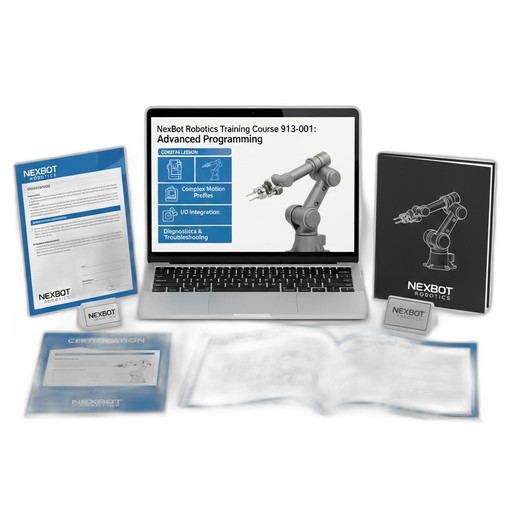
As robots become more advanced, the skills required to manage them also evolve. The most significant trend is not the replacement of workers, but the elevation of their roles. The factory of the future requires a workforce skilled in programming, integrating, and maintaining these complex automated systems. This has created a surge in demand for specialized training that goes beyond basic operation. To unlock the full potential of a robotic cell, technicians and engineers need to master advanced techniques. Investing in comprehensive training programs, like the NexBot Robotics Training Course 913-001 Advanced Programming, becomes a strategic imperative. Such courses empower teams to handle complex logic, sophisticated motion control, and seamless I/O integration, transforming them from simple robot operators into true automation specialists who can optimize processes and troubleshoot complex issues.
Conclusion: Building a Resilient Automation Strategy
The future of industrial robotics is dynamic and interconnected. Success is not achieved by adopting a single trend but by building a resilient strategy that embraces technology, prioritizes reliability, and invests in people. By integrating intelligent cobots, leveraging AI for smarter operations, committing to proactive lifecycle management, and upskilling your workforce, you can build a factory that is not only efficient and productive today but also agile and prepared for the innovations of tomorrow.