The era of Industry 4.0 is no longer a future concept; it's the operational reality for modern manufacturing. At the heart of this transformation is industrial robotics, which continues to evolve beyond simple, repetitive tasks into complex, data-driven operations. For businesses looking to maintain a competitive edge, understanding the dominant trends in automation is not just beneficial—it's essential. This article delves into the key shifts shaping the industry and how they translate into tangible advancements on the factory floor.
Trend 1: The Proliferation of Smart, Connected Components
Gone are the days of automation components acting as isolated, 'dumb' devices. The modern factory thrives on data, and the expectation is that every part of the system, down to the end-of-arm tooling (EOAT), contributes to the data ecosystem. This is where communication protocols like IO-Link are becoming the industry standard.
IO-Link is a powerful point-to-point serial communication protocol used to connect sensors and actuators to a control system. It allows for the transmission of diagnostic data, parameter settings, and event information alongside standard process data. For a robotic cell, this means a gripper can report not just whether it has a part, but also its internal temperature, cycle count, and potential error flags. This level of insight is invaluable for predictive maintenance and real-time process optimization.
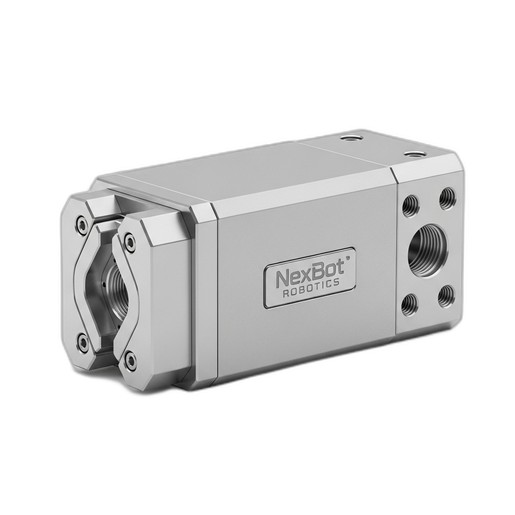
A prime example of this trend is the NexBot Robotics MAG414-005 Magnetic Gripper. By integrating IO-Link connectivity, this gripper transforms from a simple handling tool into an intelligent node in the automation network. Technicians can remotely adjust parameters, monitor performance, and diagnose issues without physical intervention, drastically reducing downtime. Its 140N holding force is reliably managed and monitored, ensuring that every pick-and-place operation involving ferrous parts is logged and verified, contributing to a factory's digital twin.
Trend 2: The Demand for Higher Performance in Compact Footprints
As production lines become more complex and floor space remains a premium commodity, there is a relentless push for robotic systems that are smaller, faster, and more precise. This miniaturization of automation requires components that deliver exceptional performance without the bulk. The focus is on maximizing power density—achieving higher torque, speed, and accuracy from motors and drives that can fit into tighter spaces.
This trend is particularly evident in motion control systems. The ability to execute intricate movements with sub-millimeter precision is critical in applications like electronics assembly, CNC machine tending, and quality inspection. Achieving this level of control hinges on the quality of the drive system's core components.
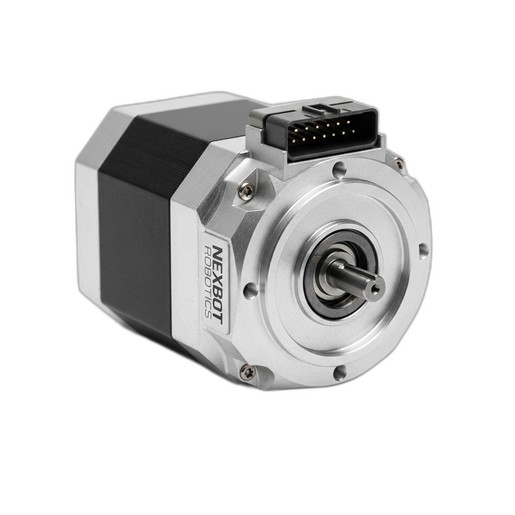
The NexBot Robotics STP113-005 NEMA 23 Stepper Motor directly addresses this need. It provides a substantial holding torque of 1.9 Nm within the widely adopted NEMA 23 frame size. This allows engineers to design or upgrade robotic axes and actuators with significant power without needing to allocate more physical space. Its 1.8° step angle ensures fine resolution for precision positioning tasks. Such motors are the unsung heroes of modern robotics, enabling the development of more agile and capable multi-axis systems that drive efficiency and product quality.
Trend 3: Bridging the Automation Skills Gap
As robotic systems become more sophisticated, the skills required to design, program, and maintain them also become more advanced. The industry is facing a significant skills gap, where the demand for qualified robotics engineers and technicians outpaces the available talent pool. Companies are recognizing that investing in hardware without investing in their people is an unsustainable strategy.
This has led to a major trend in specialized, hands-on training programs that go beyond basic operation. These courses focus on advanced programming, system integration, troubleshooting complex faults, and optimizing performance. The goal is to empower in-house teams to take full ownership of their automation systems, reducing reliance on external integrators for day-to-day adjustments and maintenance.
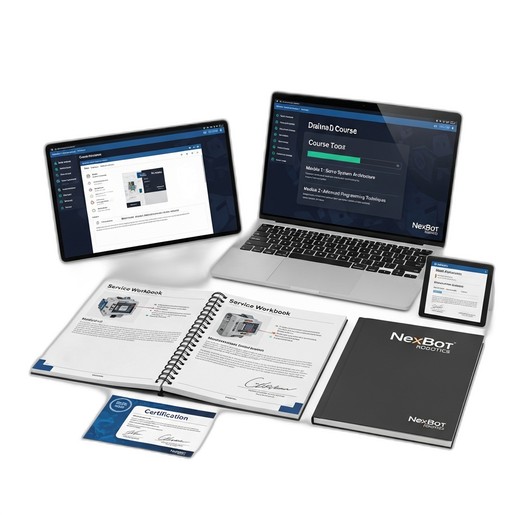
Recognizing this critical need, services like the NexBot Drives Training Course 913-006 have become indispensable. This intensive, on-site course is designed specifically to elevate the expertise of engineering and maintenance teams. By focusing on advanced programming for servo systems, it equips attendees with the practical knowledge to unlock the full potential of their motion control hardware. This investment in human capital pays dividends through increased operational uptime, faster deployment of new applications, and a more resilient, self-sufficient technical team.
Trend 4: The Growth of Flexible and Collaborative Systems
Finally, the market is shifting away from rigid, single-purpose automation towards more flexible and collaborative solutions. Manufacturers need the ability to quickly reconfigure production lines to handle smaller batch sizes, product variations, and fluctuating demand. This requires robotic systems that are easy to reprogram and redeploy.
Collaborative robots, or 'cobots,' are a major part of this trend, designed to work safely alongside human operators. However, flexibility also extends to traditional industrial robots through the use of modular components and versatile EOAT. Quick-change systems for grippers and tools allow a single robot arm to perform multiple different tasks within a shift, maximizing its utilization and return on investment.
Components like the MAG414-005 Magnetic Gripper contribute to this flexibility. Its robust design is suitable for a wide range of ferrous material handling tasks, from raw metal blanks to finished components. Combined with a quick-change adapter, a robot can switch from magnetic gripping to another tool in seconds, adapting to the next product on the line. This modular approach is fundamental to building the agile factories of the future.
Conclusion: Embracing the Future of Automation
The industrial robotics landscape is dynamic and full of opportunity. The dominant trends all point towards a future of smarter, more precise, and more flexible automation. By embracing intelligent components with advanced connectivity, leveraging high-performance motion control systems, and investing in the skills of your workforce, your organization can not only keep pace but lead the way in the next generation of manufacturing.