The narrative of Industry 4.0 is often dominated by the impressive capabilities of six-axis robots, the intelligence of AI-driven vision systems, and the vast potential of the Industrial Internet of Things (IIoT). While these technologies are undeniably transformative, they represent only the most visible layer of the automation revolution. Beneath the surface, a complex infrastructure of power, data, and safety components works tirelessly to make it all possible. This foundational layer is where reliability is forged, and it's the true enabler of the productivity and efficiency gains promised by modern automation.
The Nervous System of the Smart Factory
Think of an industrial robot as a world-class athlete. To perform at its peak, it needs two things: a consistent supply of energy and a flawless connection between its brain (the controller) and its muscles (the motors). This is the domain of industrial cabling—the circulatory and nervous system of the automated cell. In a dynamic, high-flex environment, standard cables simply won't suffice. The constant motion, potential for abrasion, and exposure to industrial contaminants demand components engineered for the task.
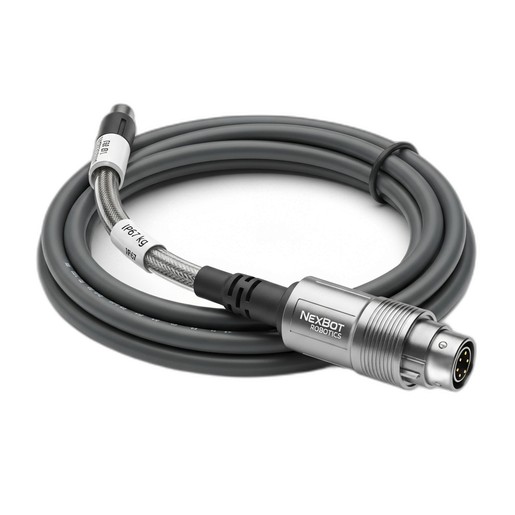
Motor power cables are the arteries, delivering high-voltage power to the servos that drive the robot's motion. A cable like the NexBot Robotics PWR511-001 Motor Power Cable is designed not just to handle the required 600VAC, but to withstand millions of flex cycles without degradation. An interruption or fluctuation in power can lead to costly unplanned downtime, positioning errors, or even component damage. Therefore, selecting a robust, service-ready power cable is a critical first step in ensuring system reliability.
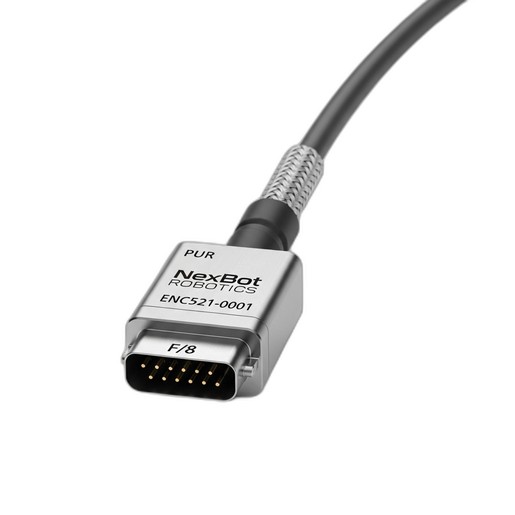
Simultaneously, encoder cables act as the sensory nerves, transmitting precise positional data from the motors back to the controller. This feedback loop is what allows for the incredible accuracy and repeatability of modern robots. The NexBot Robotics ENC521-001 Encoder Cable facilitates this communication, ensuring that every command from the controller is executed perfectly and that the system always knows the exact position of the robot arm. The adoption of industrial protocols like PROFINET over these connections is a key trend, enabling real-time, high-speed data exchange that is essential for complex, coordinated tasks in a connected factory.
Safety as a Prerequisite, Not an Afterthought
As automation expands from isolated cages to more integrated roles within the factory, the importance of safety systems has grown exponentially. The goal is to protect personnel from hazards without impeding productivity. While advanced sensors and collaborative robot designs are pushing boundaries, fundamental physical guarding remains the bedrock of a comprehensive safety strategy. It provides an unambiguous and reliable barrier between human workers and automated machinery.
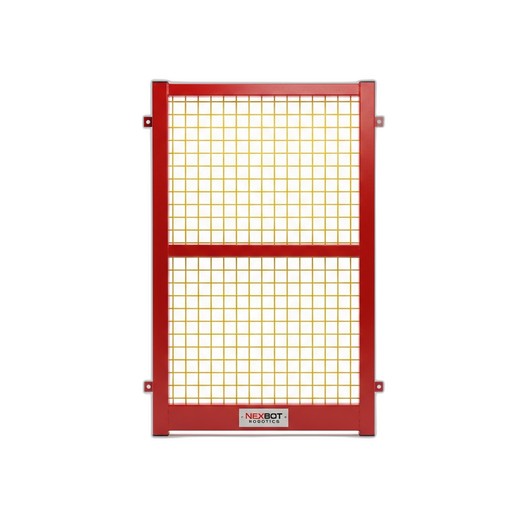
Perimeter guarding systems are the first line of defense. A well-designed safety fence does more than just create a physical barrier; it defines the operational zone of the robot, preventing accidental entry and protecting personnel from the kinetic energy of a moving robot arm or a potential ejected workpiece. Products like the NexBot Robotics 611-001 Perimeter Guard Panel are engineered to meet stringent industrial safety standards. The robust steel wire mesh construction provides the necessary impact resistance while still allowing for visibility of the process, which is crucial for monitoring and troubleshooting. In the trend towards modular and flexible manufacturing, easily configurable guarding systems are essential for adapting work cells to new products and processes.
The Holistic View: Integrating for Reliability
The most significant trend in industrial automation today is the shift towards a holistic, system-level approach. Companies no longer just buy a robot; they invest in a complete, integrated automation solution. This means that components like cables and safety fencing are no longer afterthoughts but are considered integral parts of the system design from day one. Specification-driven planning ensures that every component is perfectly matched to the application's demands for voltage, communication protocol, and physical resilience.
This integrated approach has profound implications for maintenance and total cost of ownership. By using components designed for the rigors of industrial robotics, manufacturers can move from a reactive to a proactive maintenance strategy. Knowing the expected lifecycle of a high-flex cable or the inspection requirements for a safety system allows for specification-driven replacement planning, minimizing unplanned downtime and maximizing the operational life of the entire system. Ultimately, the reliability of a multi-million-dollar automation line can depend on the quality of a single cable or the integrity of a single guard panel. Recognizing this reality is what separates successful automation deployments from those that struggle to deliver on their promise.