In the world of industrial automation, precision is not a luxury; it's a fundamental requirement. From the delicate assembly of microelectronics to the flawless execution of a welding seam, the ability of a robot to move to the exact same point, time and time again, is what separates a productive asset from a costly liability. At the very core of this capability lies the gearbox, the unsung hero that translates motor power into controlled, repeatable motion. Today, we're putting a spotlight on a critical component in this domain: the NexBot Harmonic Gearbox HR-30.
The Engineering of Zero-Backlash Motion
Before diving into the specifics of the HR-30, it’s important to understand what makes a harmonic gearbox unique. Unlike traditional planetary or spur gear systems, a harmonic drive operates on an elegant strain-wave gearing principle. It consists of three primary components:
- Wave Generator: An elliptical bearing assembly that acts as the input.
- Flexspline: A thin-walled, flexible cup with external gear teeth that is fitted over the wave generator.
- Circular Spline: A rigid, internal ring gear that engages with the teeth of the flexspline.
As the wave generator rotates, its elliptical shape deforms the flexspline, causing its teeth to progressively engage with the teeth of the stationary circular spline. Because the flexspline has slightly fewer teeth than the circular spline, this engagement results in a very slow, high-torque rotation of the flexspline in the opposite direction. This unique mechanism is the source of the harmonic drive's greatest advantages: high gear ratios in a compact space, exceptional torque capacity, and, most importantly, near-zero backlash. This lack of 'play' in the gear train is the key to the incredible positional accuracy and repeatability demanded by modern robotics.
Key Capabilities of the NexBot HR-30
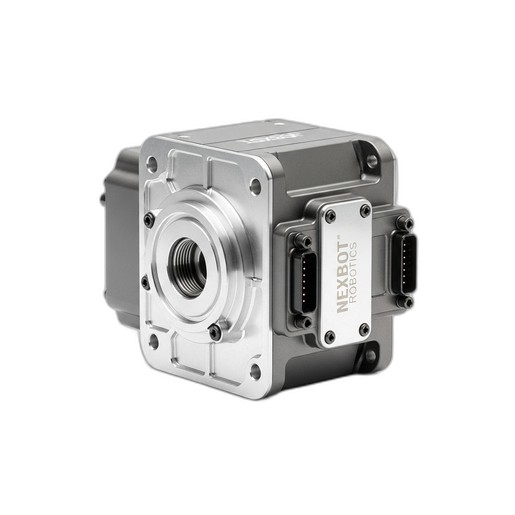
The NexBot Harmonic Gearbox HR-30 is engineered to embody these principles for challenging industrial environments. It's not just a component; it's a cornerstone of high-performance automation.
Production-Grade Payload Handling
The HR-30 is built for strength and stiffness. Its high torque density allows a robot joint to handle significant payloads without sacrificing speed or precision. This means robots equipped with the HR-30 can manipulate heavy components, apply consistent force for assembly tasks, or carry complex end-of-arm tooling without suffering from positional drift or vibration, ensuring consistent quality in every cycle.
Unmatched Repeatable Motion Control
For applications in automated welding, dispensing, or high-tolerance assembly, repeatability is paramount. The zero-backlash nature of the HR-30 ensures that when the controller commands a position, the robot's arm achieves it with microscopic accuracy. This eliminates the minute inconsistencies that can lead to product defects, ensuring every part produced meets the strictest quality standards.
Designed for the Industrial Floor
Durability and ease of integration are critical. The HR-30 operates on standard industrial 400-480VAC 3-Phase power, making it a direct fit for typical factory infrastructure. Furthermore, its native support for the PROFINET protocol ensures seamless, high-speed communication with a wide range of PLCs and control systems. This simplifies integration, reduces commissioning time, and provides the real-time data exchange necessary for Industry 4.0 applications. Its design also incorporates service-friendly maintenance access, acknowledging that uptime is crucial and planned service should be as efficient as possible.
Building a Complete, High-Performance System
A precision component like the HR-30 performs at its best as part of a well-architected robotic system. This means considering both safety and long-term reliability.
Ensuring Functional Safety
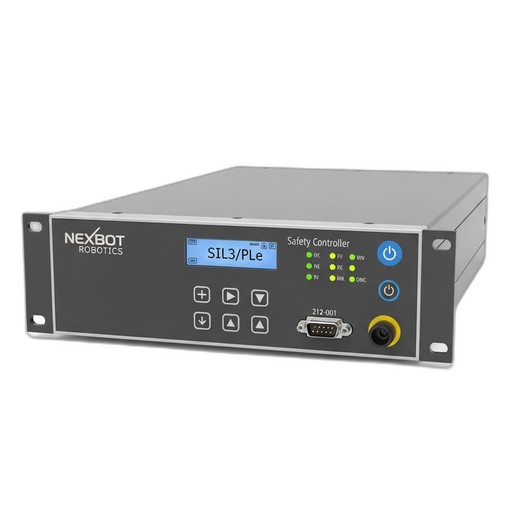
Powerful, precise motion must be controlled and monitored. This is where the NexBot Robotics 212-001 Safety Controller becomes essential. Certified to the highest standards (SIL3/PLe), this controller acts as the vigilant overseer of the robotic cell. It integrates with the robot's drive system to implement critical safety functions like Safe Torque Off (STO) and Safe Speed Monitoring. By using a robust protocol like FSoE (Fail Safe over EtherCAT), the 212-001 ensures that the powerful movements enabled by the HR-30 always remain within safe, predictable boundaries, protecting both operators and expensive equipment.
Planning for Long-Term Reliability
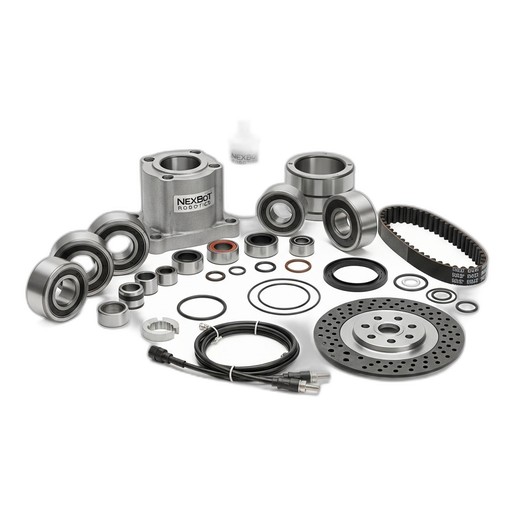
Even the most robust components require maintenance to deliver consistent performance over their lifespan. A comprehensive maintenance strategy is key to maximizing return on investment. The NexBot R-20 Major Overhaul Kit (5,000 hours) is a perfect example of this philosophy in practice. While the HR-30 is a specific component, it exists within a larger robotic arm that has other joints and wear items. This kit provides all the necessary OEM-quality parts—from bearings and seals to a new timing belt and grease—to perform a scheduled major service on a robot. Proactively replacing wear items ensures that the entire system, including its high-precision gearboxes, continues to operate within its original design specifications, preventing unplanned downtime and preserving motion accuracy.
Conclusion: The Foundation of Precision Automation
The NexBot Harmonic Gearbox HR-30 is more than just a collection of gears; it is an enabling technology. It provides the foundational precision, power, and reliability that allow manufacturers to tackle complex automation challenges with confidence. When integrated within a system that prioritizes functional safety with components like the 212-001 Safety Controller and is supported by a proactive maintenance plan using kits like the R-20 Overhaul Kit, the result is an automated solution that is not only productive but also safe, reliable, and built to last.