In the world of industrial automation, the silent hum of a robotic arm is the sound of productivity. But when that hum unexpectedly stops, the silence is deafening—and expensive. Unplanned downtime is the single greatest threat to manufacturing efficiency, leading to missed deadlines, inflated costs, and frustrated teams. The solution isn't to react faster when a breakdown occurs; it's to prevent it from happening in the first place. This is the power of a robust preventive maintenance (PM) program.
This guide provides a practical framework for implementing a PM strategy that will keep your robotic assets running at peak performance, extend their operational life, and protect your bottom line.
The Cornerstone of Reliability: Your Maintenance Schedule
A reactive "if it ain't broke, don't fix it" approach is a gamble you can't afford to take with high-value automation equipment. A proactive, scheduled approach turns maintenance from a chaotic emergency into a predictable, controlled process. The foundation of any successful PM program is a consistent schedule based on the manufacturer's recommendations, typically measured in operational hours.
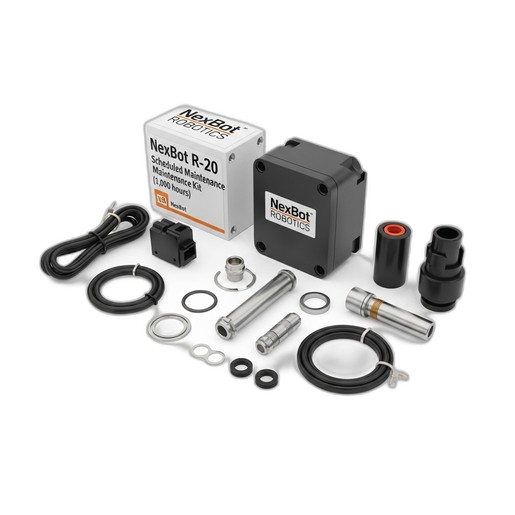
Following these prescribed intervals is crucial for addressing wear and tear before it escalates into a catastrophic failure. To simplify this process, standardized kits are invaluable. For instance, the NexBot R-20 Scheduled Maintenance Kit (NXB-KIT-R20-1000) is designed for the 1,000-hour service interval, a common milestone for many industrial robots. Using a comprehensive kit like this ensures that your technicians have all the necessary components on hand, eliminating the guesswork and potential for oversight.
A typical scheduled maintenance kit includes:
- Seals & O-Rings: These components are vital for preventing contaminants like dust and moisture from entering sensitive joints and gearboxes. They also prevent lubricants from leaking out. Over time, they can become brittle and lose their effectiveness.
- Grease Cartridge: Proper lubrication is the lifeblood of a robot's mechanical systems. Fresh, clean grease reduces friction, dissipates heat, and prevents premature wear on gears and bearings.
- Encoder Battery: This battery provides power to the robot's encoders, which track the precise position of each axis. A failing battery can lead to a loss of positional data, requiring a time-consuming and complex remastering process upon startup. Proactive replacement is a simple step that prevents a major headache.
- Filter Set: Filters in the robot controller cabinet protect sensitive electronics from airborne dust and debris. Clogged filters can lead to overheating and component failure.
By bundling these items, scheduled maintenance becomes a streamlined, repeatable task, ensuring no critical step is missed.
Key Areas of Focus for Comprehensive Inspection
While a scheduled service is the core of your PM program, regular inspections of key systems are equally important. Your maintenance team should be trained to look for subtle signs of wear and potential issues across the entire robotic cell.
Mechanical Systems and Lubrication
The robot arm itself is a complex assembly of motors, gears, and bearings.
- Listen: Encourage technicians to listen for any unusual noises, such as grinding, whining, or clicking, which can indicate bearing wear or gear problems.
- Look: Visually inspect joints for signs of leaking grease or oil, which points to failing seals. Check for excessive vibration or jerky movements during operation.
- Lubricate: Adhere strictly to the lubrication schedule. Using the correct type and amount of grease, as supplied in a kit like the NXB-KIT-R20-1000, is non-negotiable for protecting your investment.
Electrical Systems and Cabling
A robot is only as reliable as its connections. Cables are subjected to constant flexing, twisting, and environmental exposure, making them a common failure point.
- Inspect the Dress Pack: Check the external cable bundle for signs of abrasion, pinching, or stretching. Ensure it moves freely without snagging throughout the robot's full range of motion.
- Check Connection Points: Verify that all connectors are secure and free of corrosion. Loose connections can cause intermittent faults that are notoriously difficult to troubleshoot.
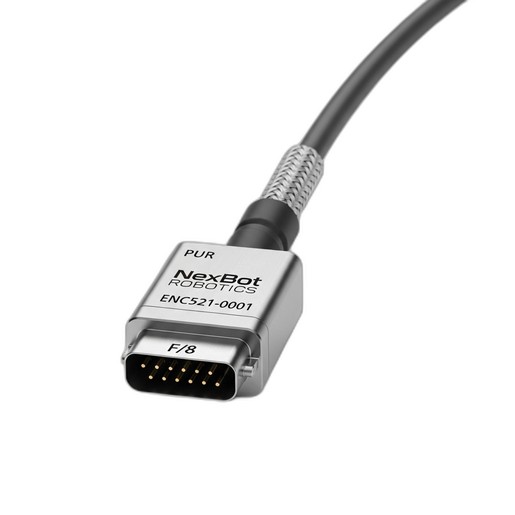
- Plan for Replacement: High-quality cables are essential for signal integrity. An encoder cable, for example, transmits critical position data. A failing cable can cause motion errors or complete shutdowns. Using a service-ready replacement like the NexBot Robotics ENC521-001 Encoder Cable (NXB-SNS-ENC521-001) ensures compatibility and reliable performance, minimizing diagnostic time when a replacement is needed. Don't wait for a cable to fail completely; if it shows signs of significant wear, schedule its replacement during the next planned downtime.
Peripherals: Sensors and Vision Systems
Your PM plan must extend beyond the robot arm to include the entire workcell, especially critical peripherals like vision systems.
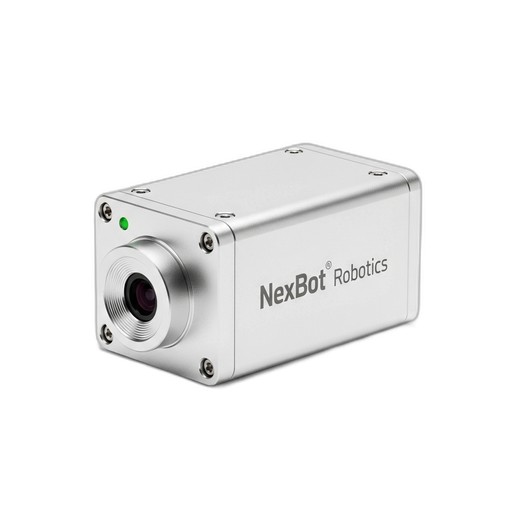
- Cleanliness is Key: A machine vision system relies on a clear view. The lens of a camera like the NexBot Robotics 321-001 2D Vision Camera (NXB-SNS-321-001) should be regularly cleaned with appropriate lens cleaning supplies. Dust, oil, or smudges can degrade image quality and lead to incorrect guidance or failed inspections.
- Secure Mounting: Vibrations can cause camera mounts to loosen over time, leading to a loss of calibration. Periodically check that all mounting hardware is tight and the camera's position has not shifted.
- Cable Integrity: Just like the robot's main cables, the camera's data cable (e.g., a GigE Vision interface cable) should be inspected for damage. A secure, undamaged connection is vital for the reliable, high-speed data transmission needed for robotic guidance.
Building Your Preventive Maintenance Checklist
To ensure consistency, create a detailed PM checklist that technicians can follow. This document should be tailored to your specific robots and applications but can be broken down into tiers based on frequency.
Daily (Pre-Shift Inspection):
- [ ] Visually inspect the robot and workcell for any obvious damage or leaks.
- [ ] Check that safety guards and sensors are functioning.
- [ ] Listen for unusual operating noises.
- [ ] Verify that the end-of-arm tooling (EOAT) is secure.
Weekly:
- [ ] Clean the robot arm and controller cabinet exterior.
- [ ] Check the integrity and security of the cable dress pack.
- [ ] Clean vision system lenses and check camera mounting.
- [ ] Test the emergency stop circuit.
Scheduled (e.g., Every 1,000 Hours):
- [ ] Perform all tasks from the NexBot R-20 Scheduled Maintenance Kit.
- [ ] Replace seals and o-rings.
- [ ] Re-grease all specified axes.
- [ ] Replace the encoder battery.
- [ ] Replace controller air filters.
- [ ] Back up the robot controller software and programs.
- [ ] Thoroughly inspect all cables and connectors for wear, replacing as needed.
The ROI of Proactive Maintenance
Investing time and resources into a preventive maintenance program delivers a clear and substantial return. The benefits go far beyond simply avoiding repairs.
- Maximized Uptime: The primary goal and greatest benefit. Scheduled, planned downtime is brief and controlled, unlike the lengthy and unpredictable nature of emergency repairs.
- Extended Equipment Lifespan: A well-maintained robot will perform reliably for years beyond one that is neglected, maximizing the return on your capital investment.
- Improved Safety: Worn components or failing safety circuits create a hazardous work environment. Regular inspections ensure the robot operates within its safety parameters.
- Predictable Budgeting: PM transforms maintenance costs from a volatile, reactive expense into a predictable, manageable operating cost.
Ultimately, preventive maintenance is about taking control. It's a strategic decision to invest in reliability, ensuring your automation systems remain a powerful asset rather than a potential liability. By implementing a consistent schedule, using high-quality service kits and components, and fostering a culture of proactive care, you can ensure your robots deliver the productivity and performance you depend on, day in and day out.