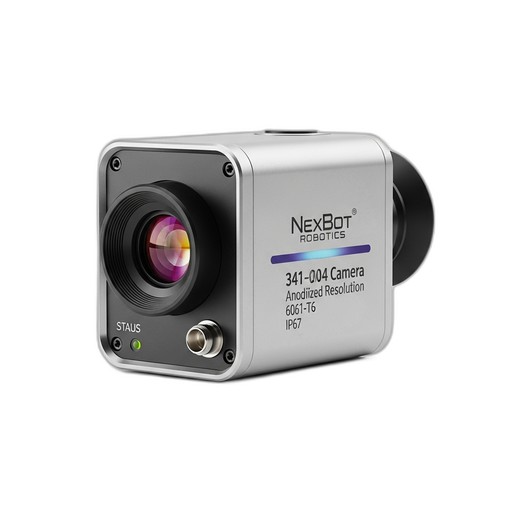
In the landscape of Industry 4.0, data is the currency of efficiency. The ability to see and interpret the physical world in real-time allows manufacturers to optimize processes, reduce waste, and guarantee quality. While traditional vision systems see in the visible spectrum, a critical layer of information often goes unnoticed: heat. Thermal data provides invaluable insights into process stability and product integrity. This is where specialized sensors like the NexBot Robotics 341-004 Thermal Camera become indispensable tools in the modern automation toolkit.
The Invisible World of Thermal Data
Every object with a temperature above absolute zero emits thermal radiation. Thermal cameras translate this infrared energy into a visible image, allowing us to literally see temperature variations across a surface. In an industrial setting, this capability moves beyond simple temperature checks to become a dynamic, non-contact method for comprehensive process control. A sudden hot spot on a circuit board, an unevenly cooled plastic part, or a subtle temperature drop in a chemical mixture can all be early indicators of a quality issue. Capturing this data robotically ensures consistency and repeatability, 24/7.
A Closer Look at the NexBot 341-004
The NexBot 341-004 is engineered specifically for the demanding environments of industrial automation. It's not just a camera; it's a ruggedized sensor designed for reliability and seamless integration. Let's break down its core attributes:
- Accurate Non-Contact Measurement: The camera provides precise temperature readings from -20°C to 400°C. This wide range covers applications from refrigerated environments to heat treatment and molding processes. Being non-contact is crucial—it prevents product contamination and allows for safe monitoring of moving parts or extremely hot surfaces.
- Clear Thermal Resolution: With a 160x120 resolution, the sensor delivers a detailed thermal map sufficient for identifying subtle temperature gradients and pinpointing anomalies in a wide variety of quality control tasks.
- Industrial-Grade Integration: The 341-004 operates on standard 24VDC power, making it compatible with typical control cabinets. More importantly, it communicates via the GigE Vision protocol. This is a globally recognized standard for high-performance machine vision, ensuring high-speed, reliable data transmission over common Ethernet cabling. This simplifies integration with industrial PCs and PLCs, allowing for immediate analysis and decision-making.
Key Applications in Automated Quality Control
Mounting a NexBot 341-004 Thermal Camera on a robotic arm unlocks a host of powerful applications that improve quality and throughput.
- Plastics and Molding: In injection molding, mold temperature is critical for part quality. The 341-004 can verify that a mold is at the correct temperature before injection and inspect the part post-ejection to ensure uniform cooling, preventing warpage and structural defects.
- Electronics Manufacturing: During in-circuit or functional testing of PCBs, the camera can detect overheating components that might indicate a short circuit or a failing part, catching defects long before they lead to field failures.
- Welding and Joining: The camera can monitor the heat-affected zone during and after welding operations. This data helps verify proper heat distribution and cooling rates, which are essential for ensuring the structural integrity of the weld.
- Packaging and Sealing: For heat-sealing applications in food, beverage, or medical packaging, the 341-004 can instantly verify that the seal has reached the correct temperature across its entire length, guaranteeing package integrity.
From Raw Data to Actionable Insights
A stream of thermal data is only useful if it can be acted upon. This is where the camera's data output becomes part of a larger ecosystem. The GigE Vision protocol allows the thermal video and temperature data to be fed directly into machine vision software for analysis. Automated routines can be configured to flag any reading that falls outside of predefined temperature thresholds, triggering an alert or directing a robot to sort the defective part into a rejection bin.
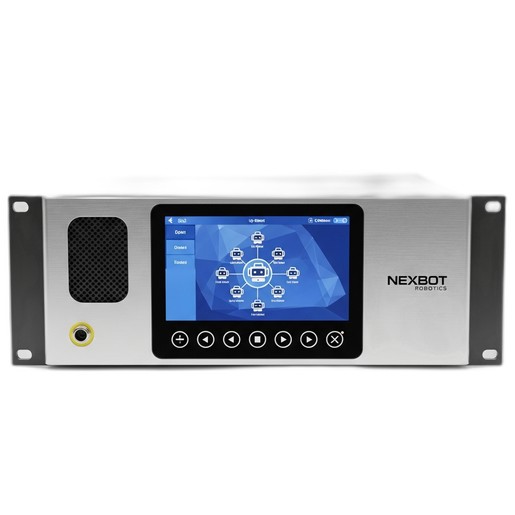
For larger operations, this data can be aggregated at a higher level. When multiple robots are equipped with these sensors, their data streams can be centralized using platforms like the NexBot Robotics 233-004 Fleet Management Software. By correlating thermal data with robot operational data, managers can gain a holistic view of production. This enables them to identify systemic issues, track process drift over time, and optimize parameters across the entire line, leading to significant improvements in Overall Equipment Effectiveness (OEE).
Conclusion: A Critical Sensor for Modern Manufacturing
The NexBot 341-004 Thermal Camera is more than just a component; it is a gateway to a deeper understanding of your manufacturing processes. By providing accurate, real-time thermal data in a rugged and easy-to-integrate package, it empowers manufacturers to automate complex quality control tasks, prevent defects before they happen, and build more intelligent, resilient production lines. In the pursuit of perfection, the ability to see heat is a clear competitive advantage.