The Modern Robotic Cell: An Integrated Ecosystem
In today's advanced manufacturing environments, an industrial robot is rarely a standalone machine. It's the centerpiece of a complex, interconnected ecosystem known as a robotic cell. This cell is a symphony of specialized components working in concert: the robot arm providing motion, the end-of-arm tooling (EOAT) performing the task, and the safety systems ensuring secure operation. The success of this entire system hinges on one critical element: communication. How these disparate components talk to each other—the protocols they use, the speed of their data exchange, and the reliability of their signals—determines the cell's performance, flexibility, and safety. This deep dive explores the digital handshake between the core components of a modern robotic cell, focusing on the technologies that make seamless integration possible.
The Central Nervous System: High-Speed Motion Control with EtherCAT
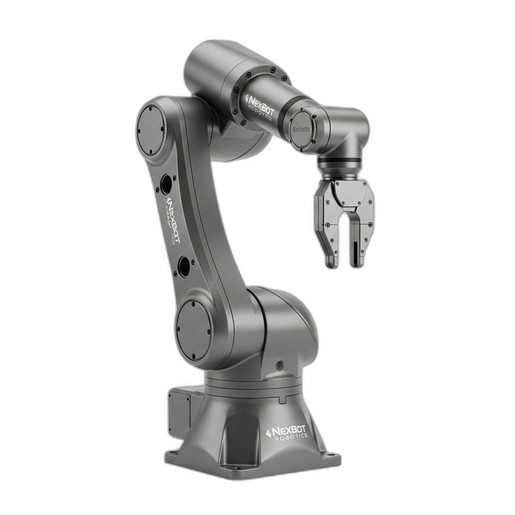
At the heart of any high-performance robotic application is the robot arm itself, governed by a powerful controller. For tasks requiring precision, speed, and synchronized movement, the choice of communication protocol is paramount. The NexBot Robotics MA012-009 6-Axis Robot Arm, for instance, leverages EtherCAT (Ethernet for Control Automation Technology) as its primary communication bus. This is no accident. EtherCAT is a real-time Industrial Ethernet protocol known for its exceptional performance and deterministic behavior.
Unlike standard Ethernet where data packets can experience variable delays, EtherCAT processes data 'on the fly.' An EtherCAT frame sent from the master controller passes through each slave device (like servo drives in the robot's joints). Each slave reads the data addressed to it and inserts its own data into the frame as it moves downstream. The frame returns to the master having visited every node in microseconds. This architecture provides several key advantages:
- Synchronization: EtherCAT enables distributed clocks with an accuracy of less than one microsecond. This ensures that all axes of a robot like the MA012-009 move with perfect synchronicity, which is crucial for complex motion paths in applications like welding, dispensing, or high-speed assembly.
- High Speed: The protocol's efficiency allows for extremely short cycle times, enabling the controller to update motion commands and receive feedback thousands of times per second. This translates to smoother, faster, and more precise robot movements.
- Flexible Topology: EtherCAT networks can be set up in various topologies (line, tree, star) without requiring complex switches, simplifying wiring within the robot and the wider cell.
For a 25 kg payload robot arm designed for machine tending and pick-and-place, the responsiveness afforded by EtherCAT is what allows it to meet demanding cycle time targets safely and repeatedly.
The Last Mile of Data: Intelligent Tooling with IO-Link
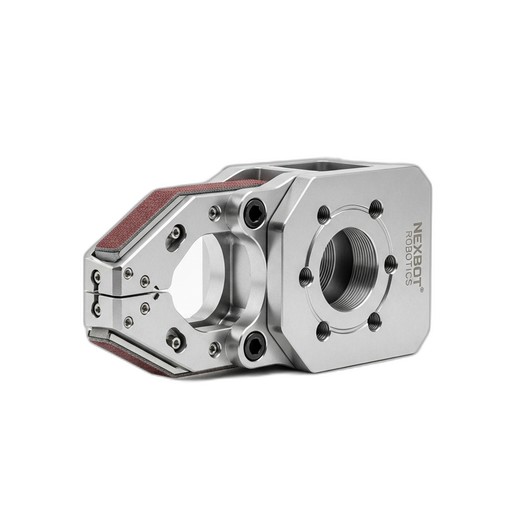
While EtherCAT manages the robot's core motion, the interaction with the workpiece is handled by the EOAT. Modern tooling is no longer a simple passive gripper or clamp; it's an intelligent device with its own sensors and actuators. The NexBot Drives 442-006 Sanding and Polishing Tool is a perfect example. It needs to do more than just spin; it needs to provide feedback on speed, temperature, and applied force, and it must allow for on-the-fly adjustments.
This is where IO-Link comes in. IO-Link is a standardized point-to-point communication protocol (IEC 61131-9) designed to connect smart sensors and actuators to a higher-level control system. It's often called the 'USB of industrial automation' for its simplicity and power. The 442-006 tool uses IO-Link to communicate over a standard 3-wire cable, which provides power and bidirectional data exchange.
The benefits for an advanced tool are immense:
- Simplified Installation: IO-Link uses standard, unshielded M12 connectors, eliminating complex wiring and potential for error.
- Advanced Diagnostics: The tool can report its status, operational hours, temperature warnings, or error codes directly to the robot controller. This is invaluable for predictive maintenance, as it allows technicians to address issues before they cause downtime.
- Remote Parameterization: An operator or PLC can digitally change the tool's parameters—such as the sanding speed or polishing pressure—without manual adjustments. This allows a single robotic cell to handle different parts or finishing requirements with a simple program change.
To integrate the IO-Link tool with the EtherCAT-based robot, an IO-Link Master is used. This device acts as a gateway, with multiple IO-Link ports on one side and an EtherCAT connection on the other. It translates the data from the 442-006 tool into the EtherCAT protocol, making it accessible to the main robot controller as if it were a native EtherCAT device.
The Uncompromising Mandate: Integrating Fail-Safe Systems
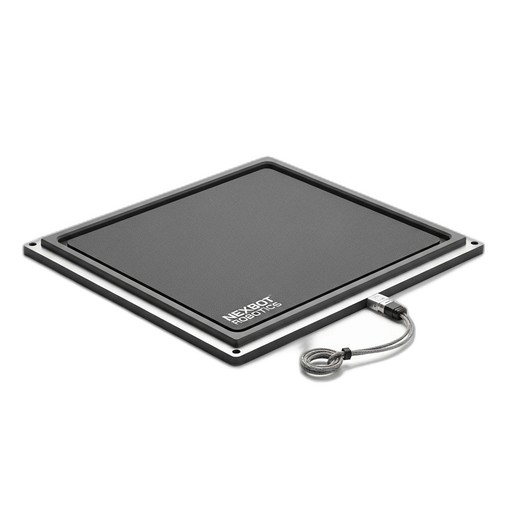
Performance and flexibility are meaningless without safety. A robotic cell must be designed to protect human personnel at all times. This is achieved through layers of safety devices, such as the NexBot Robotics 631-007 Pressure Safety Mat. When an operator steps on this mat, it must trigger an immediate and reliable stop command.
Unlike performance data from a tool, safety signals operate under a much stricter set of rules. They are typically handled by a dedicated safety controller or safety PLC. These signals are transmitted via redundant channels to ensure that any single point of failure (like a broken wire) results in a safe state (i.e., the robot stops). The 631-007 mat provides a dual-channel, fail-safe output that connects to this safety circuit.
In an EtherCAT environment, this is often accomplished using a protocol extension called FailSafe over EtherCAT (FSoE). The safety mat's signals are wired to a secure FSoE I/O module. This module encapsulates the safety data in a 'safe container' and transmits it over the same EtherCAT network as the standard control data. The safety controller validates the signal, and if a safety breach is detected, it issues a Safe Torque Off (STO) command to the robot's drives, guaranteeing a stop that overrides any command from the primary controller. This integration ensures that safety is not an afterthought but a deeply embedded, certified part of the machine's control architecture, compliant with standards like ISO 13849-1.
Conclusion: A Symphony of Protocols
Building a modern, high-functioning robotic cell is an exercise in system integration. It requires a deep understanding of how different technologies and protocols can work together to achieve a common goal. A high-speed protocol like EtherCAT provides the backbone for precise robotic motion for the MA012-009 arm. A versatile protocol like IO-Link offers the plug-and-play intelligence needed for advanced EOAT like the 442-006 finishing tool. And robust, certified safety protocols like FSoE ensure that powerful systems, monitored by devices like the 631-007 safety mat, operate without compromising human well-being. The digital handshake between these components is what transforms a collection of hardware into a truly intelligent and productive automation solution.