The Unseen Backbone of Modern Automation
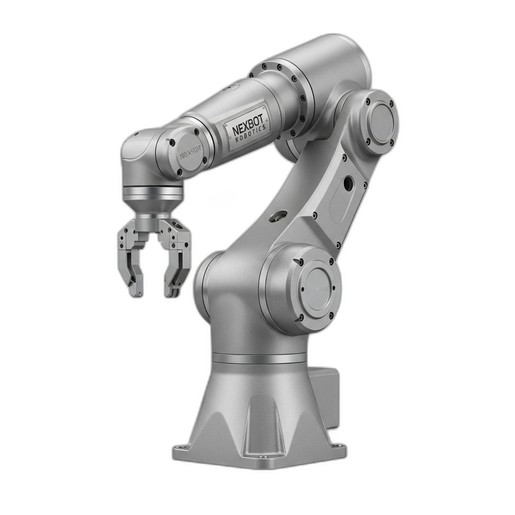
In any automated facility, the sight of an articulated robot like the NexBot R-20 moving with speed and precision is impressive. Its arms maneuver a 50kg payload through a complex sequence of motions, placing it perfectly every time. But behind this physical prowess lies an invisible yet critical infrastructure: the industrial communication protocol. This digital nervous system is responsible for transmitting every command, sensor reading, and safety signal with uncompromising speed and reliability. Without it, the robot is merely a collection of motors and steel. Understanding this technology is key to appreciating the true capability of production-grade automation.
Industrial communication protocols are the specialized languages that allow robots, Programmable Logic Controllers (PLCs), sensors, and other factory-floor devices to communicate. Unlike standard office Ethernet, these protocols are designed for the harsh realities of the industrial environment and, most importantly, for real-time performance. In robotics, a delay of even a few milliseconds can lead to positioning errors, reduced throughput, or safety failures. This is why protocols like PROFINET, the standard used in the NexBot R-20, are fundamental to high-performance robotics.
PROFINET: Real-Time Communication over Industrial Ethernet
PROFINET is an open technical standard for data communication over Industrial Ethernet. It leverages standard Ethernet hardware but adds a layer of software and protocols to achieve the deterministic performance required for industrial control. This means that data packets arrive exactly when they are expected to, eliminating the variability (or 'jitter') that is common in standard IT networks. This determinism is the secret to a robot's repeatable motion control.
PROFINET achieves this through several communication classes, with Isochronous Real-Time (IRT) being the most critical for demanding motion control applications. IRT synchronizes the communication cycles of all devices on the network with extreme precision, typically with a jitter of less than one microsecond. For a multi-axis robot like the NexBot R-20, this synchronized communication is essential. It ensures that the commands sent to each of the robot's joints are executed in perfect harmony, allowing for smooth, accurate, and high-speed path following.
Why Determinism Matters for the NexBot R-20
The capabilities of the NexBot R-20 Articulated Robot are directly enabled by its PROFINET backbone. Let's explore how this technology translates into tangible performance benefits on the factory floor.
1. Precision and Repeatability: When an application demands that a robot place a component with sub-millimeter accuracy thousands of times a day, there is no room for error. PROFINET's low latency and deterministic nature ensure that the robot's control system can calculate and execute complex motion paths with the highest fidelity. The physical motion of the robot arm perfectly matches the digital plan, cycle after cycle.
2. High-Speed Payload Handling: Moving a 50kg payload quickly and safely requires immense coordination between the robot's axes. The high bandwidth of PROFINET allows the robot controller to process vast amounts of data—from motor encoders, torque sensors, and the master PLC—in real time. This enables rapid acceleration and deceleration profiles without sacrificing stability or accuracy, maximizing throughput.
3. Seamless Integration: A robot rarely works in isolation. It is part of a larger automated cell that may include vision systems, conveyors, safety scanners, and an HMI. PROFINET's use of standard Ethernet technology makes it simple to integrate these disparate devices into a single, cohesive network. This simplifies system design, reduces wiring complexity, and allows for centralized control and monitoring.
Beyond Motion: The Role of Protocols in Diagnostics and Maintenance
A robust communication protocol does more than just control motion; it is also a vital conduit for system health and diagnostic information. PROFINET provides extensive diagnostic capabilities that allow for proactive maintenance, a core principle behind the design of service-friendly robots like the R-20.
Network devices, including the robot itself, can report their status, error codes, and performance metrics back to a central controller. This data can be analyzed to predict potential failures before they occur. For instance, a gradual increase in motor current or temperature on a specific axis could indicate bearing wear or a need for lubrication. This is the kind of intelligence that allows a maintenance team to act proactively.
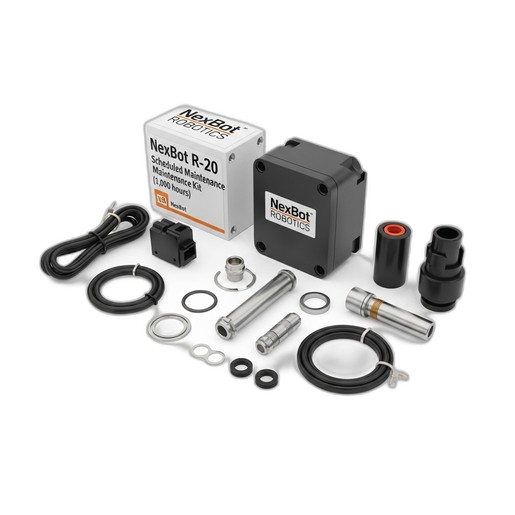
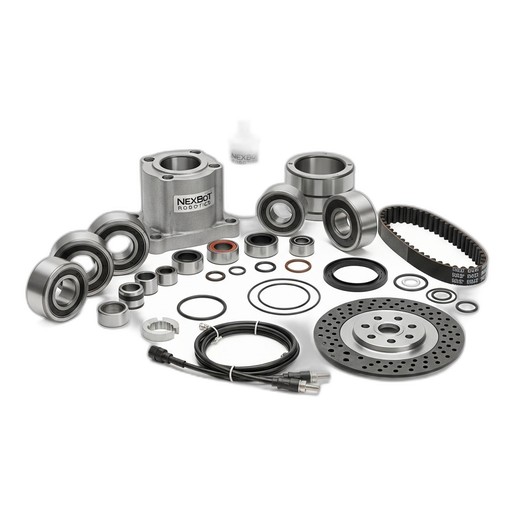
This is where planned maintenance becomes crucial. The system's diagnostic data can help confirm when it's time for scheduled service. Following a structured maintenance plan using designated kits ensures long-term reliability. For routine upkeep, the NexBot R-20 Scheduled Maintenance Kit (NXB-KIT-R20-1000) provides everything needed for the 1,000-hour service interval, including a new encoder battery, grease, and seals. For more intensive service, the NexBot R-20 Major Overhaul Kit (NXB-KIT-R20-5000) contains the timing belts, bearings, and brake components required at the 5,000-hour mark. This proactive approach, enabled by the rich data flowing over the PROFINET network, minimizes unplanned downtime and extends the robot's operational life.
Conclusion: The Power of Intelligent Communication
The physical strength and mechanical design of an industrial robot are only half the story. Its true potential is unlocked by the speed, precision, and intelligence of its communication protocol. For the NexBot R-20, PROFINET provides the digital foundation for best-in-class performance, enabling everything from precise, high-speed motion to advanced diagnostics that simplify maintenance. By understanding the role of this digital nervous system, you can better appreciate the complex technology that drives modern manufacturing forward and make more informed decisions about your automation investments.