The Dawn of a Smarter Factory
The landscape of modern manufacturing is undergoing a profound transformation. Industry 4.0, the fourth industrial revolution, is no longer a futuristic concept but a present-day reality, fundamentally altering how products are designed, produced, and delivered. At the heart of this revolution lies industrial robotics, evolving from simple, repetitive task-doers into intelligent, data-driven systems that form the backbone of the smart factory. This evolution isn't just about faster or stronger robots; it's about creating a cohesive ecosystem where hardware, software, and human expertise converge to unlock unprecedented levels of efficiency, flexibility, and quality. As we look at the key trends shaping this new era, it becomes clear that success hinges on a holistic approach that embraces advanced components, adaptable tooling, and a highly skilled workforce.
Trend 1: The Rise of Sentient Robotics with Advanced Sensing
For decades, industrial robots operated 'blindly,' executing pre-programmed paths with high precision but with little to no awareness of their immediate environment. The primary trend driving automation forward is the integration of advanced sensors, giving robots a sense of perception akin to human touch and sight. This shift from blind execution to sensory-driven adaptation is critical for complex tasks that require finesse and variability.
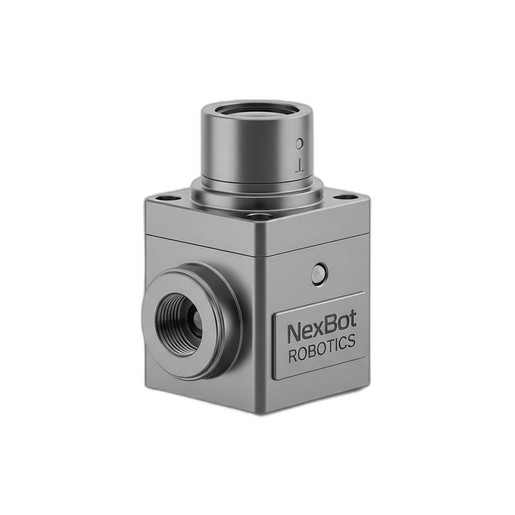
Leading this charge are multi-axis force/torque (F/T) sensors. These components are game-changers, enabling robots to 'feel' the forces and torques they exert and experience in real-time. Imagine a delicate assembly task where a component must be inserted with precise pressure, or a surface polishing application that requires consistent force across a complex contour. Without sensory feedback, these tasks are nearly impossible to automate reliably. A high-precision 6-axis force/torque sensor, such as the NexBot Drives 311-006 6-Axis Force/Torque Sensor (NXB-SNS-311-006), provides the granular data needed for this level of control. By integrating such a component, a robot can detect contact, adjust its path to avoid binding, and apply just the right amount of force, dramatically improving process quality and reducing defects. The use of high-speed communication protocols like EtherCAT ensures that this crucial feedback is delivered with minimal latency, allowing for immediate adjustments in the robot's motion.
Trend 2: Intelligent and Adaptable End-of-Arm Tooling (EoAT)
A robot is only as capable as the tool it wields. End-of-Arm Tooling (EoAT) is where the robot physically interacts with the workpiece, and the trend here is a move towards greater adaptability, intelligence, and ease of integration. While advanced servo-electric grippers and vision-guided tools are gaining traction, the foundation of countless applications remains robust and reliable tooling like pneumatic grippers.
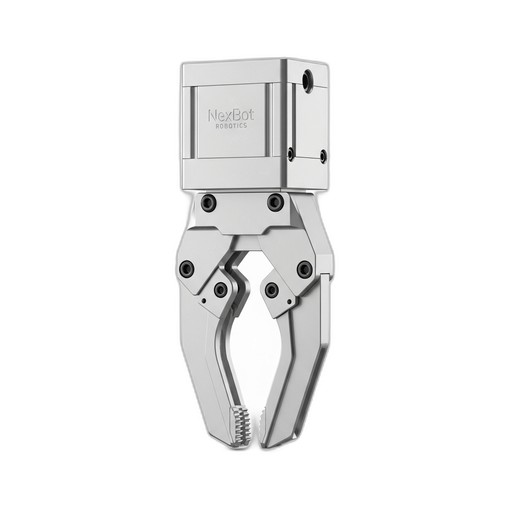
These workhorses of automation are essential for pick-and-place, machine tending, and packaging operations. The modern trend isn't necessarily to replace them, but to integrate them into smarter systems. A product like the NexBot Drives PNU411-006 Pneumatic Gripper (NXB-GEN-PNU411-006) exemplifies this principle. It is designed for service-ready installation and specification-driven replacement, minimizing downtime and simplifying maintenance. In an Industry 4.0 context, even a seemingly simple component like a pneumatic gripper becomes part of a larger data ecosystem. Its performance can be monitored, and its lifecycle managed through predictive maintenance schedules, ensuring that the most critical point of contact in the automation cell remains consistently reliable. The future of EoAT lies in this blend of proven, robust hardware and intelligent system-level integration.
Trend 3: Bridging the Skills Gap with Specialized Training
The most sophisticated hardware is ineffective without the human expertise to deploy, manage, and optimize it. As robotic systems become more complex—incorporating advanced sensors, vision systems, and intricate logic—the skills required to manage them have evolved significantly. The 'skills gap' is one of the most significant challenges facing manufacturers adopting Industry 4.0 technologies. Simply knowing how to jog a robot or program a basic pick-and-place routine is no longer sufficient.
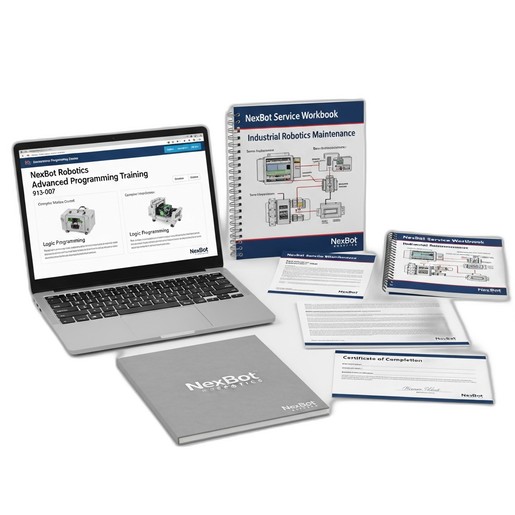
Today's automation specialists must be proficient in complex motion control, understand how to integrate and interpret data from sensors like F/T units, and write sophisticated logic to handle process variations. This requires a commitment to continuous learning and advanced training. Investing in your technical team is as crucial as investing in new capital equipment. Specialized programs, such as the NexBot Robotics Advanced Programming Training Course 913-007 (NXB-TRN-913-007), are designed to elevate the capabilities of experienced technicians. Such courses move beyond the fundamentals to cover the very skills needed to unlock the full potential of a modern robotic system. By empowering engineers and technicians to master these advanced concepts, companies can ensure they are not just installing robots, but are building truly intelligent and adaptable automation solutions.
Conclusion: A Holistic Vision for the Future
The path to a successful Industry 4.0 implementation is not paved by a single technology. It is built upon a strategic integration of interconnected elements. The key trends—advanced sensing, adaptable EoAT, and workforce upskilling—are not independent but deeply intertwined. A force/torque sensor provides the data, a reliable gripper acts upon it, and a skilled programmer orchestrates the entire process to achieve a result that is greater than the sum of its parts. By focusing on this holistic ecosystem, manufacturers can move beyond simple automation and build the resilient, efficient, and intelligent factories of the future.