The landscape of modern manufacturing is undergoing a seismic shift. Driven by the principles of Industry 4.0, factories are transforming into highly connected, intelligent, and autonomous ecosystems. At the heart of this revolution lies industrial robotics, which has evolved far beyond simple, repetitive task automation. Today’s robotic systems are sophisticated, data-rich, and collaborative, enabling unprecedented levels of efficiency, quality, and flexibility. Understanding the key trends driving this evolution is crucial for any organization looking to maintain a competitive edge. Let's explore the dominant forces shaping the future of industrial automation.
Trend 1: The Rise of Smart Sensors and Data-Driven Operations
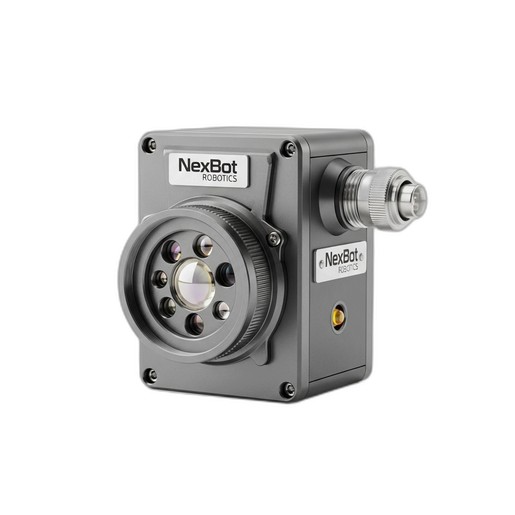
Data is the lifeblood of Industry 4.0, and modern robotic systems are prolific data generators. The integration of advanced sensors has moved beyond simple presence detection to encompass a rich tapestry of environmental and operational data. Vision systems, thermal cameras, and environmental monitors are giving robots a new level of awareness, allowing them to not only perform tasks but also inspect, analyze, and adapt in real-time. This flood of data fuels predictive maintenance algorithms, enhances quality control, and optimizes entire production lines. For example, a component like the NexBot Robotics 341-006 Thermal Camera can be integrated into a robotic cell to provide non-contact temperature monitoring of critical machinery or in-process materials. By detecting thermal anomalies before they lead to failure, manufacturers can prevent costly downtime and ensure product consistency, turning a simple robotic arm into a proactive quality assurance tool.
Trend 2: Hyper-Precision with Advanced Motion Control
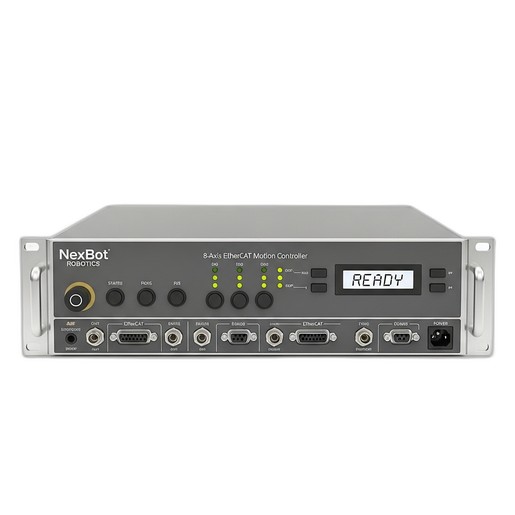
As manufacturing processes become more complex, the demand for speed, precision, and synchronized multi-axis movement has skyrocketed. The clumsy, point-to-point movements of the past are being replaced by fluid, intricate motion paths required for tasks like complex assembly, laser welding, and high-speed pick-and-place. This leap in performance is powered by innovations in motion control technology. High-performance controllers, such as the NexBot Robotics 213-013 8-Axis EtherCAT Motion Controller, are central to this trend. By leveraging high-speed industrial protocols like EtherCAT, these controllers achieve sub-millisecond cycle times, ensuring all robotic axes are perfectly synchronized. This level of precision allows for smoother operations, higher throughput, and the ability to execute tasks that were previously impossible to automate, pushing the boundaries of what robots can achieve on the factory floor.
Trend 3: Human-Robot Collaboration and Dynamic Safety
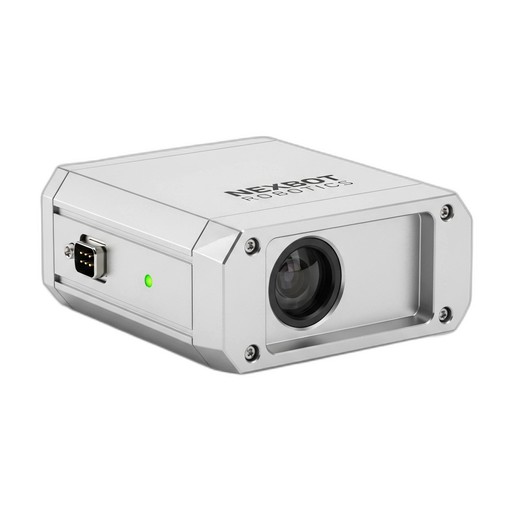
Perhaps one of the most significant trends is the blurring of lines between human and robotic workspaces. The era of caging every robot is giving way to a more collaborative environment where humans and machines work side-by-side. This shift, driven by the rise of collaborative robots (cobots), is also influencing traditional industrial robotics. The key enabler for this trend is advanced safety technology. Instead of static physical barriers, modern work cells utilize dynamic safety systems that adapt to the presence of human operators. Advanced components like the NexBot Robotics 332-016 Laser Safety Scanner are critical in creating these fenceless applications. These scanners create configurable protective fields around the robot. If a person enters a designated warning zone, the robot might slow down; if they enter the critical protective field, the robot stops immediately. This allows for more flexible floor layouts, seamless human intervention, and a safer, more efficient partnership between people and machines.
Trend 4: Interoperability and Simplified Integration
In the connected factory, no single piece of equipment exists in a vacuum. The ability for robots, controllers, sensors, and enterprise-level software to communicate seamlessly is paramount. This has led to a strong industry push towards standardized communication protocols and open integration platforms. Manufacturers are moving away from proprietary, closed-off systems in favor of components that can communicate using widely adopted industrial standards like EtherCAT, PROFINET, and GigE Vision. This trend simplifies the integration process, reduces engineering time, and gives businesses the flexibility to choose best-in-class components from various suppliers without worrying about compatibility issues. A single robotic cell might use a PROFINET safety scanner, an EtherCAT motion controller, and a GigE Vision camera, all working in concert. This plug-and-produce philosophy is accelerating the adoption of automation by lowering the barrier to entry and enabling more agile and scalable manufacturing systems.
Conclusion: Weaving the Trends into a Smarter Future
These trends are not isolated developments; they are interconnected threads weaving the fabric of the smart factory. Advanced motion controllers provide the precision, smart sensors provide the data and awareness, and dynamic safety systems provide the collaborative framework. Together, they create robotic systems that are not just more efficient, but also more intelligent, flexible, and responsive to the demands of modern production. As these technologies continue to mature and converge, they will unlock even greater potential for automation, solidifying the role of robotics as a cornerstone of Industry 4.0 and the future of manufacturing.