The fourth industrial revolution, or Industry 4.0, is no longer a futuristic concept—it's the new reality for manufacturers worldwide. This evolution is characterized by the fusion of digital and physical technologies, creating smart factories that are more efficient, flexible, and data-driven than ever before. At the heart of this transformation lies industrial robotics, which has moved beyond simple, repetitive tasks to become a cornerstone of intelligent manufacturing ecosystems. Let's explore the key trends defining the role of robotics in this new era.
Trend 1: The Rise of Collaborative Robots (Cobots)
Perhaps the most significant shift in recent years is the growth of collaborative robotics. Unlike traditional industrial robots that operate within caged-off safety zones, cobots are designed to work safely alongside human employees. This collaboration enhances human capabilities, taking over strenuous or repetitive tasks while allowing workers to focus on more complex, value-added activities like quality control and problem-solving. This trend has democratized automation, making it accessible and affordable for small and medium-sized enterprises (SMEs) that previously found traditional automation to be cost-prohibitive.
Trend 2: Data-Driven Manufacturing and the IIoT
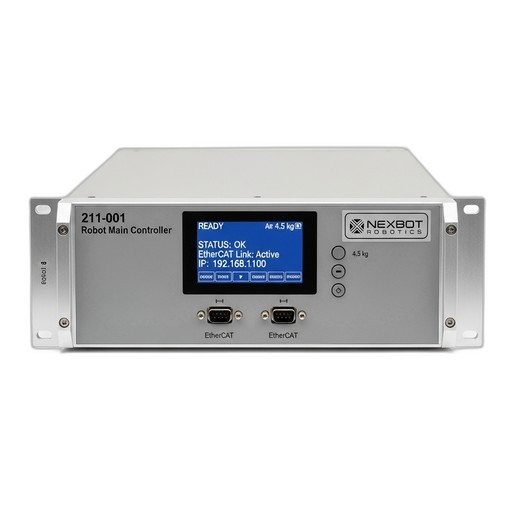
The Industrial Internet of Things (IIoT) is the connective tissue of the smart factory. Modern robotic systems are packed with sensors that generate vast amounts of data about performance, health, and operational cycles. This data is the lifeblood of Industry 4.0. The central processing unit of any modern robot is its controller, which must manage more than just motion. It serves as a critical data hub. For instance, the NexBot Robotics 211-001 Robot Main Controller leverages the high-speed EtherCAT protocol not just for real-time motion control but also for seamless communication across the entire production line. This level of connectivity enables predictive maintenance, real-time performance optimization, and integration with enterprise-level planning systems, turning raw data into actionable intelligence.
Trend 3: Modular and Flexible Automation
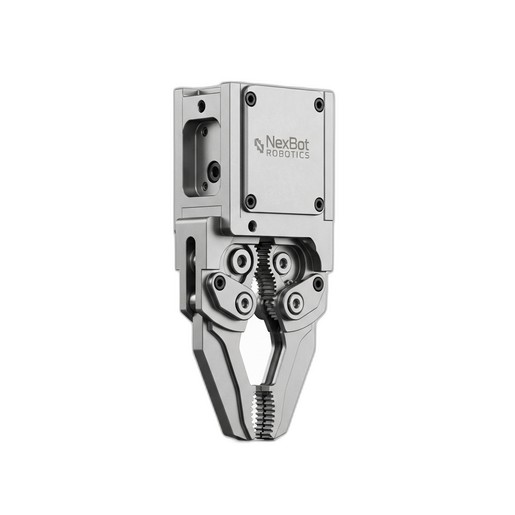
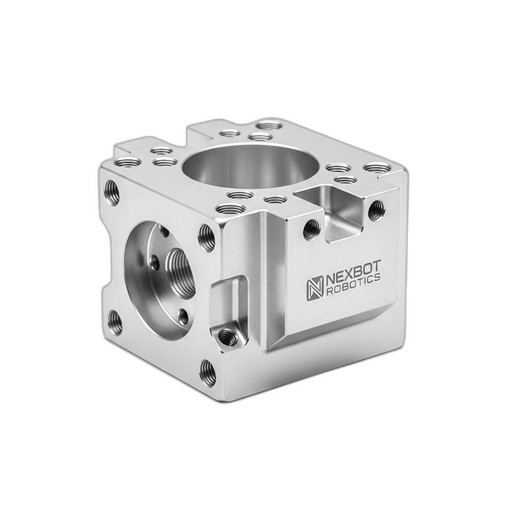
The days of single-purpose, monolithic production lines are fading. Today’s market demands high-mix, low-volume production, which requires automation systems that can be quickly reconfigured. Modularity is key. This trend is most visible in End-of-Arm Tooling (EoAT) and mounting systems. Standardized interfaces, such as the one found on the NexBot Robotics 813-001 Tool Adapter Plate, which adheres to the ISO 9409-1 standard, allow manufacturers to swap grippers, welders, or sensors in minutes, not hours. This adaptability is complemented by intelligent tools like the NexBot Robotics ELC412-001 Electric Gripper. With its adjustable force control and wide stroke, a single gripper can handle a variety of parts—from delicate electronics to rugged metal components. Its IO-Link communication protocol further enhances flexibility, allowing for on-the-fly parameter changes directly from the main controller without manual adjustments, perfectly embodying the principles of a reconfigurable smart factory.
Trend 4: Artificial Intelligence and Machine Vision
Artificial intelligence (AI) and machine learning are elevating robotics from simple programmable machines to intelligent partners in production. When integrated with machine vision systems, robots can perform complex tasks that were once impossible to automate. These include intricate assembly operations, advanced quality inspection with sub-millimeter accuracy, and 'bin picking'—identifying and grasping randomly oriented parts from a container. AI algorithms also optimize robot path planning for greater speed and energy efficiency and analyze operational data to predict component failure before it causes downtime. This intelligence layer, processed by powerful controllers, is what truly unlocks the potential of a fully autonomous and self-optimizing manufacturing environment.
Building the Future with NexBot Robotics
Navigating the landscape of Industry 4.0 requires a foundation of reliable, interoperable, and intelligent components. The trends of collaboration, connectivity, and flexibility are not independent; they are deeply intertwined. A successful automation strategy depends on a cohesive ecosystem where the controller, mounting hardware, and end-effectors work in perfect harmony. At NexBot Robotics, we provide the foundational building blocks for the factory of the future, from powerful EtherCAT-enabled controllers to versatile electric grippers and standardized mounting plates. By embracing these core trends, manufacturers can build resilient, efficient, and competitive operations ready for the challenges of tomorrow.