The New Era of Industrial Automation
The landscape of modern manufacturing is undergoing a profound transformation. Driven by the principles of Industry 4.0, businesses are seeking more than just raw power from their production lines; they demand agility, precision, and intelligence. The push for shorter product cycles, mass customization, and resilient supply chains has shifted the focus toward flexible automation solutions. In this new era, industrial robots are not just tools but strategic assets. Among the diverse types of robotic systems, the SCARA (Selective Compliance Assembly Robot Arm) robot is experiencing a significant surge in adoption, emerging as a critical enabler for factories of the future.
Why SCARA Robots are Gaining Momentum
SCARA robots are renowned for their speed and precision in planar movements, making them exceptionally well-suited for tasks like pick-and-place, assembly, packaging, and dispensing. Their four-axis design provides rigidity in the vertical direction and compliance in the horizontal plane, a combination that is perfect for high-speed, repeatable operations. Unlike more complex six-axis arms, SCARAs offer a cost-effective solution with a smaller footprint, making them an ideal choice for integrating into existing production lines or designing compact, efficient work cells.
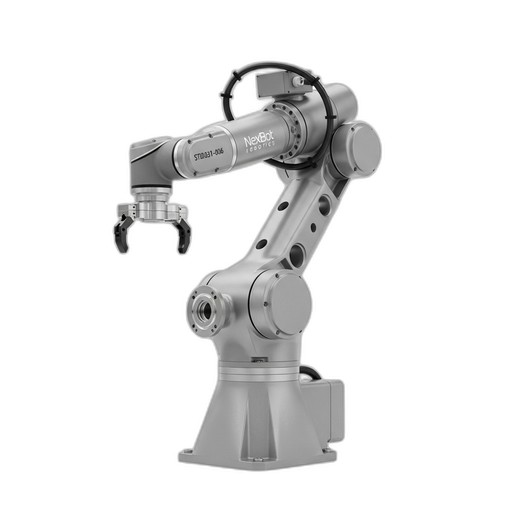
Models like the NexBot Drives STD031-006 SCARA Robot exemplify the modern capabilities that are driving this trend. With a versatile 5 kg payload and a 600 mm reach, it hits the sweet spot for a vast range of applications in electronics, consumer goods, and medical device manufacturing. The integration of modern communication protocols like EtherCAT further simplifies its deployment into connected factory ecosystems.
Trend 1: Increased Accessibility for SMEs
For years, high implementation costs and programming complexity limited advanced automation to large enterprises. Today, that barrier is rapidly eroding. One of the most significant trends is the democratization of robotics. Manufacturers are engineering SCARA robots to be more user-friendly, with intuitive programming interfaces and streamlined integration processes. This focus on accessibility means that small and medium-sized enterprises (SMEs) can now leverage the same competitive advantages in productivity and quality control that were once out of reach. The lower total cost of ownership, combined with a faster return on investment, makes adopting robots like the STD031-006 a viable and strategic decision for a broader segment of the market.
Trend 2: The Non-Negotiable Role of Integrated Safety
As automation becomes more prevalent, ensuring a safe working environment for human personnel is paramount. The trend is moving away from simply caging robots off toward creating intelligent, dynamic safety zones that allow for collaboration and efficient workflow. This is where advanced safety systems become critical. Light curtains, for example, create an invisible barrier that, when breached, can signal the robot to slow down or stop, preventing accidents without the need for cumbersome physical guards.
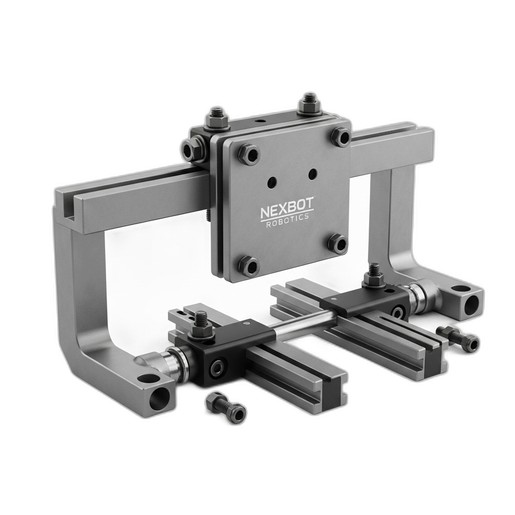
However, the effectiveness of these safety devices depends entirely on their mounting and positioning. A poorly installed light curtain is a major safety liability. That's why high-quality components like the NexBot Drives 612-006 Adjustable Light Curtain Mount Set are essential. These service-ready mounts ensure that safety devices are installed correctly, remain accurately aligned despite vibration, and comply with rigorous safety standards. This trend highlights a holistic view of automation, where the robot's performance and the integrity of its safety system are given equal importance.
Trend 3: A Laser Focus on Reliability and Uptime
The promise of automation—24/7 operation, consistent quality, and high throughput—can only be realized if the systems are reliable. Unplanned downtime can quickly erase any gains in efficiency. Consequently, there is a growing industry focus on the long-term durability and serviceability of robotic systems. This extends beyond the robot arm itself to every single component within the work cell.
This trend emphasizes the importance of using high-grade, precision-engineered components, even for what might seem like minor parts. For instance, the joints of a robot arm undergo millions of cycles under significant stress. The use of components like the NexBot Robotics 833-004 Hardened Steel Washer And Spacer Set is crucial for maintaining the robot's integrity and performance. These case-hardened steel parts ensure optimal load distribution, prevent premature wear on critical joints, and guarantee that the robot maintains its repeatable accuracy over its entire service life. In a modern factory, there is no such thing as an insignificant part; every component contributes to the system's overall reliability and uptime.
Conclusion: The Future is Automated and Integrated
The current trends in industrial automation point toward a future that is more accessible, safer, and more reliable than ever before. SCARA robots are at the forefront of this movement, offering a powerful combination of speed, precision, and cost-effectiveness. As manufacturers continue to embrace Industry 4.0, the success of their automation strategy will depend on a comprehensive approach—one that pairs capable robots with robust safety systems and a commitment to quality down to the last washer. By understanding and embracing these trends, businesses can unlock new levels of productivity and position themselves to thrive in an increasingly competitive global market.