In the world of industrial automation, the robotic arm often gets all the attention. However, its performance is fundamentally dependent on the ecosystem of peripherals that support it. A state-of-the-art robot is only as reliable as its weakest component. Unplanned downtime is rarely caused by a catastrophic failure of the main robot controller or arm structure; more often, it's a worn-out belt, a misaligned tool changer, or a jammed parts feeder that brings a multi-million dollar production line to a halt.
This is why a comprehensive preventive maintenance (PM) program for your robotic cell must extend beyond the arm itself. By focusing on the critical peripherals that handle parts, change tools, and transmit motion, you can prevent failures before they happen, ensure consistent quality, and maximize your return on investment. This guide provides a practical checklist for maintaining three of the most common and critical robotic accessories.
Maintaining Your Parts Feeder for Consistent Throughput
A vibratory bowl feeder is the unsung hero of many assembly operations, tirelessly sorting and orienting components for pickup. When it works, it's invisible. When it fails, the entire line stops. Proactive maintenance is key to its reliability.
Daily Checks:
- Visual Inspection: Look for any foreign objects, debris, or fluid contamination inside the bowl. A small metal shaving or a buildup of cutting fluid can easily cause parts to jam or misalign.
- Sensor Check: Ensure that part-level sensors are clean and functioning correctly. A dusty sensor can fail to detect a low-level condition, starving the robot of components.
Weekly Checks:
- Thorough Cleaning: Wipe down the stainless steel bowl and feed tracks with an appropriate cleaning agent. For feeders like the NexBot Robotics 841-005 Parts Feeder, a clean surface is essential for consistent part flow.
- Check Mountings: Verify that all mounting bolts for the feeder and its controller are secure. The constant vibration can cause fasteners to loosen over time, which affects performance and can lead to damage.
Monthly/Quarterly Checks:
- Vibration Tuning: The optimal vibration frequency can drift over time or may need adjustment if you switch to a slightly different part. Check the part flow and make fine adjustments to the vibration controller to ensure smooth, consistent sorting without causing parts to jump or jam.
- Electrical Inspection: Inspect the 24VDC power supply and IO-Link communication cable for signs of wear, abrasion, or loose connections. Secure connections are critical for reliable operation.
Proactive Care for Automatic Tool Changers
Automatic tool changers (ATCs) give a single robot the versatility to perform multiple tasks, from welding to material handling. Their reliability is paramount for flexible manufacturing. An ATC failure can result in a dropped tool, damaged product, or a dangerous system state.
Per-Shift Checks:
- Visual Confirmation: Before starting a run, visually confirm that the correct tool is mounted and that the ATC locking mechanism is fully engaged.
Weekly Checks:
- Cleanliness: The mating surfaces of the tool changer are precision-machined. Keep them clean and free of dirt, grease, and metal particles. Use compressed air to gently clean the locking mechanism and electrical contact points.
- Inspect for Wear: Examine the locking pins, bushings, and alignment dowels for signs of galling, scoring, or excessive wear. These are key indicators that a component is nearing the end of its service life.
- Test Connections: For ATCs like the NexBot Drives 421-006, which pass electrical signals, perform a functional test of all connections. Ensure that signals and power are passing through to the end-of-arm tool (EOAT) without interruption.
Monthly Checks:
- Lubrication: Follow the manufacturer's schedule for lubricating the ATC's moving parts. Use the specified lubricant to prevent premature wear and ensure smooth locking and unlocking actions.
- Torque Check: Re-check the torque on the bolts mounting the ATC to the robot wrist and the tool plates to the EOAT. These connections are subject to high dynamic loads.
The Critical Role of Timing Belt Inspection
Deep inside the robot's joints, timing belts are responsible for the precise, low-backlash transmission of power from the motors to the linkages. A failing belt can lead to positional inaccuracies, while a broken belt will cause a complete axis failure.
Quarterly Inspection (or more frequently in high-cycle applications):
- Tension Check: Belt tension is critical. A belt that is too loose will allow backlash, ruining positioning accuracy. A belt that is too tight will put excessive strain on motor bearings and the belt's own tensile cords. Use a tension gauge to ensure it is within the manufacturer’s specified range.
- Visual Wear Inspection: Carefully inspect the belt for signs of degradation. Look for:
- Cracking: Small cracks on the back of the belt or at the base of the teeth.
- Fraying: Worn fabric or exposed tensile cords along the edges of the belt.
- Tooth Wear: Look for rounding, shearing, or a glossy appearance on the tooth flanks, which indicates advanced wear.
Scheduled Replacement:
- Timing belts are wear parts with a finite lifespan. Do not wait for one to fail. Adhere strictly to the replacement interval specified by the robot manufacturer, which is typically based on operational hours.
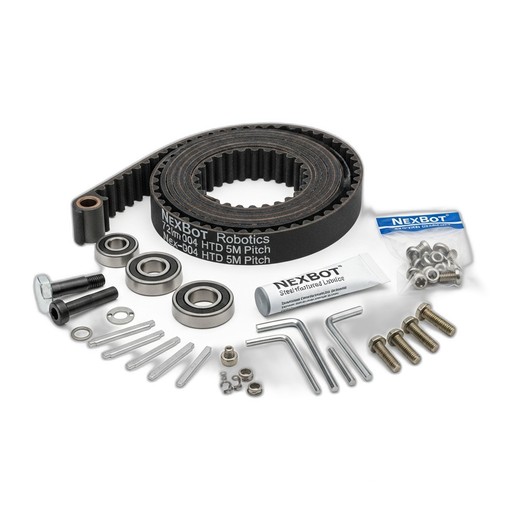
- When it's time for a replacement, always use a genuine, high-quality part like the NexBot Robotics 721-004 Timing Belt. Its HTD 5M pitch and specific construction are engineered to match the robot's performance requirements, ensuring that precision and reliability are maintained after service.
By integrating these checks into your regular PM schedule, you transform maintenance from a reactive, costly fire-fight into a proactive strategy for maximizing productivity and extending the operational life of your entire robotic system.