Introduction: Why Preventive Maintenance is Non-Negotiable
In modern manufacturing and logistics, industrial robots are the engines of productivity. A collaborative robot, or cobot, represents a significant investment in efficiency and flexibility. However, like any high-performance machine, its reliability is directly tied to how well it's maintained. Unplanned downtime is one of the most significant hidden costs in any automated facility, leading to production halts, missed deadlines, and costly emergency repairs.
A proactive preventive maintenance (PM) schedule is the most effective strategy to counteract these risks. By investing a small amount of time on a regular basis, you can extend the life of your equipment, ensure consistent performance, and maintain a safe working environment for your team. This guide provides a comprehensive checklist tailored for collaborative robots, helping you protect your investment and maximize your return.
The Foundation: Safety First, Always
Before any maintenance task begins, safety is the absolute priority. All maintenance should be performed by personnel who have been properly trained on the specific equipment and safety procedures. Powering down and following proper lock-out/tag-out (LOTO) procedures is mandatory for any task that involves physical contact with the robot's mechanical or electrical systems.
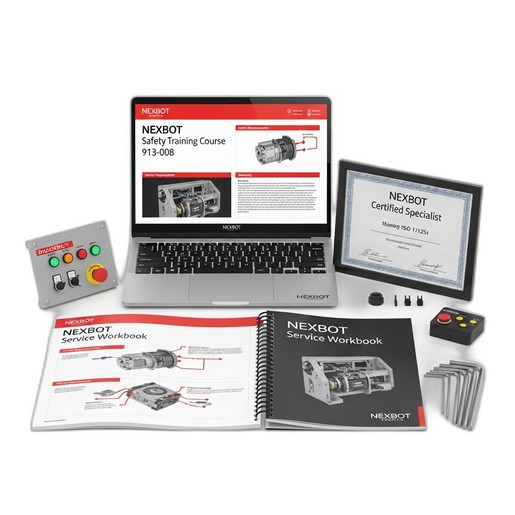
Understanding the robot's safety features, operational limits, and risk mitigation strategies is crucial. This is where formal training becomes invaluable. For instance, the NexBot Safety Training Course 913-008 provides the essential on-site certification needed for operators and maintenance staff to perform their duties confidently and safely. A well-maintained robot in the hands of an untrained operator is still a risk; comprehensive training closes that gap.
Daily Maintenance Checks (5-10 Minutes)
These quick, routine inspections should be performed at the start of every shift. They are designed to catch obvious issues before they escalate.
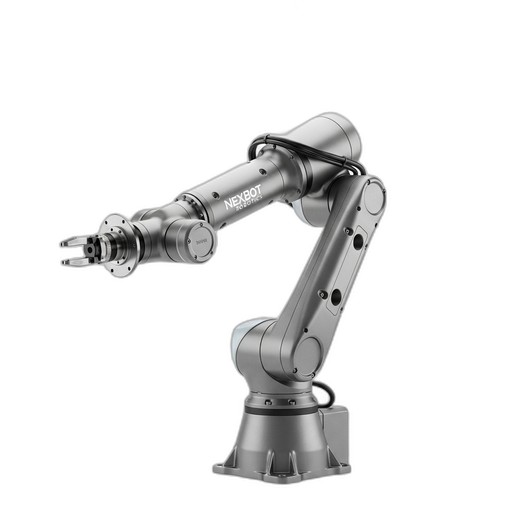
- Visual Inspection of Robot Arm: Walk around the robot, such as the NexBot Safety FLR022-008, and look for any signs of physical damage, like dents, cracks, or deep scratches on the arm's surface.
- Check Cabling and Hoses: Inspect all external cables and pneumatic hoses connected to the robot and its end-of-arm tooling (EOAT). Look for signs of wear, abrasion, pinching, or loose connections. Damaged cables can lead to intermittent communication errors or complete failure.
- Inspect End-of-Arm Tooling (EOAT): Ensure the gripper, welder, or other tool is securely mounted. Check for any loose parts, wear on contact surfaces, or damage.
- Clear the Work Envelope: Verify that the robot's designated workspace is free from obstructions, debris, or fluid spills that could interfere with its movement or create a slip hazard.
Weekly Maintenance Checks (30-60 Minutes)
These tasks are more thorough and address the gradual buildup of dirt and the potential for mechanical loosening over time.
- Clean Robot Surfaces: Wipe down the robot arm and controller cabinet with a soft, lint-free cloth and an approved cleaning solution. Dust and grime can act as an insulator, trapping heat and potentially causing electronic components to overheat.
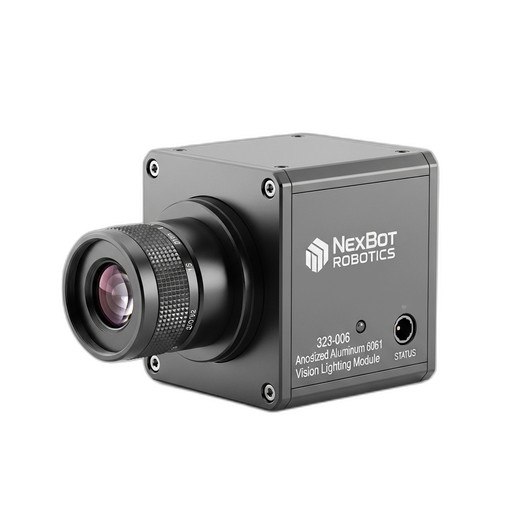
- Inspect and Clean Peripherals: Ancillary equipment requires attention too. For vision systems, the lens on a lighting module must be clean to ensure consistent performance. For a component like the NexBot Drives 323-006 Vision Lighting Module, gently wipe the lens to remove any dust or film. This ensures it continues to deliver its full 1200 lumens of clear 5000K light, which is critical for reliable inspections.
- Check Mounting Hardware: Verify that the bolts securing the robot base to the floor or pedestal are torqued to the manufacturer's specification. Vibrations during operation can slowly loosen hardware over time.
- Listen for Unusual Noises: Manually move the robot through its typical range of motion (at a safe, slow speed). Listen for any grinding, clicking, or whining sounds from the joints, which could indicate a developing issue with a bearing or gearbox.
- Test Teach Pendant Functionality: Check the teach pendant's cable for damage and ensure all buttons, especially the emergency stop, are functioning correctly.
Monthly & Quarterly Maintenance Tasks
These deeper checks focus on system health and the integrity of less-visible components.
- Review System Logs: Access the robot controller's logs and look for any recurring error codes or warnings. These can provide early indicators of a specific joint motor working too hard, a communication fault, or a sensor issue.
- Test Safety Functions: Actively test all safety circuits. This includes triggering the emergency stop buttons (on the controller and teach pendant), light curtains, and safety scanners. For a collaborative robot like the FLR022-008, it's also wise to verify that its force and torque limiting safety features are responding as expected.
- Inspect Joint Seals: Carefully inspect the seals on each of the robot's six axes. Look for any signs of grease leakage, cracking, or deterioration. Damaged seals can allow contaminants to enter the joint, leading to premature wear.
- Check Controller Cabinet: Open the controller cabinet (after LOTO) and inspect for dust buildup. Clean or replace the cabinet's air filters to ensure proper cooling airflow. Verify that all cooling fans are operational.
Annual Maintenance & Professional Servicing
Certain tasks require specialized tools and expertise and are typically performed once a year. It's often best to have these performed by a manufacturer-certified technician.
- Grease and Lubricant Service: Depending on the robot's duty cycle, the grease in the gearboxes of certain axes may need to be checked or replaced according to the service manual.
- Battery Replacement: The robot controller contains a battery to maintain system memory and position data when powered off. This battery has a finite lifespan (typically 3-5 years) and should be replaced proactively to prevent loss of programs and calibration.
- Full System Backup: Perform a complete backup of all robot programs, configurations, and system parameters. Store this backup in a secure, separate location.
- Professional Calibration Check: Over thousands of hours of operation, a robot's mechanical accuracy can drift slightly. An annual check with specialized tools can verify and, if necessary, recalibrate the robot to restore its peak precision.
Conclusion: A Well-Maintained Robot is a Productive Robot
Preventive maintenance isn't a cost center; it's an investment in operational excellence. By following a structured checklist of daily, weekly, monthly, and annual tasks, you ensure that your robotic assets, like the robust NexBot Safety FLR022-008, operate at peak efficiency and safety for their entire service life. A consistent PM schedule turns unplanned, expensive downtime into planned, manageable upkeep, forming the bedrock of a truly reliable and productive automated facility.