
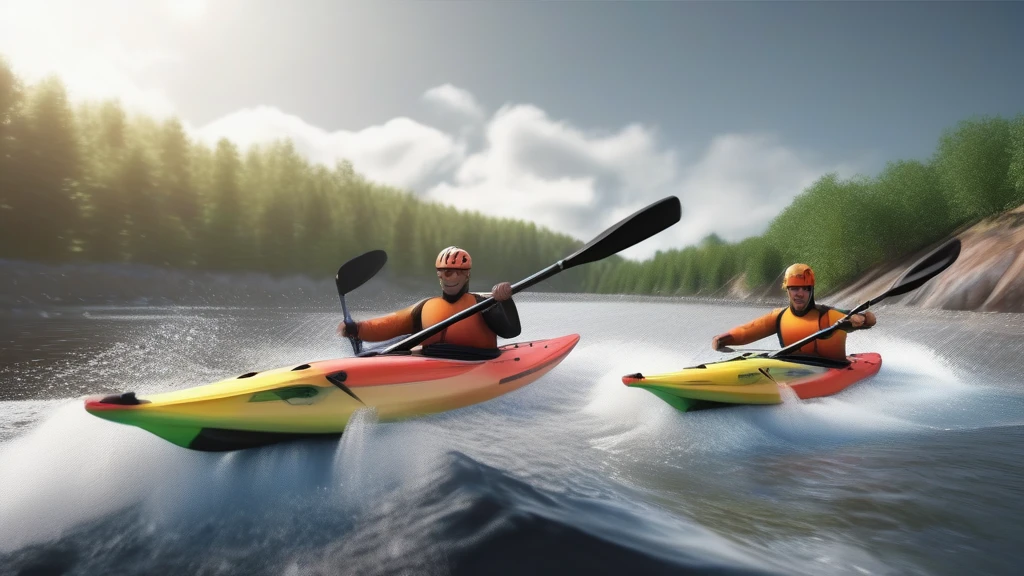
When it comes to slalom kayaking, the design of the kayak’s hull plays a pivotal role in how it performs on the water. Whether you’re a competitive racer navigating challenging downriver courses or an advanced paddler focused on fitness and technique, understanding the nuances of racing hull designs can help you find the perfect balance between speed and stability. This article explores the key hull types used in slalom kayaks, the materials that influence their performance, and practical tips for selecting a kayak that matches your paddling goals.
Understanding Slalom Kayak Hull Designs
Slalom kayaks are engineered specifically for agility and velocity in dynamic river conditions. Their hull shapes are crucial in determining how they cut through water, respond to rapid maneuvers, and maintain control at high speeds. The primary hull designs you’ll encounter in slalom kayaks include displacement, planing, and hybrid hulls.
Displacement Hulls: Precision and Efficient Glide
Displacement hulls have a rounded or V-shaped profile that moves through the water by pushing it aside rather than riding on top. This design emphasizes efficient forward momentum with minimal drag, allowing paddlers to maintain sustained speeds over longer distances.
- Advantages: Smooth tracking, excellent glide efficiency, and superior directional stability make displacement hulls ideal for downriver racing where maintaining speed over distance is critical.
- Considerations: These hulls can feel less responsive in tight turns compared to planing designs. They may require more skill to maneuver quickly in technical slalom gates.
Planing Hulls: Maneuverability and Quick Response
Planing hulls feature flatter bottoms that allow the kayak to rise and skim across the water surface at high speeds. This design boosts maneuverability, enabling rapid changes in direction and quick acceleration.
- Advantages: Enhanced agility and sharp turning capabilities make planing hulls well-suited for technical slalom courses with frequent gate navigation.
- Considerations: While planing hulls excel in responsiveness, they may sacrifice some straight-line speed and tracking stability, requiring more balance and control from the paddler.
Hybrid Hulls: Striking a Balance
Many modern slalom kayaks utilize hybrid hull designs that blend characteristics of displacement and planing hulls. These designs aim to offer a versatile performance profile that balances speed with stability and maneuverability.
- Advantages: Hybrid hulls provide a forgiving ride for intermediate paddlers while still delivering competitive performance for advanced racers. They typically feature a semi-V shape with flatter sections to optimize both glide and quick turns.
- Considerations: Hybrids may not perform as specialized as pure displacement or planing hulls in extreme racing scenarios but offer excellent all-around utility.
Material Impact on Hull Performance and Durability
Beyond shape, the materials used in constructing slalom kayak hulls significantly affect their weight, durability, and responsiveness. Common materials include:
Carbon Fiber
- Performance: Extremely lightweight and stiff, carbon fiber hulls maximize speed and responsiveness.
- Durability: High impact resistance but can be vulnerable to sharp strikes or abrasion without protective coatings.
- Ideal for: Competitive racers and advanced paddlers seeking peak performance.
Kevlar
- Performance: Slightly heavier than carbon fiber but offers excellent strength-to-weight ratio.
- Durability: Exceptional impact resistance and toughness, making it suitable for rocky river conditions.
- Ideal for: Paddlers prioritizing durability along with speed.
Fiberglass
- Performance: Moderate weight and stiffness, providing a balance of speed and flexibility.
- Durability: Good resilience but more prone to cracking under high impact than Kevlar or carbon fiber.
- Ideal for: Intermediate paddlers or those on a budget who desire lightweight performance.
High-Density Polyethylene (HDPE) and Thermoformed ABS
- Performance: Heavier and less stiff than composite materials, resulting in slightly reduced speed.
- Durability: Highly impact and abrasion resistant, excellent for rough conditions.
- Ideal for: Beginners, adventure touring, or environments with frequent hull contact.
Balancing Speed and Stability: What to Consider
Finding the ideal balance between speed and stability depends largely on your skill level, intended use, and water conditions.
Skill Level and Experience
- Beginners to Intermediate: Kayaks with hybrid hulls made from durable materials such as Kevlar or fiberglass offer a forgiving ride with manageable speed, helping paddlers build confidence.
- Advanced to Competitive Racers: Displacement or planing hulls crafted from carbon fiber provide the performance edge needed for high-speed precision but require refined paddling techniques.
Typical Water Conditions
- Flat or Moderate Flow Rivers: Displacement hulls shine with their efficient glide and tracking.
- Rapid, Technical Slalom Courses: Planing or hybrid hulls allow for rapid turns and agility.
- Mixed Environments: Hybrid hulls provide versatility for changing conditions.
Weight and Portability
Lightweight kayaks (often under 35 lbs) enable easier transport and quicker response on the water. Carbon fiber and Kevlar constructions excel here but come at a higher cost and require careful handling.
Training Tips to Maximize Hull Performance
Regardless of hull type, paddlers can improve their performance by focusing on technique and conditioning:
- Core Strength and Balance: Enhance stability and control during rapid maneuvers.
- Stroke Efficiency: Practice smooth, powerful strokes to maintain speed without excessive fatigue.
- Boat Control Drills: Work on edging, carving, and bracing to exploit your kayak’s hull characteristics.
- Course Simulation: Train in conditions similar to your target races to adapt to hull behavior in real scenarios.
Maintenance and Safety Considerations
High-performance slalom kayaks demand proper care for longevity and safety:
- Hull Inspection: Regularly check for cracks, dents, or delamination, especially after impact.
- Protective Measures: Use spray skirts and hull guards to minimize water intrusion and abrasion.
- Emergency Equipment: Equip your kayak with quick-release systems and safety gear appropriate for high-speed paddling.
- Storage: Store kayaks out of direct sunlight and in stable environments to prevent UV degradation and warping.
Environmental Impact and Sustainable Choices
As awareness of environmental sustainability grows, many manufacturers incorporate eco-friendly materials and low-emission production methods. Choosing kayaks with recyclable composites or those produced with responsible processes helps minimize your ecological footprint while enjoying water sports.
Conclusion
Selecting the right slalom kayak hull design is a nuanced decision that hinges on balancing speed, stability, and maneuverability to suit your paddling style and goals. Understanding the distinctions between displacement, planing, and hybrid hulls, alongside the influence of construction materials, empowers you to make informed choices. Coupled with targeted training and proper maintenance, the ideal kayak can elevate your performance and enjoyment in slalom racing and fitness paddling.
Whether you’re carving through rapid gates or cruising for endurance, the right hull design is your foundation for success on the water.