
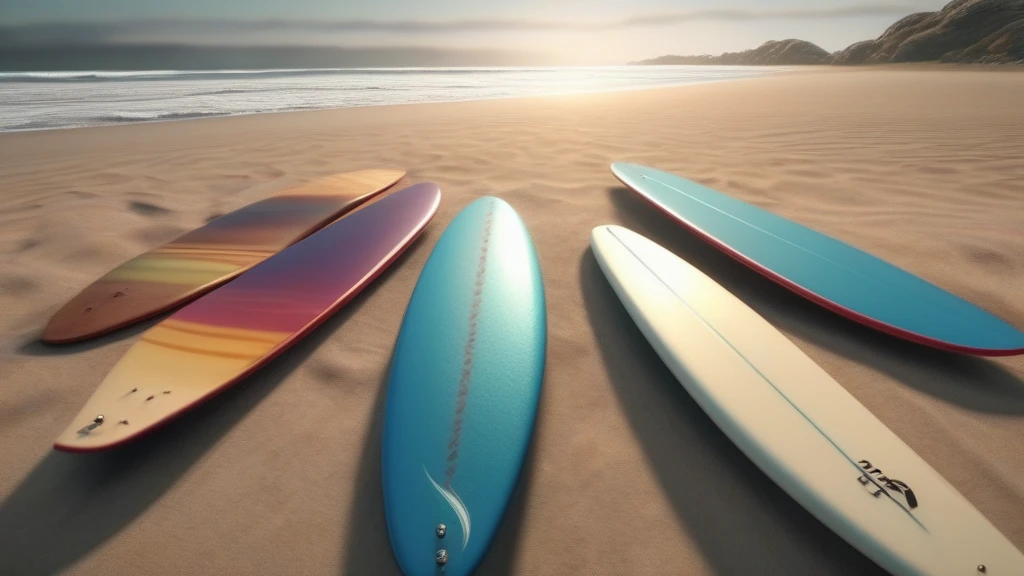
Longboard surfboards hold a cherished place in the surfing world, celebrated for their smooth rides, classic style, and versatility across skill levels. Whether you’re a beginner seeking stability or an advanced surfer aiming for precise noseriding, longboards offer a broad spectrum of designs and features tailored to your needs. In this article, we take a deep dive into the various types and styles of longboard surfboards, comparing their materials, shapes, rocker profiles, and fin setups to help you understand which board aligns best with your surfing style and goals.
Understanding the Core Dimensions: Length and Width
Longboards typically range between 8'0" and 10'0" in length, with widths varying to balance stability and maneuverability.
-
Shorter Longboards (8'0"–8'6"): These boards are more responsive and suited for freestyle surfing. The slightly reduced length allows for quicker turns and tricks, appealing to surfers who want to blend classic cruising with dynamic moves.
-
Mid-Length Longboards (8'6"–9'0"): Offering a balance, these are great for intermediate surfers who want a mix of stability and control. They provide enough volume for easy paddling but retain some agility.
-
Longer Longboards (9'0"–10'0"): The traditional, classic longboards excel at noseriding and smooth cruising, favored by beginners and those who appreciate a relaxed surfing style.
Width also plays a crucial role, with wider boards (22"–24") delivering enhanced stability—ideal for beginners and cruising—while narrower boards improve maneuverability.
Tail Shapes: Enhancing Control and Style
The tail shape of a longboard greatly influences its turning radius, speed, and overall feel on the wave. Here’s a comparison of common tail shapes found in longboards:
1. Round Tail
- Characteristics: Smooth, curved edges that facilitate smooth, flowing turns.
- Best For: Classic noseriding and relaxed cruising.
- Performance: Offers excellent hold on the wave face, making it easier to maintain control during carving.
2. Squash Tail
- Characteristics: Squared-off with rounded corners, providing a balance between stability and maneuverability.
- Best For: Freestyle surfers who need quick responsiveness without sacrificing glide.
- Performance: Enables sharper turns and quick directional changes, ideal for more dynamic surfing.
3. Pin Tail
- Characteristics: Narrow, pointed tail that offers maximum control and hold.
- Best For: Surfing bigger, more powerful waves and advanced noseriding.
- Performance: Provides excellent tracking and grip in steep waves but requires more skill to control.
4. Swallow Tail
- Characteristics: Divided tail with two pointed ends resembling a swallow’s tail.
- Best For: Surfers who want a blend of speed and maneuverability.
- Performance: Enhances quick turns and adds lift at the back, useful in smaller, weaker waves.
5. Square Tail
- Characteristics: Wide, flat tail giving maximum surface area.
- Best For: Beginners and cruising on smaller waves.
- Performance: Generates speed and stability but limits sharp turns.
Rocker Profiles: How Curvature Affects Ride Quality
The rocker—the curve along the bottom of the board from nose to tail—plays a vital role in how a longboard interacts with waves.
- Flat Rocker
- Description: Minimal curvature, almost flat.
- Advantages: Facilitates speed and glide on smaller, gentle waves. Easier paddling and longer rides.
-
Ideal For: Beginners and casual cruisers.
-
Moderate Rocker
- Description: Balanced curve offering both speed and control.
- Advantages: Versatile across wave sizes, allowing smooth turns without sacrificing momentum.
-
Ideal For: Intermediate surfers who want adaptable performance.
-
High Rocker
- Description: Pronounced curve with a lifted nose and tail.
- Advantages: Better maneuverability and control on steep, powerful waves; reduces nose-diving.
-
Ideal For: Advanced surfers focused on performance and aggressive noseriding.
-
Continuous Rocker
- Description: Even, smooth curve from nose to tail.
- Advantages: Allows fluid, flowing turns and enhanced control over the wave face.
- Ideal For: Surfers emphasizing classic style and grace.
Materials and Construction: Balancing Durability, Weight, and Sustainability
Longboards are traditionally constructed using polyurethane (PU) foam cores wrapped in fiberglass and coated with resin. However, modern innovations have introduced alternative materials that improve durability, weight, and environmental impact.
Traditional PU and Fiberglass
- Pros: Classic feel and flex; widely available and repairable.
- Cons: Heavier and less environmentally friendly; susceptible to dings and water absorption.
Epoxy Construction
- Pros: Lightweight and highly durable; resistant to impact and water damage.
- Cons: Slightly stiffer ride; may be pricier.
Carbon Fiber Reinforcements
- Pros: Adds strength without significant weight increase; improves board responsiveness.
- Cons: Higher cost; less common in entry-level boards.
Eco-Friendly Materials
- Increasingly, manufacturers are adopting sustainable practices by incorporating recyclable materials, bio-resins, and low-carbon-footprint production methods. These boards appeal to environmentally conscious surfers seeking performance without compromising the planet.
Fin Setups: Tailoring Stability and Maneuverability
The fin configuration on a longboard dramatically influences its handling characteristics. Common setups include:
- Single Fin
- Description: A large central fin.
-
Performance: Classic longboard feel with smooth, stable tracking; ideal for noseriding and cruising.
-
2+1 Setup
- Description: One large central fin with two smaller side fins.
-
Performance: Combines stability with the ability to make sharper turns; versatile for various surfing styles.
-
Thruster (Three Fins)
- Description: Three equally sized fins.
-
Performance: Enhanced maneuverability and control; less common on traditional longboards but favored in freestyle.
-
Quad Fin
- Description: Four fins, usually smaller in size.
- Performance: Increased speed and drive; suitable for fast, hollow waves.
Many modern longboards offer adjustable or removable fins to customize the ride or simplify transport.
Portability and Safety Features
Because longboards are larger and heavier than other surfboards, portability and safety are important considerations.
- Weight and Materials: Epoxy and carbon fiber boards reduce weight, making carrying and paddling easier.
- Fin Design: Foldable or removable fins prevent damage during transport and reduce bulk.
- Safety Certifications: Boards certified by ISO, CE, or TÜV standards ensure quality construction, UV resistance, and impact durability.
- Deck Features: Soft tops and anti-slip textures enhance grip and reduce injury risk, especially for beginners.
- Accessories: Included carry bags with padding, leashes, wax kits, and repair kits add convenience and promote board longevity.
Matching Longboard Styles to Surfer Skill Levels and Preferences
| Surfer Level | Recommended Board Type | Key Features | Typical Use Case |
|---|---|---|---|
| Beginner | Long, wide boards with flat rocker and square or round tails; soft tops | Stability, ease of paddling, safety features | Learning, casual cruising, small waves |
| Recreational | Mid-length boards with moderate rocker, squash or round tails, epoxy construction | Balance of glide and maneuverability, eco-conscious materials | Regular beach sessions, intermediate waves |
| Freestyle | Shorter longboards with squash tails, continuous rocker, thruster or 2+1 fin setups, lightweight materials | Quick turns, tricks, lightweight design | Freestyle surfing, dynamic maneuvers |
| Advanced | Longer boards with pin or round tails, high rocker profiles, carbon fiber reinforcements, single or 2+1 fin setups | Precise noseriding, control in powerful waves | Competitive longboarding, classic style surfing |
Conclusion
Choosing the right longboard surfboard hinges on understanding how tail shapes, rocker profiles, materials, and fin setups influence your ride. From stable, beginner-friendly designs to high-performance advanced boards, the longboard category offers diverse options tailored to your style and skill level. Additionally, modern innovations in materials and eco-friendly manufacturing ensure that surfers can enjoy their passion responsibly and sustainably. By carefully considering these factors, you can select a longboard that not only enhances your surfing experience but also supports your goals on the waves for years to come.