
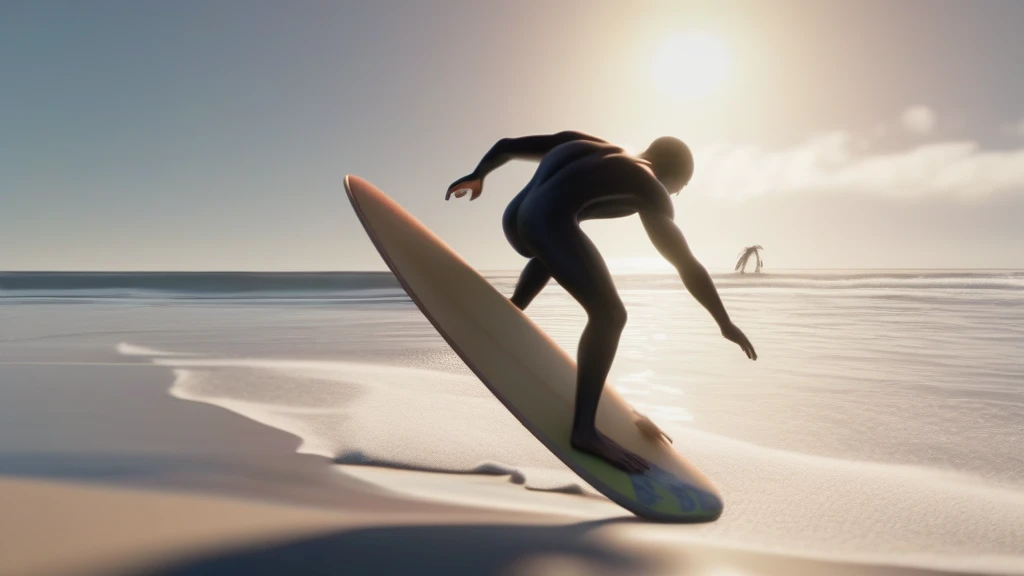
Shortboard surfboards are the ultimate choice for surfers seeking speed, agility, and precision on the waves. Whether you’re an intermediate rider honing your freestyle skills or an advanced competitor chasing high-performance maneuvers, understanding the design nuances of your board can significantly impact your surfing experience. Two of the most critical design elements that influence how your shortboard performs are the rocker profile and tail shape. This article explores these features in detail, offering practical insights to help you select or fine-tune a shortboard that matches your skill level, wave conditions, and surfing style.
What is a Rocker Profile and Why Does It Matter?
The rocker profile refers to the curvature of the surfboard from nose to tail when viewed from the side. It’s often described as the board’s “arc” or “bend.” This curvature affects how the board handles speed, maneuverability, and wave adaptability.
Types of Rocker Profiles
- Flat Rocker
- Characterized by minimal curvature along the length of the board.
- Advantages: Increases speed and glide on smaller, slower waves because it reduces drag by maximizing surface area in contact with the water.
-
Considerations: Can feel less responsive in steep or fast waves and may be prone to nose-diving on drops.
-
Moderate Rocker
- Features a balanced curvature that suits a wide range of conditions.
- Advantages: Offers a good compromise between speed and maneuverability, making it ideal for intermediate surfers who want versatility.
-
Considerations: May not excel in extreme conditions but performs reliably in typical beach and reef breaks.
-
Continuous Rocker
- Exhibits a smooth, consistent curve from nose to tail without flat sections.
- Advantages: Enhances maneuverability and control on steep, powerful waves, allowing for quick turns and tight arcs.
-
Considerations: Can reduce top-end speed on smaller waves due to increased drag.
-
Hybrid Rocker
- Combines features of flat and continuous rockers, often flat in the middle with more pronounced curves at the nose and tail.
- Advantages: Provides speed on the wave face while maintaining control in critical sections.
- Considerations: Suits surfers who want performance without sacrificing versatility.
How Rocker Influences Your Shortboard Riding
- Speed: Flatter rockers promote faster paddling and planing, ideal for catching waves early and maintaining momentum on smaller surf.
- Control and Maneuverability: More pronounced rockers improve the board’s ability to fit into steep wave pockets and perform dynamic turns.
- Wave Adaptability: Choosing the right rocker depends on the typical wave conditions you frequent. Steep, hollow waves call for more rocker, while mellow, rolling waves benefit from flatter profiles.
Tail Shapes: Shaping Your Board’s Turning and Stability
The tail shape of a shortboard plays a pivotal role in how the board responds during turns, speed transitions, and overall control. Different tail designs cater to specific surfing styles and wave demands.
Common Tail Shapes for Shortboards
- Squash Tail
- Features a square, slightly rounded outline.
- Benefits: Offers a balanced combination of stability, control, and maneuverability. The wider surface area provides lift and speed, while the rounded corners allow for smooth turns.
-
Ideal For: Surfers who want versatility across various wave sizes and conditions.
-
Swallow Tail
- Recognizable by its two pointed “swallow” tips separated by a concave cut.
- Benefits: Enhances grip and control, especially in steep or hollow waves, by providing extra bite during turns. The split tail also adds speed and lift.
-
Ideal For: Surfers who favor quick, sharp maneuvers in medium to larger waves.
-
Bat Tail
- A hybrid between swallow and squash, with extended points and a more dramatic cutout.
- Benefits: Combines stability with sharper turning capability, offering excellent hold in fast, critical sections.
-
Ideal For: Experienced surfers looking for aggressive performance in powerful surf.
-
Round Tail
- Smoothly curved edges that form a rounded, tapered tail.
- Benefits: Facilitates smooth, flowing turns and greater hold in larger waves. The rounded shape allows water to release cleanly, providing stability at high speeds.
-
Ideal For: Surfers riding bigger, more powerful waves who prioritize control and flow.
-
Pin Tail
- Long and narrow with a pointed end.
- Benefits: Maximizes hold and control, especially in big, steep waves, by reducing surface area and increasing water flow around the tail.
- Ideal For: Advanced surfers tackling heavy waves where hold and drive are critical.
Tail Shape and Surfing Style
- Freestyle and Quick Maneuvers: Squash and swallow tails are preferred for their responsiveness and ability to pivot quickly on the wave face.
- Big Wave Riding: Round and pin tails offer stability and control at high speeds.
- Versatility: Squash tails provide a well-rounded experience for surfers navigating varied conditions.
Matching Rocker Profiles and Tail Shapes to Your Surfing Goals
Choosing the right combination of rocker and tail shape can elevate your shortboard’s performance and enjoyment.
For Intermediate Surfers Developing Freestyle Skills
- Recommended Rocker: Moderate or hybrid rocker for a balance of speed and control.
- Recommended Tail: Squash or swallow tail for maneuverability and stability.
For Advanced Surfers Targeting High-Performance Maneuvers
- Recommended Rocker: Continuous or hybrid rocker to handle steep drops and tight turns.
- Recommended Tail: Bat or swallow tail for aggressive control; round tail for smooth carving.
For Surfers Focused on Speed and Glide in Small to Medium Waves
- Recommended Rocker: Flat or moderate rocker to maximize speed.
- Recommended Tail: Squash tail for lift and ease of turning.
For Big Wave and Powerful Surf Conditions
- Recommended Rocker: Continuous rocker to fit the wave’s steep face.
- Recommended Tail: Pin or round tail for maximum hold and stability.
Additional Considerations for Choosing Your Shortboard Design
- Weight and Materials: Lightweight constructions with epoxy or carbon fiber enhance responsiveness, which works in tandem with rocker and tail shape choices.
- Fin Setup: Fin configurations like thruster or quad complement tail shapes by influencing drive and control. For instance, a thruster setup pairs well with squash tails for balanced performance.
- Portability and Durability: If you travel frequently, consider how your rocker and tail shape affect board handling and packing, alongside durability features like reinforced fins and scratch-resistant coatings.
- Environmental Impact: Eco-conscious surfers may prefer boards made with sustainable materials and biodegradable coatings, which do not compromise rocker or tail performance.
Conclusion
Understanding the interplay between rocker profiles and tail shapes is essential for maximizing your shortboard’s potential. These design elements directly influence your board’s speed, maneuverability, wave adaptability, and overall feel. By aligning your choice with your skill level, preferred surfing style, and typical wave conditions, you can enhance your performance and enjoyment on the water.
Whether you’re carving tight turns in hollow waves or gliding smoothly on smaller surf, a well-chosen combination of rocker and tail shape empowers you to push your limits confidently and creatively. As you explore these features, keep in mind the broader aspects of board construction, fin setups, and sustainability to find a shortboard that truly fits your surfing lifestyle.